
Features
Only 54 Months Left: Is Nigeria Doing Enough to Protect the Maputo Protocol and Deliver on Gender Equality?

By Caroline Ameh
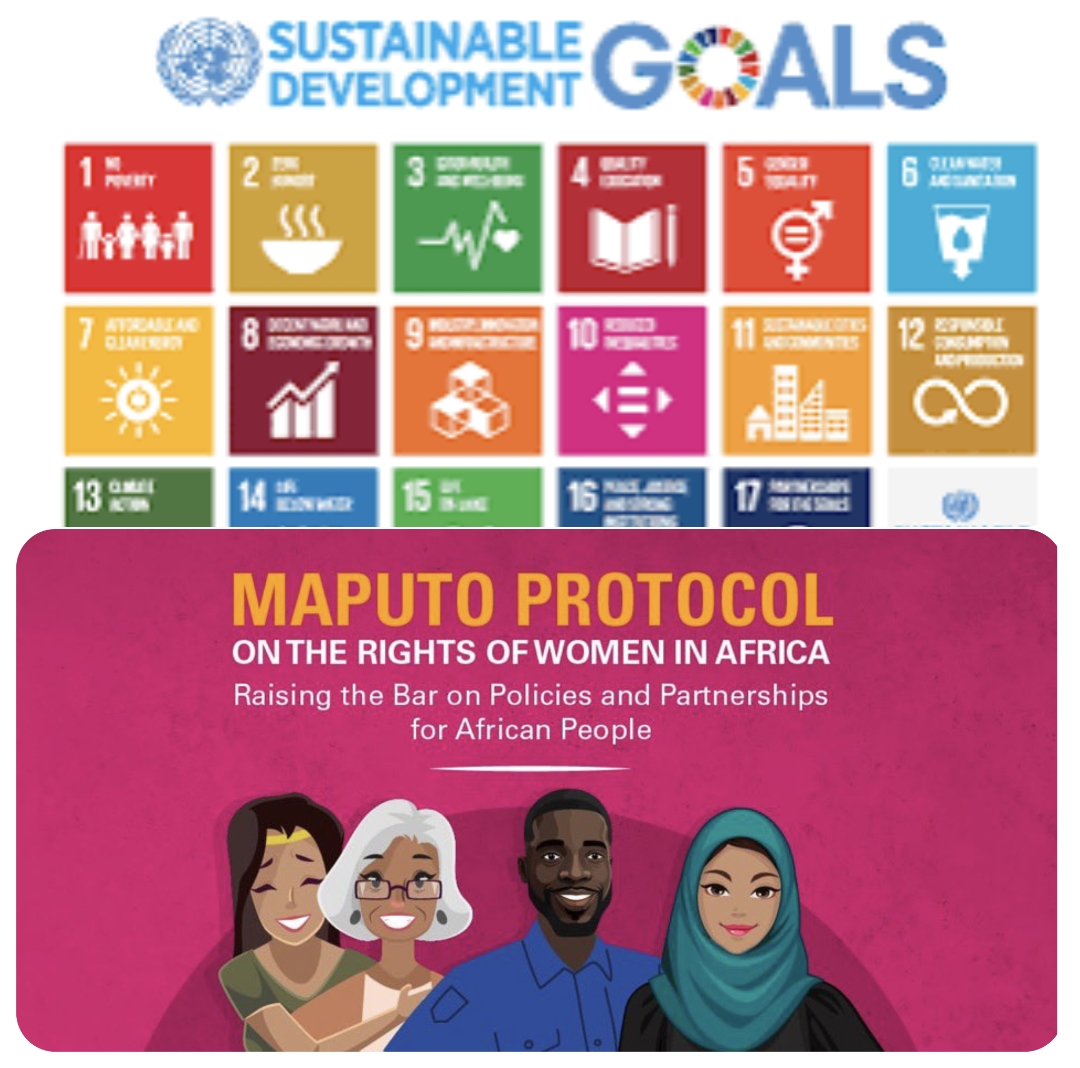
As the world enters the final stretch towards the 2030 Sustainable Development Goals (SDGs), a stark reality confronts governments across Africa: only 54 months remain to deliver on gender equality (SDG 5) and ensure healthy lives and wellbeing for all (SDG 3).
For Nigeria, Africa’s most populous nation and one of the earliest signatories to the African Union’s landmark Maputo Protocol, the countdown raises urgent questions. Is the country doing enough to protect the gains made under the Protocol? Can Nigeria withstand growing anti-rights movements seeking to reverse decades of progress on women’s rights and reproductive health? And what challenges continue to hinder full implementation of one of Africa’s most progressive human rights instruments?

The debate has gained renewed urgency following warnings from gender advocates, legal experts and United Nations officials over a controversial draft African Charter on Family Sovereignty and Values, which critics argue threatens to undermine hard-won gains embodied in the Maputo Protocol.
The Protocol That Changed Africa’s Gender Rights Landscape
Adopted by the African Union in 2003 in Maputo, Mozambique, the Protocol to the African Charter on Human and Peoples’ Rights on the Rights of Women in Africa, commonly known as the Maputo Protocol, remains one of the continent’s most ambitious legal frameworks for women’s rights.
Nigeria signed the Protocol in 2003 and ratified it in December 2004, thereby committing itself to a broad range of obligations aimed at eliminating discrimination against women and protecting their rights.
The Protocol guarantees women’s rights to dignity, equality, freedom from violence, access to education, inheritance rights, political participation, reproductive health services and protection from harmful practices such as female genital mutilation and child marriage.
Perhaps most significantly, Article 14 of the Protocol recognises women’s sexual and reproductive health rights and calls on governments to authorise medical abortion under specific circumstances, including rape, incest and threats to the life or health of the mother.
For many gender advocates, the Maputo Protocol represents proof that women’s rights are not foreign concepts imposed on Africa but homegrown aspirations shaped by African women, legal scholars and governments.
“The significance of the Maputo Protocol goes beyond its legal provisions,” says Famia Nkansa, Communications Lead at Purposeful, a feminist organisation rooted in Sierra Leone.
“It demonstrates that gender equality and women’s rights are not external concepts imposed on Africa. African women activists, policymakers, legal experts and governments played a central role in shaping the Protocol.”
A New Threat Emerges
At a recent SHE & Rights Media Brief hosted by the Global Centre for Health Diplomacy and Inclusion (CeHDI) and partner organisations, experts raised alarm over a proposed draft African Charter on Family Sovereignty and Values.
Critics describe the draft charter as one of the most significant anti-rights initiatives currently facing the continent.
Dr Tlaleng Mofokeng, United Nations Special Rapporteur on the Right to Health, minced no words in her assessment.
“The regressive draft African Charter on Family Sovereignty and Values is yet another assault on sexual and reproductive health rights and justice, as well as bodily autonomy and human rights in general,” she said.
“Governments need to disengage with this draft Charter and instead honour and deliver on the promises they have made on gender equality and human rights to health.”
According to legal analyses conducted by the Initiative for Strategic Litigation in Africa (ISLA), the proposed charter attempts to redefine rights through concepts of family authority, sovereignty and cultural preservation, potentially weakening protections for women, girls and gender-diverse communities.
Sibongile Ndashe, Executive Director of ISLA, argues that the charter prioritises family cohesion above individual rights and lacks safeguards to prevent women’s rights from being subordinated to patriarchal structures.
“The rights language is retained in form, but the rights protection is weakened in substance,” she warned.
Nigeria’s Record: Progress Worth Protecting
Despite persistent challenges, Nigeria has made notable strides in implementing aspects of the Maputo Protocol.
One of the most significant achievements was the enactment of the Violence Against Persons (Prohibition) Act (VAPP) in 2015.
The law criminalises various forms of gender-based violence, including domestic abuse, harmful widowhood practices, female genital mutilation, psychological abuse and sexual violence.
Although initially applicable only in the Federal Capital Territory, many states have subsequently domesticated the legislation.
Nigeria has also expanded efforts to reduce maternal mortality, improve reproductive healthcare and combat child marriage.
The National Gender Policy seeks to promote gender mainstreaming across public institutions, while initiatives such as the Nigeria for Women Project, supported by the World Bank, have focused on economic empowerment for rural women.
In the health sector, government investments in primary healthcare centres, family planning services, immunisation programmes and maternal health interventions have contributed to improvements in health outcomes.
The country has also established mechanisms aimed at increasing women’s participation in politics and governance, though progress remains uneven.
More recently, the administration of President Bola Ahmed Tinubu has launched programmes focused on women’s economic inclusion, social protection and healthcare access.
Several federal ministries, including the Ministry of Women Affairs and the Ministry of Health and Social Welfare, continue to implement policies aligned with the Protocol’s objectives.
The Numbers Tell a Different Story
Yet despite these efforts, the reality remains sobering.
Nigeria continues to face some of the highest maternal mortality rates globally.
Millions of girls remain out of school.
Child marriage remains prevalent in parts of northern Nigeria.
Gender-based violence continues at alarming levels.
Women’s political representation remains among the lowest in Africa.
According to recent global gender assessments, Nigeria is still struggling to close gender gaps in education, economic participation and political leadership.
The gap between policy commitments and implementation remains one of the country’s biggest challenges.
While laws exist, enforcement often falls short.
While policies are announced, funding is frequently inadequate.
While commitments are made internationally, local realities often tell a different story.
Why Full Implementation Remains Elusive
Experts identify several interconnected barriers preventing Nigeria from fully implementing the Maputo Protocol.
Cultural and Religious Resistance
Perhaps the most visible challenge is the persistence of deeply entrenched patriarchal norms.
In many communities, cultural and religious beliefs continue to influence attitudes towards women’s rights, reproductive health and gender equality.
Issues such as child marriage, inheritance rights, family planning and comprehensive sexuality education often become politically sensitive topics.
Advocates argue that resistance frequently stems from misconceptions that gender equality initiatives undermine cultural values or religious traditions.
This tension has contributed to slow implementation of reforms in several states.
Weak Political Commitment
Although Nigeria has ratified numerous international agreements, translating commitments into action often depends on political will.
Successive governments have endorsed gender equality frameworks but have not always prioritised implementation.
Observers note that gender issues are frequently treated as social concerns rather than development imperatives.
This limits the urgency attached to policy execution.
The absence of constitutional guarantees for affirmative action and women’s representation has also slowed progress.
Repeated attempts to pass gender equality legislation have encountered resistance in the National Assembly.
Inadequate Funding
Funding remains a critical obstacle.
Women’s rights organisations consistently argue that gender programmes receive insufficient budgetary allocations.
This challenge mirrors Nigeria’s broader struggles with meeting international commitments.
Just as Nigeria has repeatedly fallen short of the Maputo Declaration’s target of allocating 10 percent of national budgets to agriculture, gender-focused programmes often receive limited resources.
Without adequate financing, implementation efforts remain fragmented and unsustainable.
Weak Health Systems
Achieving the health-related provisions of the Protocol requires robust healthcare systems.
Yet Nigeria’s health sector continues to grapple with infrastructure deficits, shortages of healthcare workers, inadequate medical supplies and unequal access between urban and rural areas.
Women in remote communities often face significant barriers in accessing maternal and reproductive healthcare services.
These challenges directly affect progress toward SDG 3 and the health rights envisioned under the Protocol.
Rising Anti-Rights Movements
The emergence of organised anti-rights campaigns across Africa represents a newer challenge.
These movements frequently frame gender equality, reproductive rights and sexuality education as foreign agendas incompatible with African values.
According to experts at the SHE & Rights briefing, such narratives threaten to reverse progress achieved over decades.
“The anti-rights narrative travels quickly through transnational conservative networks,” warns Professor Pam Rajput, former Chairperson of India’s High-Level Committee on the Status of Women.
“Rollback of rights in one region can become a precedent elsewhere.”
The SDG Deadline Is Fast Approaching
The urgency of the situation becomes clearer when viewed against the backdrop of the Sustainable Development Goals.
SDG 5 seeks to achieve gender equality and empower all women and girls by 2030.
SDG 3 aims to ensure healthy lives and promote wellbeing for all.
Yet multiple international assessments suggest that the world is not on track to achieve either goal.
Nigeria reflects many of these global challenges.
Gender-based violence remains widespread.
Maternal mortality remains unacceptably high.
Economic inequalities persist.
Women’s political participation remains limited.
Shobha Shukla, Coordinator of SHE & Rights, believes the world is moving too slowly.
“Only 54 months are left to deliver on the promise of gender equality and health and wellbeing by 2030. But the sense of urgency and purpose is missing.”
Her observation resonates strongly in Nigeria, where demographic growth, economic pressures and security challenges increasingly complicate development efforts.
What Must Nigeria Do Next?
Experts argue that protecting the Maputo Protocol requires more than defending it against external threats.
It requires accelerated domestic action.
First, Nigeria must strengthen implementation of existing laws, including the VAPP Act and child protection legislation.
Second, greater investments are needed in maternal healthcare, family planning, education and social protection programmes.
Third, governments at federal and state levels must intensify efforts to eliminate harmful traditional practices and child marriage.
Fourth, policymakers must improve women’s political representation through affirmative measures and electoral reforms.
Fifth, public awareness campaigns are needed to counter misinformation surrounding gender equality and reproductive rights.
Importantly, experts stress that implementation should not be viewed solely as a women’s issue.
Evidence consistently shows that gender equality contributes to economic growth, improved health outcomes, poverty reduction and social stability.
A Test of Leadership
For Nigeria, protecting the Maputo Protocol is ultimately a test of political leadership.
The country has already made commitments.
It has ratified treaties.
It has adopted policies.
It has enacted laws.
The challenge now lies in implementation.
As anti-rights movements gain momentum globally and across parts of Africa, the question is no longer whether the Protocol remains relevant.
The question is whether governments are willing to defend it.
Dr Tlaleng Mofokeng offers perhaps the clearest reminder of what is at stake.
“Gender justice and human rights to health are not negotiable. They are essential bedrock for human development, sustainable peace and security.”
With only 54 months remaining before the SDG deadline, Nigeria stands at a crossroads.
The choices made today will determine whether millions of women and girls experience greater equality, dignity and access to healthcare—or whether progress stalls under the weight of resistance, underinvestment and political hesitation.
The Maputo Protocol remains one of Africa’s boldest promises to women and girls. Protecting it is no longer simply a legal obligation.
It is a moral imperative.