General News
Nigeria-India Trade Surges to $9bn as Indian Firms Employ 100,000 Nigerians

By Iyojo Ameh
Bilateral trade between Nigeria and India has climbed to about $9 billion, representing a significant increase from the $7.13 billion recorded in the previous financial year, the Indian High Commissioner to Nigeria, Abishek Singh, has disclosed.
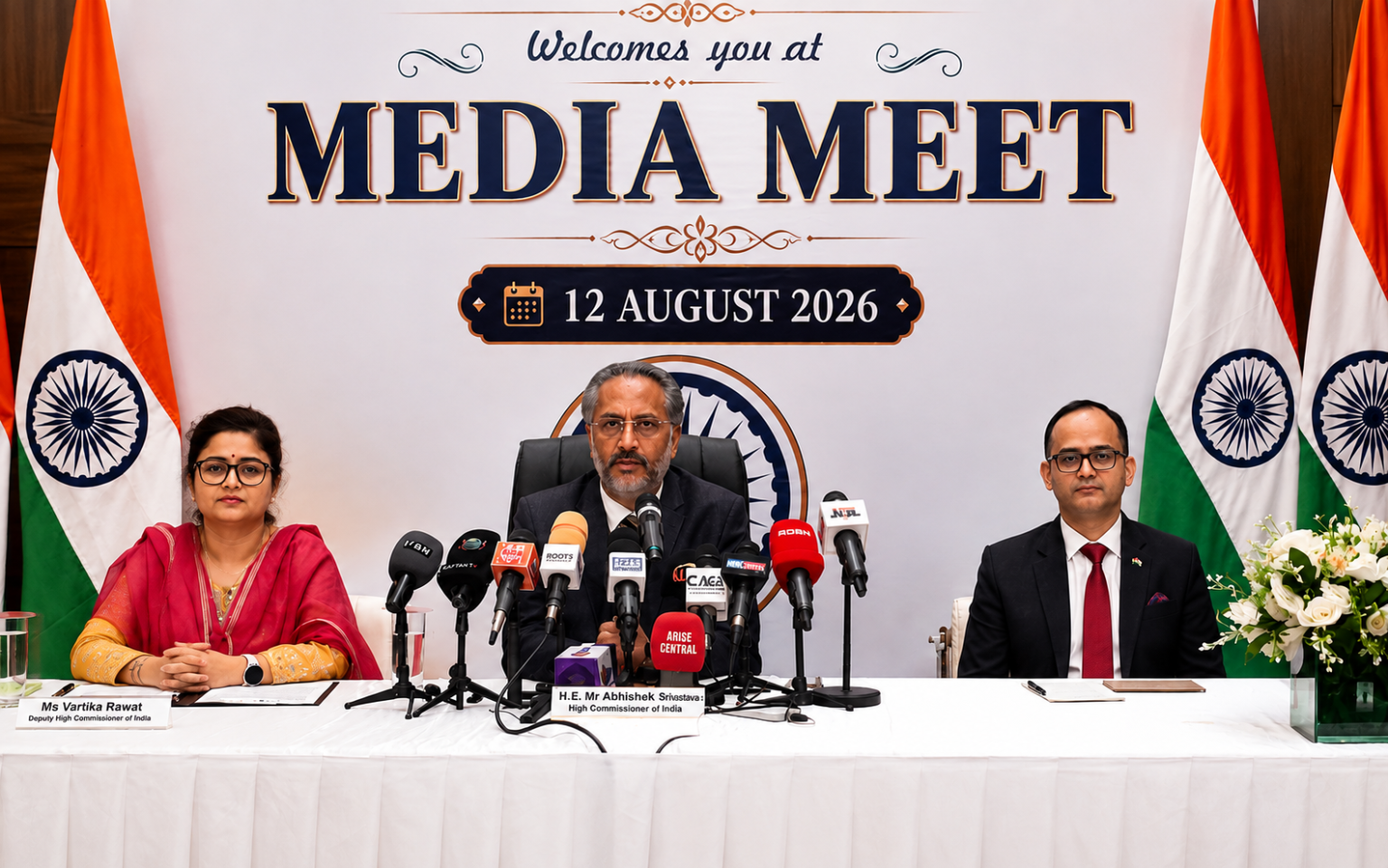
Singh made the disclosure on Wednesday during a media briefing in Abuja, attributing the growth to the deepening economic and strategic partnership between both countries.

He said trade and investment remained key pillars of Nigeria-India relations, which have expanded beyond traditional areas of cooperation to include manufacturing, healthcare, pharmaceuticals, energy, agriculture, technology and security.

«“I am very happy to report that the trade for the financial year 2025-26 stands at around US dollar nine billion, which is up from US dollar 7.13 billion in the financial year 2024-25,” Singh said.»
The envoy disclosed that more than 200 Indian companies currently operate in Nigeria across several sectors, including pharmaceuticals, manufacturing, power, construction, consumer goods, healthcare and services.

According to him, many of the companies are no longer focused solely on importing goods into Nigeria but have established manufacturing plants locally.
He said the investments had created employment opportunities for nearly 100,000 Nigerians, making Indian companies among the largest private-sector employers in the country.
“They are also making in Nigeria. They are producing in Nigeria; they have set up plants in Nigeria. And this has translated into close to 100,000 brothers and sisters from Nigeria being deployed, employed by these companies,” he said.
Singh said the growing economic relationship demonstrated the evolution of Nigeria-India ties from historical goodwill and oil-based trade into a broad strategic partnership.
He identified security, technology, food security, health, agriculture, energy and global governance as some of the emerging areas of cooperation between both countries.
India accounts for 40% of Nigeria’s pharmaceutical imports
Also speaking at the briefing, India’s Deputy High Commissioner to Nigeria, Vertika Rawat, highlighted the growing importance of health cooperation between the two countries.
Rawat disclosed that India currently supplies about 40 per cent of Nigeria’s pharmaceutical imports, with its share exceeding 90 per cent in some categories of medicines.
She said Indian pharmaceutical exports to Nigeria reached $315 million in the 2024/2025 financial year, while Indian companies had invested about $4 billion in pharmaceutical manufacturing in Nigeria.
According to her, the investments demonstrate India’s commitment to moving beyond pharmaceutical exports to supporting local production in Nigeria.
“This is what it means in practice for India to be the pharmacy of the world. It means not only affordable medicines reaching Nigerian homes, but also manufacturing medicines in Nigeria for Nigerian homes,” Rawat said.
She said India was prepared to deepen cooperation with Nigeria as the country pursues universal health coverage, particularly through policy exchange, institutional partnerships and training of healthcare professionals.
India offers healthcare model to Nigeria
Rawat also drew attention to India’s Ayushman Bharat healthcare programme, saying aspects of the model could provide useful lessons for Nigeria as it seeks to expand healthcare coverage and financial protection for citizens.
She noted that India’s National Family Health Survey, released in May 2026, covered about 639,000 families across 707 districts.
According to her, the survey showed improvements in several health indicators, including maternal and child health, immunisation, nutrition and healthcare financing.
She said antenatal care had reached 96 per cent of pregnant women, while institutional deliveries rose to 90.6 per cent.
Full immunisation among children aged 12 to 23 months also increased from 83.8 per cent to 87.1 per cent, she added.
Rawat further disclosed that stunting among children under five declined from 35.5 per cent to 29.3 per cent, attributing the progress to national programmes such as POSHAN Abhiyaan and the Integrated Child Development Services programme.
She said health insurance or financing scheme coverage had also risen from 41 per cent to 60.2 per cent.
On women’s empowerment, Rawat said the proportion of Indian women who had ever used the internet increased from 33.3 per cent to 64.3 per cent, while nine out of 10 women now operated their own bank or savings accounts.
She said the experience offered areas of possible collaboration with Nigeria, particularly in maternal and child healthcare, immunisation, healthcare financing and women’s economic empowerment.
“As Nigeria charts its own path towards universal health coverage, India believes the Ayushman Bharat model and other Indian policy models offers a template well worth exploring together, alongside the continued training of Nigerian health professionals under India’s ITEC flagship programme,” she said.
Rawat described the expanding relationship between Nigeria and India as a partnership increasingly driven by shared development priorities.
She said both countries, having historically shared common experiences in the struggle against colonialism, were now seeking stronger cooperation to promote health, dignity and shared prosperity.