General News
UNGA: Nigeria, EU Revive Talks On Re-Admission Pact, Legal Migration

By Iyojo Ameh
Nigeria and the European Union have renewed negotiations on a long-delayed agreement that would facilitate the re-admission of Nigerians returned from Europe, while opening discussions on expanded legal migration opportunities.
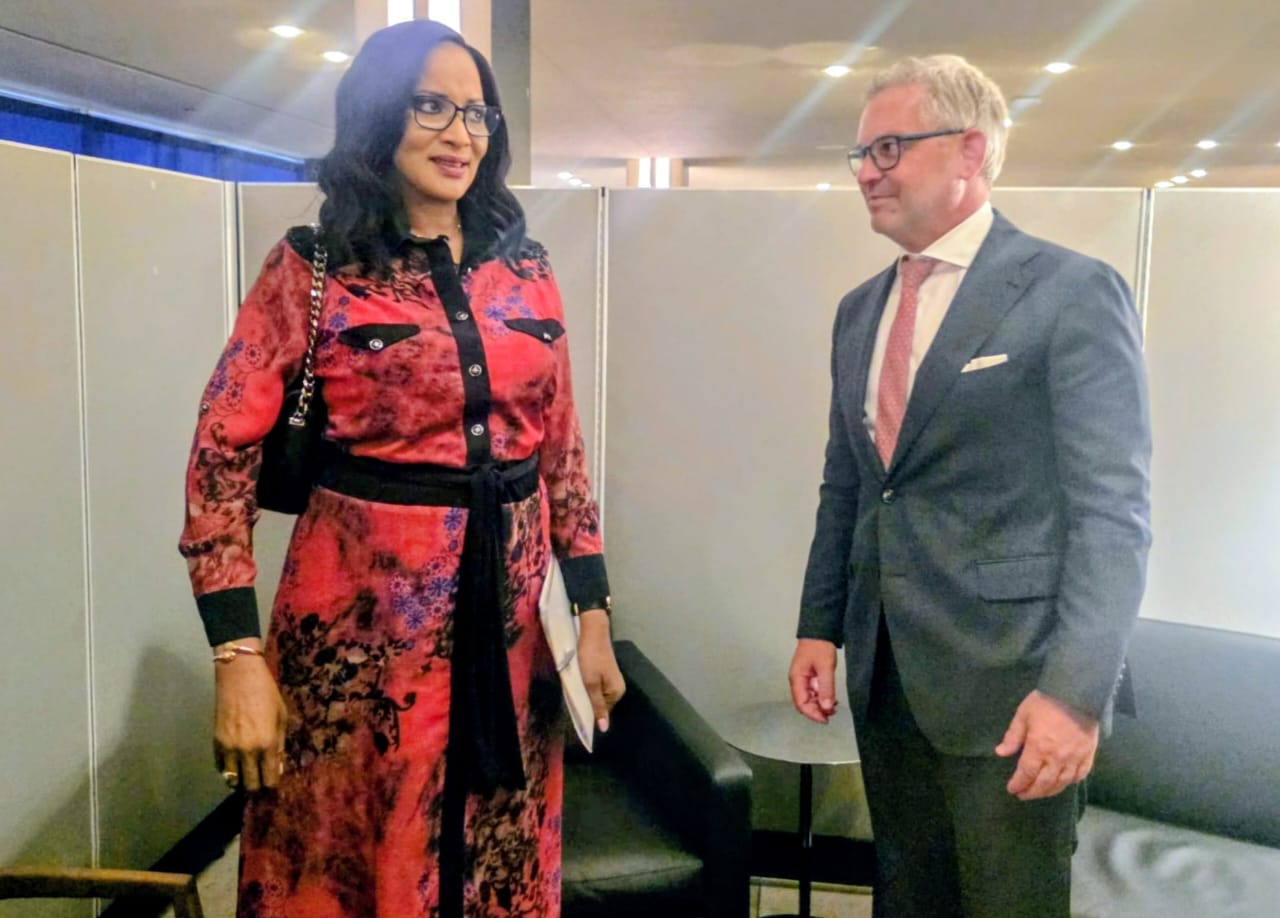
The issue featured prominently during a meeting between Nigeria’s Minister of Foreign Affairs, Ambassador Bianca Odumegwu-Ojukwu, and EU Commissioner for Internal Affairs and Migration, Magnus Brunner, on Monday, September 21, 2026, on the sidelines of the 81st United Nations General Assembly in New York.

The proposed EU-Nigeria Re-Admission Agreement, initiated in 2016, has been under discussion for years. Brunner stressed the need for its conclusion, recalling that the agreement was extensively discussed at the eighth Nigeria-EU Ministerial Dialogue in March 2026.
According to the commissioner, finalising the pact would provide a framework for wider cooperation between Nigeria and the EU on migration.
Odumegwu-Ojukwu said Nigeria was ready to strengthen migration cooperation but insisted that any arrangement must also support the country’s development priorities.
She identified reintegration assistance for returnees, infrastructure development support and expanded legal pathways for Nigerians seeking opportunities in Europe as key areas of interest.
The minister stressed the importance of creating structured and lawful mobility channels for Nigerians, particularly young people, while ensuring that migration arrangements do not undermine Nigeria’s economic and human-capital development.
The EU delegation said the concerns raised by Nigeria had been incorporated into the proposed cooperation framework.
It disclosed plans for a broader Migration and Security Cooperation Contract, which would cover talent partnerships, legal mobility pathways, reintegration of returnees, border management and support from the European Border and Coast Guard Agency, Frontex.
The proposed cooperation would also include discussions on information exchange with Europol to strengthen Nigeria’s capacity to tackle transnational organised crime.
Brunner said the EU was particularly interested in talent partnerships that could address skills shortages in Europe while providing Nigerian professionals with lawful opportunities to work abroad.
He said such arrangements could benefit both sides while helping to address concerns surrounding brain drain.
The meeting also examined ways of strengthening cooperation against irregular migration. Brunner indicated that progress in combating irregular migration could contribute to creating greater opportunities for regular and legal migration.
The EU commissioner expressed interest in continuing the discussions during a proposed visit to Abuja in November 2026, with both sides expected to agree on a specific date.
The meeting reflects renewed efforts by Nigeria and the EU to build a broader migration partnership that goes beyond return and re-admission to encompass legal mobility, reintegration, border management, security cooperation and skills development.
For Nigeria, the proposed framework offers an opportunity to seek greater legal mobility for its citizens while ensuring that migration cooperation with the EU remains aligned with the country’s development priorities.