
General News
Anti-Rights Pushback Threatens Women’s Gains in Africa, Experts Warn Ahead of UNGA81

By Iyojo Ameh
Women’s rights advocates and human rights experts have warned that growing anti-rights campaigns are increasingly using the language of “family values,” culture, religion, sovereignty and national cohesion to undermine hard-won protections for women and girls.
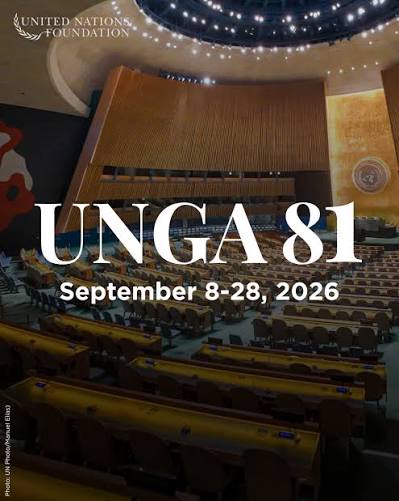
The warning was issued during the latest SHE & Rights session on gender equality, health rights and human rights accountability, held ahead of the 81st session of the United Nations General Assembly (UNGA81).
The session was jointly hosted by the Global Center for Health Diplomacy and Inclusion (CeHDI) and CNS, in partnership with the International Planned Parenthood Federation (IPPF), Asian-Pacific Resource and Research Centre for Women (ARROW), and Asia Pacific Media Alliance for Health, Gender and Development Justice (APCAT Media).
Participants acknowledged that Africa has established a strong regional human rights framework, including the African Charter on Human and Peoples’ Rights and the legally binding Maputo Protocol. However, they stressed that implementation, accountability and community engagement remain essential to preventing the erosion of women’s and girls’ rights.
African Union Not Behind Proposed ‘Family Sovereignty’ Charter
Dr Robert Eno, Registrar of the African Court on Human and Peoples’ Rights, said there is currently no indication that the proposed regressive African Charter on “family sovereignty and values” is scheduled for consideration by the African Union Assembly.
Eno stressed that the proposed charter was not initiated by the African Union, adding that even if it is eventually submitted, it would have to undergo a lengthy institutional process before it could reach the AU Assembly.
He therefore expressed doubt that the proposed instrument would be before the Assembly by February 2027.
However, he warned against complacency, saying the controversy reflects a broader struggle over how societies interpret family, culture, religion, equality and human dignity.
According to him, discriminatory laws and practices continue to affect women and girls across different parts of the world, including unequal inheritance rights, restrictions on divorce and failure to recognise marital rape.
Eno said the response to anti-rights mobilisation should go beyond legal arguments to include human stories, dialogue and persuasion.
He argued that gender equality should not be presented as a threat to family, culture or religion but as a principle capable of strengthening families, communities and societies.
He also warned that human rights advocates risk “preaching to the converted” when their engagement does not reach people who disagree with or fear the human rights agenda.
He called for greater engagement in homes, schools, places of worship, traditional institutions, communities and on social media.
While acknowledging the growing anti-rights movement, Eno said Africa had made significant normative progress through the African Charter, Maputo Protocol, African Children’s Charter, AU gender-parity commitments and regional human rights jurisprudence.
He identified implementation and accountability as the next major challenges, stressing that treaties and court judgments would have little impact unless governments translated them into action.
‘Family Values’ Used to Delay Women’s Rights Reforms
Rehema Namukose, Senior Regional Programme Officer for sub-Saharan Africa at Musawah, said anti-rights actors were increasingly exploiting the concept of family to obstruct gender equality reforms.
She said legislation designed to advance women’s rights in marriage, divorce and custody is sometimes delayed while restrictive bills presented as “family protection” measures gain political traction.
Namukose cited developments in Ghana, Kenya and Uganda, saying political and legislative initiatives in some countries could restrict bodily autonomy and sexual and reproductive rights, even as reforms relating to marriage, divorce, custody and women’s equal rights face delays.
She also warned that similar arguments can be used to justify harmful practices such as child marriage and female genital mutilation, as well as women’s economic subordination through unpaid care work and denial of equal property and inheritance rights.
She said concepts such as male guardianship and male authority in some Muslim family-law systems can be codified in ways that position men as heads of households and make women’s rights conditional on “obedience.”
Namukose argued that the language of family values, cultural integrity, sovereignty and national cohesion is sometimes deployed to preserve patriarchal power rather than genuinely protect families.
She called for collaboration among legal networks, faith communities, survivors, policymakers and civil society organisations to counter the trend.
Activists Urge Religious Communities to Reclaim Gender Justice
Samah Hadid, Global Executive Director of Musawah, said the anti-rights movement was becoming increasingly coordinated, well-resourced and effective in using religion, culture and tradition to justify discrimination.
She said religious language is frequently deployed to police women and reinforce patriarchal control in both private and public spaces.
Hadid said Musawah, a Global South feminist movement rooted in Muslim legal tradition, seeks to counter such narratives by developing egalitarian Islamic arguments supporting women’s rights and training activists, lawyers and judges to use them.
She argued that discrimination can be challenged from within Muslim legal and religious traditions rather than leaving religious discourse exclusively to conservative voices.
Hadid called for a broad alliance involving secular, religious, cultural and human rights actors, saying family, religion and tradition can be reconciled with equality and justice for women and girls.
ISLA Calls for Review Before AU Violence-Against-Women Treaty Ratification
Fatou Bantou Salah of the Initiative for Strategic Litigation in Africa (ISLA) urged African governments to undertake a comprehensive review of the African Union Convention on Eliminating Violence Against Women and Girls (AU CEVAWG) before further ratification.
The convention was adopted in February 2025. According to Salah, nine AU member states have signed it, while The Gambia and Ghana have ratified it.
She said 15 ratifications are required for the convention to enter into force, leaving 13 additional ratifications needed.
Salah said this presented an opportunity for governments and stakeholders to thoroughly examine the treaty before it becomes legally binding.
She cited concerns raised by ISLA and other civil society organisations, including limited civil society participation during the drafting process, the absence of publicly available preparatory materials, conceptual and substantive gaps and weaknesses relating to state due-diligence obligations.
She also raised concerns over the lack of explicit references to issues such as female genital mutilation, child marriage and conflict-related sexual violence.
ISLA’s “Pause for Purpose” campaign, she explained, is not seeking to abandon the convention but to temporarily halt the ratification process to allow for a detailed legal review.
The campaign is calling for an independent article-by-article assessment of the convention and comparison with existing instruments, including the African Charter on Human and Peoples’ Rights, Maputo Protocol and African Children’s Charter.
It also advocates consultations with survivors, women’s rights organisations, lawyers, service providers and affected communities.
Salah further warned that the proposed draft charter on family sovereignty and values could narrow existing rights protections through its definitions of family, family-impact assessments and emphasis on sovereignty and cultural values.
Her message was clear: “pause, listen, review, strengthen, then ratify.”
Eswatini’s Progress Masks Gaps in Adolescent Health
Vimbai Kapurura, Executive Director of Girls Not Brides and Founder Executive Director of Women Unlimited Eswatini, highlighted progress in adolescent health and education in Eswatini while warning that significant gaps remain.
She said the country’s adolescent birth rate had declined from 87 births per 1,000 girls aged 15–19 to 78, while early childbearing before age 18 dropped from 17 per cent to 12 per cent between 2022 and 2025.
Eswatini has also expanded health infrastructure and access to sexual and reproductive health and rights services, including youth-focused approaches.
However, Kapurura said modern contraceptive use among sexually active unmarried girls aged 15–19 stood at about 51 per cent, while unmet need for family planning was 46 per cent.
She questioned whether health services were genuinely accessible to girls, particularly those living in rural and poor communities.
According to her, the availability of health infrastructure does not automatically guarantee quality, dignity or stigma-free care.
She urged policymakers to examine the wider factors behind adolescent pregnancy, including access to information, poverty, education, family circumstances and social expectations.
“We also have to look at the family, the school, and the community and the systems around her, and ask whether they are creating opportunities or creating barriers for her,” she said.
Kapurura also noted that adolescent girls and young women remain particularly vulnerable to HIV due to factors including early sexual debut, poverty, adolescent pregnancy, gender-based violence and intergenerational relationships.
She said Eswatini’s Universal Periodic Review scheduled for November 2026 should be used to assess whether government commitments are translating into tangible improvements for rural girls, adolescents and underserved communities.
Experts Demand Inclusion of Older Persons in UN Treaty Process
The session also examined the ongoing United Nations process to develop a legally binding international instrument on the human rights of older persons.
Khalid Hassine, Secretary of the UN Inter-Governmental Working Group (IGWG) on the Human Rights of Older Persons, said the process must remain government-led while ensuring meaningful participation by civil society.
He said civil society organisations could influence the process through written submissions, research, evidence gathering, litigation, treaty engagement and coalition-building.
Hassine noted that the July session received more than 200 submissions from stakeholders.
Shobha Shukla, a person with lived experience and Chairperson of Development Justice for Older Persons (DJ4OP), who has participated in previous IGWG meetings on the proposed treaty, called for the lived realities of older people to be reflected in the final framework.
“We, the older people, have to make sure that the lived realities of old age are adequately reflected in the proposed human rights framework – especially women in all their diversities, indigenous peoples, persons with disabilities, and other marginalised communities. Ageism and gender inequality must end with us,” Shukla said.
She argued that older people should no longer be treated primarily as recipients of charity.
“The rights of older people have been neglected for long. At best they are treated as recipients of charity, rather than as an asset to society,” she said.
Shukla added that older people were not asking for mercy but recognition of their rights and contributions to families, communities, economies and public life.
Hassine also highlighted the gender dimension of ageing, noting that older women require particular attention in addressing ageism, violence and discrimination.
He encouraged civil society organisations to engage directly with their governments and national delegations, arguing that influencing national positions can sometimes be more effective than making formal statements during international negotiations.
The next meeting of the UN Inter-Governmental Working Group on the proposed legally binding treaty on the human rights of older persons is scheduled for October 26–30, 2026.
Participants also identified the International Day of Older Persons on October 1 as an opportunity to generate evidence and build political momentum around the treaty process.
As UNGA81 approaches, speakers at the SHE & Rights session stressed that protecting existing human rights gains will require more than international declarations. They called for stronger implementation, accountability, community engagement and alliances capable of challenging discriminatory narratives at the family, community, national and international levels.