General News
From Grid Collapses to Digital Control: How TCN Is Rewiring Nigeria’s Power Future


For years, Nigeria’s national electricity grid was plagued by recurring system collapses, aging infrastructure and operational challenges that often left homes, businesses and industries in darkness.
Today, however, a quiet but far-reaching transformation is reshaping the country’s transmission network, as the Transmission Company of Nigeria (TCN) deploys technology-driven solutions and infrastructure upgrades aimed at improving grid stability and electricity delivery nationwide.
The transformation, initiated under the leadership of TCN’s Managing Director and Chief Executive Officer, Engr. (Dr.) Sule Ahmed Abdulaziz, is increasingly being cited by industry stakeholders as one of the most significant modernisation efforts undertaken in Nigeria’s power sector in recent years.
Before the creation of the Nigerian Independent System Operator (NISO), which now oversees system and market operations, TCN embarked on a comprehensive programme to digitise grid management, strengthen infrastructure and improve operational efficiency across the transmission network.
At the heart of the reforms is a shift from the largely manual and outdated monitoring systems inherited from the defunct National Electric Power Authority (NEPA) era to modern, data-driven technologies capable of providing real-time visibility into grid operations.
One of the flagship innovations was the deployment of an in-house Internet of Things (IoT)-based solution developed by TCN engineers to improve monitoring of power generation stations and transmission substations nationwide.

The technology enabled near real-time acquisition of operational data, allowing grid controllers at the National Control Centre (NCC) to respond more quickly to emerging issues and manage electricity flows more effectively.
Industry experts say the innovation marked a major milestone for a transmission network that had historically struggled with fragmented monitoring systems and delayed operational responses.
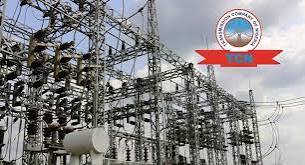
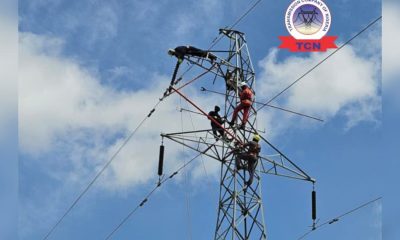
The modernisation effort has also extended to physical infrastructure through the Nigerian Electricity Grid Maintenance, Expansion and Rehabilitation Programme (NEGMERP), under which aging transmission assets are being rehabilitated and expanded.
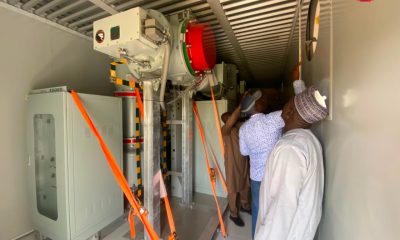
The programme includes the reconductoring of transmission lines, installation of higher-capacity transformers and construction of new substations designed to improve network reliability and increase transmission capacity.
The impact of these interventions has become increasingly evident in the performance of the national grid.
Nigeria recorded several generation milestones under the current management, including an all-time peak generation of 5,802 megawatts.
In what many stakeholders regard as one of the clearest indicators of progress, the national grid remained stable for 421 consecutive days between July 20, 2022, and September 13, 2023, without experiencing a system collapse.
Another major reform initiative is the ongoing deployment of a modern Supervisory Control and Data Acquisition/Energy Management System (SCADA/EMS), a project started by TCN and now being advanced by NISO.
The system is expected to replace obsolete infrastructure with advanced automation and communication technologies capable of supporting more sophisticated grid management and improving operational reliability.
While work continues on the large-scale SCADA/EMS deployment, the transmission operator has simultaneously implemented smaller digital solutions designed to deliver immediate improvements, creating a strategy that balances long-term modernisation with short-term operational gains.
Stakeholders believe the reforms are gradually laying the foundation for a more stable, reliable and predictable electricity transmission system, capable of supporting economic growth and meeting the country’s rising energy demands.
As digital technologies become increasingly integrated into grid operations, Nigeria’s electricity transmission network appears to be moving steadily away from the era of frequent grid failures toward a future defined by smarter infrastructure, better system visibility and enhanced operational control.