
Business and Economy
Fuel Price Jumps to ₦1,430 as Global Crude Prices Surge

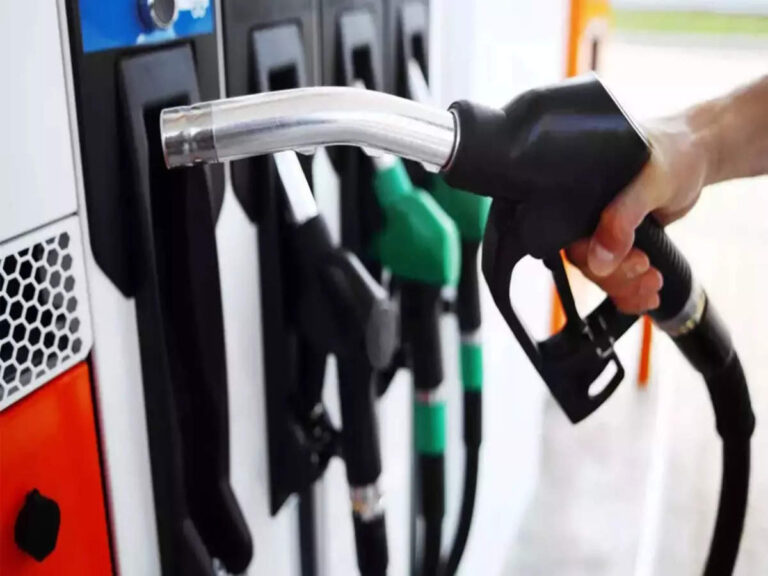
The pump price of Premium Motor Spirit (PMS), also known as petrol, rose above the usual selling price of between ₦1,265 and ₦1,350 on Sunday, reaching ₦1,430 at several filling stations across the Federal Capital Territory (FCT), Abuja.
The increase followed the latest ₦85 adjustment in Dangote Petroleum Refinery’s gantry price, which moved from ₦1,265 to ₦1,350 per litre amid a surge in global crude oil prices.
The adjustment represents a 6.7 per cent increase and takes the refinery’s wholesale price above the current petrol landing cost of ₦1,311 per litre.

Brent crude, the benchmark for Nigeria’s oil, was trading at about $107.92 per barrel before rising to $108.21 per barrel. The development could put further pressure on downstream operators and trigger additional adjustments in petrol prices across the FCT.

When a correspondent visited some filling stations in Abuja on Sunday, several outlets had already adjusted their petrol prices upward, with motorists paying more for the product.

At MRS retail outlets, the pump price increased from ₦1,350 to ₦1,395 per litre, while NIPCO retail outlets raised their price from ₦1,350 to ₦1,430 per litre.

Mobil outlets also increased their pump price from ₦1,350 to ₦1,400 per litre.
Speaking on the development, Mr Owei Lakemfa, former Secretary-General of the Organisation of African Trade Union Unity (OATUU), said Nigeria must shield consumers from the impact of fluctuations in global oil prices.
He maintained that the country should strengthen its economic planning and regulatory framework, stressing that a country like Nigeria, which produces crude oil and has a large population, should put measures in place to protect its citizens from sudden increases in the price of petroleum products.
“The ongoing geopolitical tensions involving major oil-producing and consuming countries, as well as attacks in the Middle East, are factors that can affect global oil prices and should not come as a surprise to policymakers.
“We have known that the conflict between the U.S. and Iran will affect the shipping of oil products. We know that.
“In basic economics, when you are close to the source of your products, you have advantages. If we produce oil in Nigeria, refining in Nigeria cannot be the same as importing fuel. It cannot be,” he said.
The former OATUU leader noted that importing refined petroleum products comes with additional costs, including labour, insurance, shipping and other expenses incurred in the exporting country. He therefore called for stronger planning and regulation.
He further said effective regulation and forward planning were necessary to protect consumers and prevent further economic hardship.
On his part, the National Publicity Secretary of the Independent Petroleum Marketers Association of Nigeria (IPMAN), Chinedu Ukadike, said marketers reviewed their pump prices following a series of adjustments by Dangote Refinery.
Ukadike said the frequent price changes were creating uncertainty for both marketers and consumers, as the cost of replacing products could change.