
Opinion
The Funny-Nosed Antelope That Holds Lessons for Africa

_By Sam Agogo_
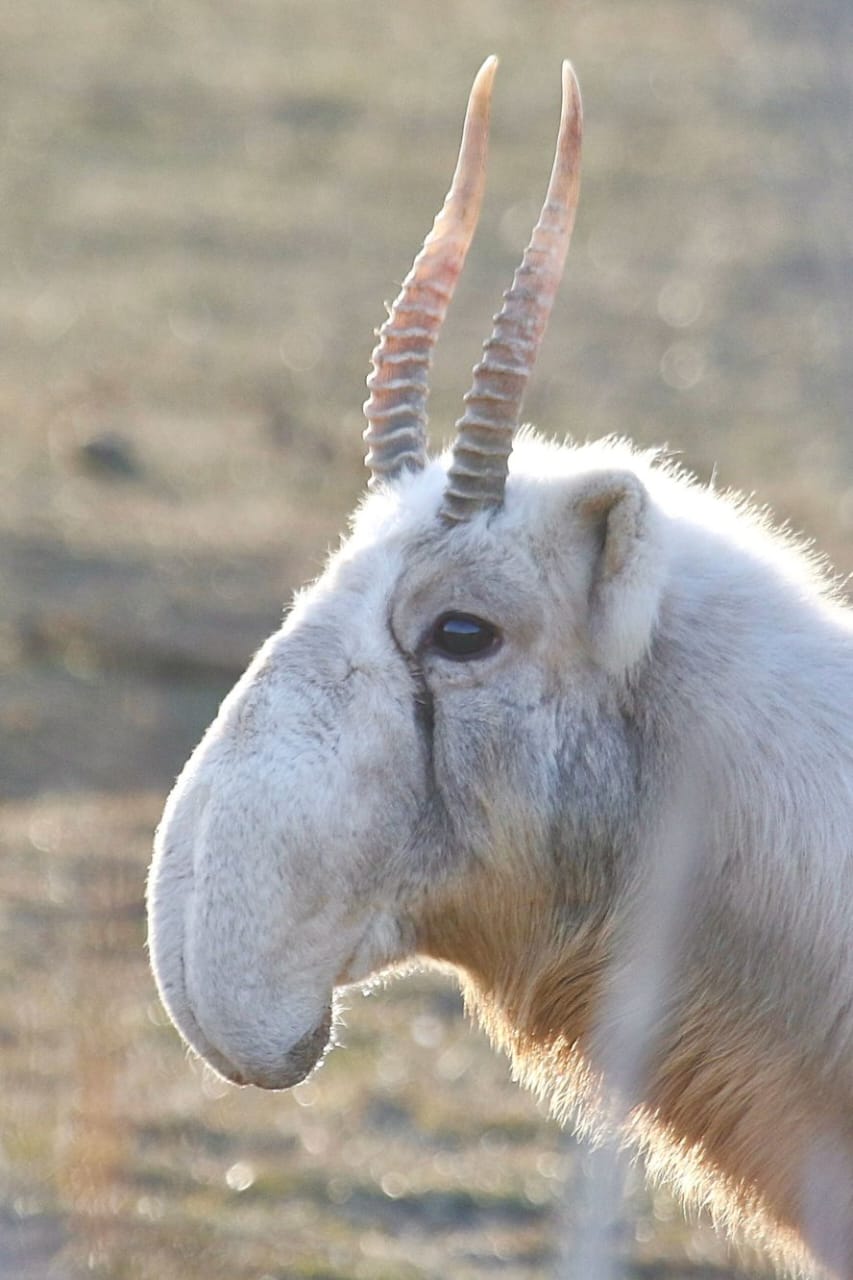
The saiga antelope (Saiga tatarica) is one of nature’s most peculiar survivors. With its bulbous, drooping nose, spindly legs, and stocky, sheep-sized body, it looks almost comical — as if stitched together from spare parts.
Yet this odd anatomy is its secret weapon.
That oversized snout warms icy air in the brutal winters of Central Asia and filters dust in the scorching summers, allowing the saiga to thrive where few large mammals could endure.For tens of thousands of years, the saiga roamed the windswept steppes of Kazakhstan, Russia, Mongolia, Uzbekistan, and Turkmenistan.

They moved in vast migratory herds, sometimes numbering in the tens of thousands, sweeping across the grasslands in tightly packed columns. Males carried ridged, translucent horns, which became highly prized in traditional medicine markets. This demand, combined with poaching, disease, and habitat loss, nearly drove the species to extinction.
By the early 2000s, Kazakhstan’s population — the largest in the world — had dwindled to fewer than 40,000 animals.
The International Union for Conservation of Nature (IUCN) listed the saiga as Critically Endangered, marking one of the fastest collapses ever recorded for a large mammal.

The fall of the Soviet Union had unleashed chaos across Central Asia, weakening law enforcement and rural economies.
Saigas were slaughtered for meat and horns, their numbers plummeting. Disease outbreaks added to the crisis, with a bacterial infection in 2015 wiping out more than 200,000 animals in Kazakhstan within weeks.
Yet what followed is now hailed as one of the great redemption stories in modern conservation. Kazakhstan imposed a nationwide hunting ban, strengthened law enforcement, and expanded protected areas. International partnerships, notably with the Saiga Conservation Alliance and Wildlife Conservation Network, provided crucial support.
By late 2023, the IUCN reclassified the saiga from Critically Endangered to Near Threatened — a rare downgrade in conservation status, where species usually slide in the opposite direction.Kazakhstan’s Ministry of Ecology now estimates the national population at around four million, with projections nearing five million after calving seasons.
Independent monitors put the figure even higher, at 4.7 million, marking an 18% increase in just one year despite harsh winters and government culling programs. Globally, saiga numbers exceed three million, with Kazakhstan’s recovery driving the surge.Ironically, success has created a new dilemma: too many saiga.
Dense herds now compete with agriculture for grazing land, forcing Kazakhstan to introduce controlled culling. In 2023 alone, nearly 200,000 animals were culled, with meat and by-products processed domestically. Horns remain tightly regulated, tagged, and stored under state supervision,
with a new digital traceability system being piloted to prevent illegal trade. Kazakhstan has even begun exporting its abundance, agreeing to transfer 1,500 saigas to China to help re-establish populations beyond their historic range.The saiga’s comeback is not just a story of survival; it is a blueprint for global conservation. Africa, home to elephants, rhinos, lions, pangolins, and countless other species, faces similar pressures: poaching, habitat loss, and climate change. The saiga’s redemption offers powerful lessons.Kazakhstan’s government treated saiga recovery as a national priority.
African nations must show the same resolve, ensuring laws are enforced and conservation is woven into national identity. Saiga conservation worked because herders were engaged. Africa’s human-wildlife conflicts can be eased by empowering communities with eco-tourism revenue, grazing rights, or direct conservation benefits. Saiga recovery was cross-border. Africa’s migratory species, like wildebeest or elephants, also cross national boundaries. Coordinated policies between countries are essential. Kazakhstan shifted from saving every saiga to managing overpopulation.
Africa too must embrace flexible strategies, balancing elephant overpopulation in Botswana with declines elsewhere. Kazakhstan’s digital horn-tracking system shows how technology can curb illegal trade. Africa can expand drones, satellite collars, and blockchain-based traceability to disrupt trafficking.
The saiga recovery took decades. Africa’s conservationists must resist quick fixes and embrace long-term strategies, knowing ecological healing is slow but possible.The saiga, once dismissed as a funny-looking relic of the Ice Age, now stands as a global teacher. Its survival shows that even the most battered populations can recover — and Africa can draw inspiration from this comeback to safeguard its own wildlife heritage.
Where once the saiga symbolized the fragility of the Eurasian steppe, today it stands as a living testament to hope. Its journey from near extinction to overabundance demonstrates that collapse is not destiny.
With protection, patience, and political commitment, Africa’s elephants, rhinos, lions, and pangolins can script their own redemption stories.The funny-nosed antelope, once a ghost of the steppe, now roars back as a beacon of resilience.
And in its unlikely face, Africa can see the possibility of its own wildlife future — one where species on the brink are given the chance to thrive again.
*For comments, reflections and further conversation, samuelagogo4one@yahoo.com or call +2348055847364.*