
Opinion
Who Benefits From Wushishi? The Hidden Story Behind the Cell Deaths

_By Sam Agogo_
Thirty-seven young men are gone, and the arithmetic of their deaths in Minna refuses to balance.
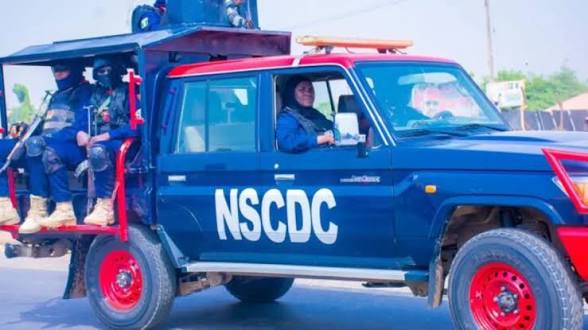
The state government insists that 67 suspected miners were arrested and locked in a single cell of the Nigeria Security and Civil Defence Corps. Survivors say more were detained than officials admit. Journalists at the hospital counted 33 bodies.

The Corps itself first said only that “scores” had died. One account puts the cell’s rated capacity at 100, another says 40 men were inside. Five figures in three days, none reconciled. A cell is arithmetic: bodies, floor space, air, and hours. Yet no authority has published the sums.The men were arrested on September 15 and 16 and found dead in the early hours of September 17.
At most, they spent two nights in custody. Whatever killed them acted quickly. The Niger State Commandant, Suberu Siyaka Aniviye, first blamed a suspected disease outbreak, naming diphtheria.
His headquarters later said the cause was unknown and awaited laboratory confirmation. But medically, an infection with an incubation period of days does not kill dozens of young men overnight in one room while guards beside them stay well. Families asked this question and got no answer. The disease theory did one convenient thing: it moved the blame from the cell to the corpses.

The capacity figure sharpens the puzzle. If a cell rated for 100 held 40 or 67, simple overcrowding is a harder explanation to sustain.
Heat, air, hazardous substances from the mining sites, and what survivors describe become the central questions. Survivors say the cell had almost no air, that water was denied, and that some men drank their own urine to stay alive. One survivor alleges a substance was sprayed into the cell after the men were locked in, and that people began to fall. That allegation must be tested, but a panel that cannot say what was in that cell’s air has learned nothing.
The cell must be sealed, measured, and photographed before it is cleaned or repainted. Its dimensions, vents, water supply, and daily headcount belong in the public record.Hospital staff say they were not told in advance and refused to admit the corpses to the mortuary.
The bodies arrived from the Corps’ command in two ambulances. Several were later buried quickly under Islamic rites. Grief and faith demand haste, and no family should be blamed for it. But in a mass custodial death, the bodies are the evidence.
The public is entitled to know how many of the 37 were autopsied before burial, who took the samples, and who kept the chain of custody.The suspects were picked up at a mining site inside the Lt. Gen. Mohammed Inuwa Wushishi Housing Estate and in Lukoto village.
Gold beneath a housing estate signals regulatory failure. Who allocated plots, issued titles, and ignored the digging? The men in the cell were the least powerful people in that chain and they paid the highest price. Some of the dead were reportedly displaced people from Shiroro, where banditry has emptied whole villages, and the governor himself says many victims were children between 14 and 18.
That is the full circle. Bandits drive a family off its farm, the son picks up a shovel in Minna, and the cell kills him. Children are not meant to be held in adult cells at all, and no one has said who, if anyone, separated them.A leading rights lawyer and former head of the National Human Rights Commission has criticised the state’s habit of labelling the dead “illegal miners” before any coroner’s inquiry, and he is right.
The presumption of innocence does not lapse at death. Mining without a licence is an offence for a court to try, and most of these men had been charged with nothing. The same lawyer alleges that families were told to pay ₦500,000 each to secure their relatives’ release.
That is unproven, and it must be investigated. If true, this detention had a price tag, and the families’ daily visits with food take on a darker meaning.The Corps operates in dangerous terrain. Earlier this year an NSCDC officer was killed and an operational van burned by attackers at a mining site in Niger State.
Pits themselves collapse, killing miners. The Corps has a mandate to protect national assets. But danger in the field is no excuse for locking dozens in a room without due process.
Only an independent inquiry can answer the questions that remain. Who authorised the raid? Why were suspects held at a command instead of remanded by a court? Who was the duty officer that night? When did the first man fall, and what did the guards do? Survivors say they called out and were ignored. Log books, radio records, and any CCTV footage must be secured today.
There is also talk in Minna that powerful interests covet the Wushishi ground. None of it is proved, and none of it should be repeated as fact, but an inquiry that refuses to ask who benefits from clearing a gold-bearing site has not done its work.The experience abroad is instructive.
In South Africa’s Stilfontein episode, authorities cut off supplies to illegal miners underground. Some 246 came out alive and 78 bodies were recovered, and a national reckoning followed. When the state controls the space, the state owns the deaths. Ghana, for all its troubles, offers small-scale miners a licensing route, and confiscates equipment and prosecutes in court.
Neither country’s practice includes packing dozens of suspects into one room.Nigeria’s own laws already say what should happen. The Constitution guarantees life and dignity and requires that an arrested person be taken before a court within a day or two.
The Anti-Torture Act criminalises cruel and degrading treatment by public officials. If the evidence shows that officers caused or ignored these deaths, they must be charged, because suspension is only where accountability starts. The families deserve compensation without a decade of litigation. The protesters shot in Minna deserve their own inquiry.
The panel should include the National Human Rights Commission, the Bar, the medical association, disease-control experts, civil society, and the families themselves, because the Corps cannot be the judge of its own case. And the young men who still dig in Wushishi should be offered a lawful way to earn a living.In the midst of grief, three angels hover over this tragedy.
The Angel of Justice demands that truth be uncovered, that records be opened, and that accountability be enforced. The Angel of Memory reminds us that these thirty-seven lives must not be reduced to statistics, that their names and faces matter, and that their families deserve dignity.
The Angel of Reform urges Nigeria to confront its failures in regulation, policing, and human rights, and to build systems that protect rather than destroy. These angels are not metaphors alone; they are imperatives. Justice, memory, and reform must guide the inquiry, the compensation, and the future of mining regulation in Niger State.Thirty-seven families are waiting for a number they can trust and a cause they can bury a second time. A country that cannot produce either for the men it locked up has not yet answered for them.
For comments, reflections and further conversation
Email: samuelagogo4one@yahoo.com
Phone: 08055847364