Business and Economy
China, Nigerian Media Leaders Strengthen Dialogue on One-China Principle

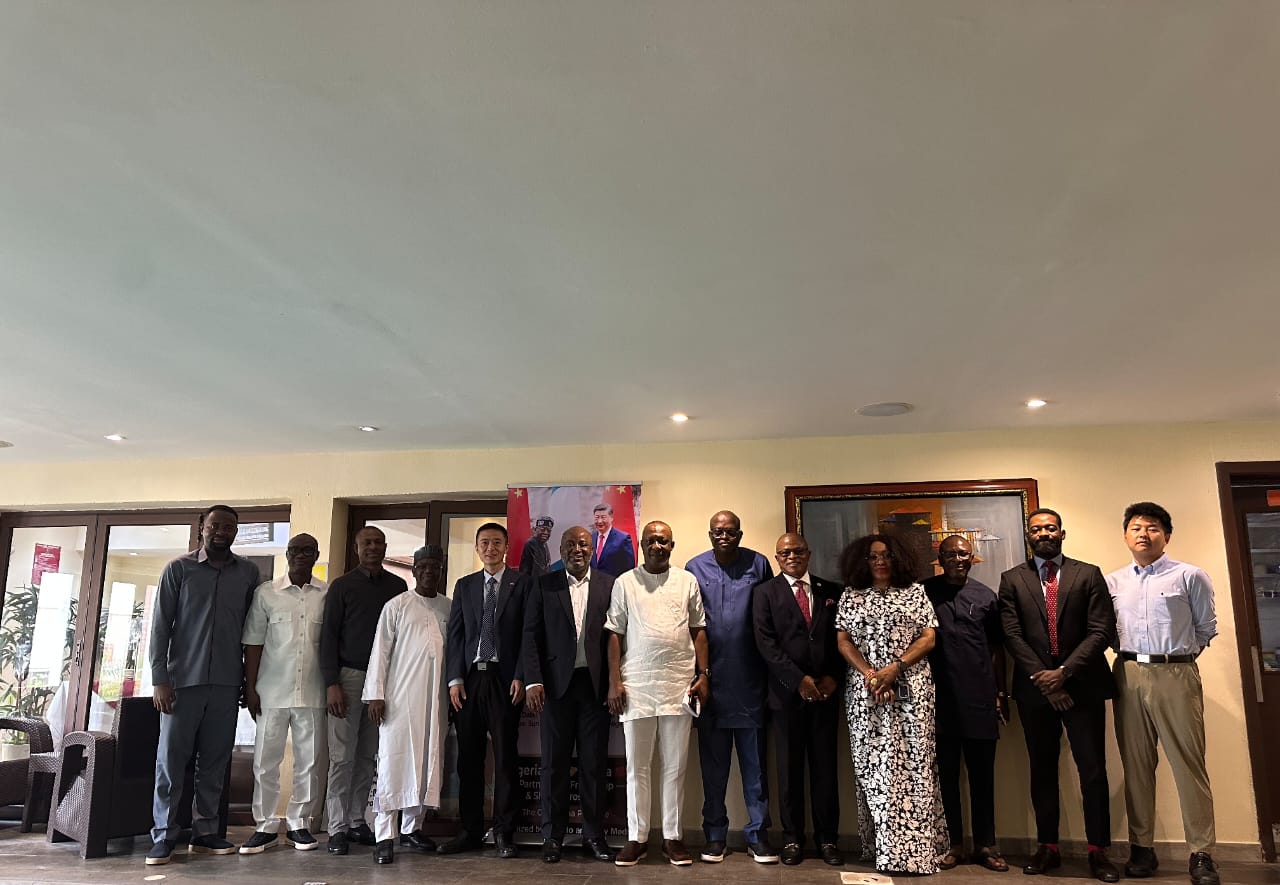
LAGOS — Senior Nigerian media executives and leading stakeholders in the media industry have engaged representatives of the Chinese Embassy in Nigeria and a former Nigerian diplomat in a high-level interactive session focused on the One-China Principle, Nigeria-China relations, and opportunities for deeper economic, cultural and media cooperation between both countries.
The interactive session, held in Lagos on Thursday, October 8, 2026, brought together managing directors and senior executives of major Nigerian media organisations, representatives of the Chinese Embassy, and Ambassador Anderson Madubike, a career diplomat and former Nigerian High Commissioner to Australia, former Consul General of Nigeria in Shanghai, China, and former Chargé d’Affaires to South Africa.
The engagement, convened by Hon. Peter Ogbonna Eze, representative of Buffalo and Bay Media, provided an open platform for participants to examine the historical, diplomatic and economic dimensions of China-Nigeria relations and, importantly, the role of the media in strengthening mutual understanding between the peoples of both countries.

In his opening remarks, Eze described Nigeria-China relations as a partnership that has expanded considerably beyond traditional government-to-government engagement to encompass infrastructure, trade, education, technology, agriculture, investment and people-to-people exchanges.
He stressed that relationships of such strategic importance require informed public discourse, noting that the media has a critical responsibility to report on the relationship with accuracy, balance, context and a clear understanding of the opportunities available to both countries.
“The media does not merely report events. It shapes how societies understand countries, people, policies and opportunities,” Eze said, urging Nigerian media leaders to use their platforms to promote a more informed, balanced and forward-looking conversation on Nigeria-China relations.
China Explains One-China Principle
Speaking on “Understanding the One-China Principle,” Mr. Xu Fan, Director of Bilateral Relations and Commerce of the Chinese Consulate General in Lagos, presented China’s historical and diplomatic position on the Taiwan question.
Xu explained that China’s position is founded on what it described as historical records, international agreements and the diplomatic framework established following the Second World War. He also referenced United Nations General Assembly Resolution 2758 of 1971 and Nigeria’s diplomatic recognition of the People’s Republic of China.
He emphasised that Nigeria formally recognises the People’s Republic of China as the sole legitimate government representing China and reaffirmed that Beijing regards the One-China Principle as the political foundation of its diplomatic relations with Nigeria.
According to Xu, Nigeria reaffirmed this position during President Bola Ahmed Tinubu’s state visit to China in September 2024, when both countries reiterated their commitment to the One-China Principle.
He appealed to Nigerian media organisations to distinguish between reporting on Taiwan and descriptions that, from China’s perspective, amount to recognising Taiwan as a separate country or referring to a “Taiwan ambassador to Nigeria.”
Xu clarified that China does not object to Nigerian media reporting on Taiwan but specifically objects to descriptions that treat Taiwan as a sovereign country or refer to a Taiwanese ambassador to Nigeria.
The clarification generated a robust exchange with Nigerian media executives, who emphasised the importance of preserving editorial freedom.
The discussion, however, ultimately underscored the importance of continued dialogue and better mutual understanding between Chinese diplomatic institutions and Nigerian media organisations.
Ambassador Madubike: Media Can Keep Diplomatic Doors Open
In one of the major interventions at the session, Ambassador Anderson Madubike emphasised the strategic role of the media in sustaining Nigeria’s relationship with China.
Drawing from more than a decade of diplomatic experience, including his service in Shanghai, Canberra, Abuja and South Africa, Madubike described Nigeria-China relations as “robust,” pointing to the extensive diplomatic, commercial and infrastructure ties between both countries.
He noted that Nigeria’s diplomatic representation in China, including its embassy in Beijing and consulates in Shanghai, Guangzhou and Hong Kong, demonstrates the depth and importance of the bilateral relationship.
According to him, diplomacy opens doors, but the media helps to keep those doors open.
He argued that treaties and government agreements alone cannot sustain a long-term relationship between peoples, stressing that public perception is shaped by the stories, images and information citizens receive through the media.
“Investment follows information, and information travels through the media,” he said, highlighting the media’s role in providing potential investors with practical information about markets, regulations, infrastructure, incentives and business opportunities.
Madubike also urged Nigerian media organisations to give greater attention to the human dimension of the relationship, including the experiences of Nigerian students, entrepreneurs and traders in China, as well as Chinese investors, engineers and entrepreneurs operating in Nigeria.
He described such people-to-people stories as powerful tools for strengthening trust between both societies.
Trade Imbalance and Chinese Businesses in Nigeria
The interactive session also addressed concerns surrounding the trade imbalance between Nigeria and China and the activities of Chinese businesses in Nigerian markets.
Participants raised questions about Nigeria’s import dependence on China, the competitiveness of Nigerian traders and concerns that some Chinese businesses engage in retail activities that Nigerian traders believe put them at a disadvantage.
Responding to the concerns, Xu Fan acknowledged that the issues deserved attention but argued that the solution should focus on establishing clearer regulatory boundaries between wholesale and retail activities rather than excluding Chinese businesses from Nigeria.
He said the Chinese Embassy had engaged Chinese traders, market authorities and other stakeholders to seek practical solutions.
According to Xu, the embassy’s position is that the objective should be to establish clear rules defining which businesses can engage in wholesale and retail activities under Nigerian law.
He also proposed a broader shift from a predominantly trade-based relationship towards increased investment and local manufacturing.
Rather than simply exporting finished products to Nigeria, he said Chinese companies could increasingly establish factories and production facilities in the country, thereby creating jobs, transferring skills and contributing directly to the Nigerian economy.
He cited this transition from trade to investment as one potential pathway towards making bilateral economic relations more mutually beneficial.
China-Nigeria Trade Reaches New Milestones
Xu also highlighted the growth of bilateral economic relations, stating that China has become Nigeria’s largest market for engineering contractors, its second-largest export market and China’s third-largest trading partner in Africa.
He disclosed that bilateral trade reached approximately US$28 billion in 2025, representing significant year-on-year growth, while Nigerian exports to China and Chinese direct investment in Nigeria had also increased substantially.
He further highlighted China’s decision to implement zero-tariff treatment for 53 African countries with diplomatic relations with China, including Nigeria. He described the policy as an opportunity for Nigerian agricultural products, such as sesame, cashew nuts and cocoa, to gain greater access to the Chinese market, subject to applicable rules of origin, inspection and quarantine requirements.
The development, he suggested, provides an opportunity for Nigerian businesses to improve their quality standards, strengthen branding and take greater advantage of the Chinese market.
China Responds to Concerns Over Illegal Mining
The issue of illegal mining by some Chinese nationals in Nigeria was also raised during the engagement.
Xu drew a clear distinction between the activities of law-abiding Chinese businesses and illegal activities, stressing that anything illegal under Nigerian law is also unacceptable to the Chinese government and diplomatic authorities.
He said the Chinese Embassy and relevant Chinese authorities were cooperating with Nigerian institutions by providing information and supporting efforts to identify and deal with Chinese nationals involved in illegal mining.
He stressed that the Chinese government does not protect illegal miners and would cooperate with Nigerian authorities where such individuals are found to have violated Nigerian laws.
Moving From Infrastructure to Investment and Industrialisation
Participants also challenged China to deepen its investment footprint in Nigeria, particularly in manufacturing, industrial development, technology transfer and value addition.
The discussion raised questions about the Belt and Road Initiative and whether Nigeria-China cooperation could move further towards investments that create productive capacity within Nigeria rather than focusing predominantly on infrastructure and the movement of goods.
The Chinese side responded by pointing to investment and industrial cooperation as areas with considerable potential for the next phase of the bilateral relationship.
The discussion reflected a growing desire among Nigerian stakeholders for the relationship to evolve from one centred largely on trade and infrastructure into one that increasingly promotes local production, employment, technology transfer, skills development and value addition.
Media Independence and Mutual Understanding
One of the most candid aspects of the engagement was the discussion surrounding media freedom and China’s expectations concerning coverage of Taiwan.
Several Nigerian media executives emphasised that Nigerian journalism operates in an environment where editorial independence is strongly valued. They maintained that disagreements over reporting should be addressed through dialogue, clarification and the right of reply rather than attempts to suppress stories.
Chinese representatives, in turn, emphasised that their intention was not to treat the media as an adversary but as a partner in promoting mutual understanding.
The exchange provided an important opportunity for both sides to better understand the differences between diplomatic sensitivities and the operating principles of the Nigerian media.
China Offers Expanded Media Cooperation
In his concluding remarks, Xu Fan struck a conciliatory tone, describing Nigerian media organisations as “partners and friends, not enemies.”
He said the Chinese Embassy and Chinese consulates were prepared to strengthen cooperation with Nigerian media through professional exchanges, media delegations, training programmes, seminars and other forms of institutional collaboration.
According to him, Chinese authorities intend to continue facilitating opportunities for Nigerian journalists and media professionals to visit different parts of China, experience its development firsthand and gain a deeper understanding of Chinese society, culture, economy and development.
He also disclosed that the Chinese government provides opportunities for media professionals to participate in seminars and training programmes in China.
Xu invited the Nigerian media organisations represented at the engagement to communicate their areas of interest and propose practical projects that could be developed jointly, including media programmes, publications and professional exchange initiatives.
A New Opportunity for Deeper China-Nigeria Understanding
The Lagos engagement ultimately demonstrated that while Nigeria and China may occasionally have different perspectives on sensitive issues, there remains considerable room for constructive dialogue and mutually beneficial cooperation.
For Nigeria, the relationship with China presents opportunities across trade, infrastructure, manufacturing, agriculture, education, technology, investment and cultural exchange.
For China, Nigeria remains one of Africa’s most important markets and strategic partners, with a large population, substantial economic potential and a growing need for infrastructure, industrial investment and technological development.
The challenge, and opportunity, is therefore to ensure that the relationship continues to evolve in a manner that delivers greater value to both sides.
The media, participants agreed, has a critical role to play in that process.
As Ambassador Madubike aptly observed, “Diplomacy is often described as people who open doors. I would add that it is the media that keeps those doors open.”
The interactive session therefore ended not with the elimination of differences but with a stronger commitment to dialogue, greater mutual understanding and a shared recognition that sustained engagement remains essential to building an even stronger China-Nigeria partnership.
For the media, the message was clear: understanding the relationship is the first step towards reporting it more effectively, and reporting it responsibly can help create the public confidence required for deeper cooperation between Nigeria and China.