
Opinion
Bishops Challenge Tinubu, Onaiyekan Reveals Tense Meeting

By Sam Agogo
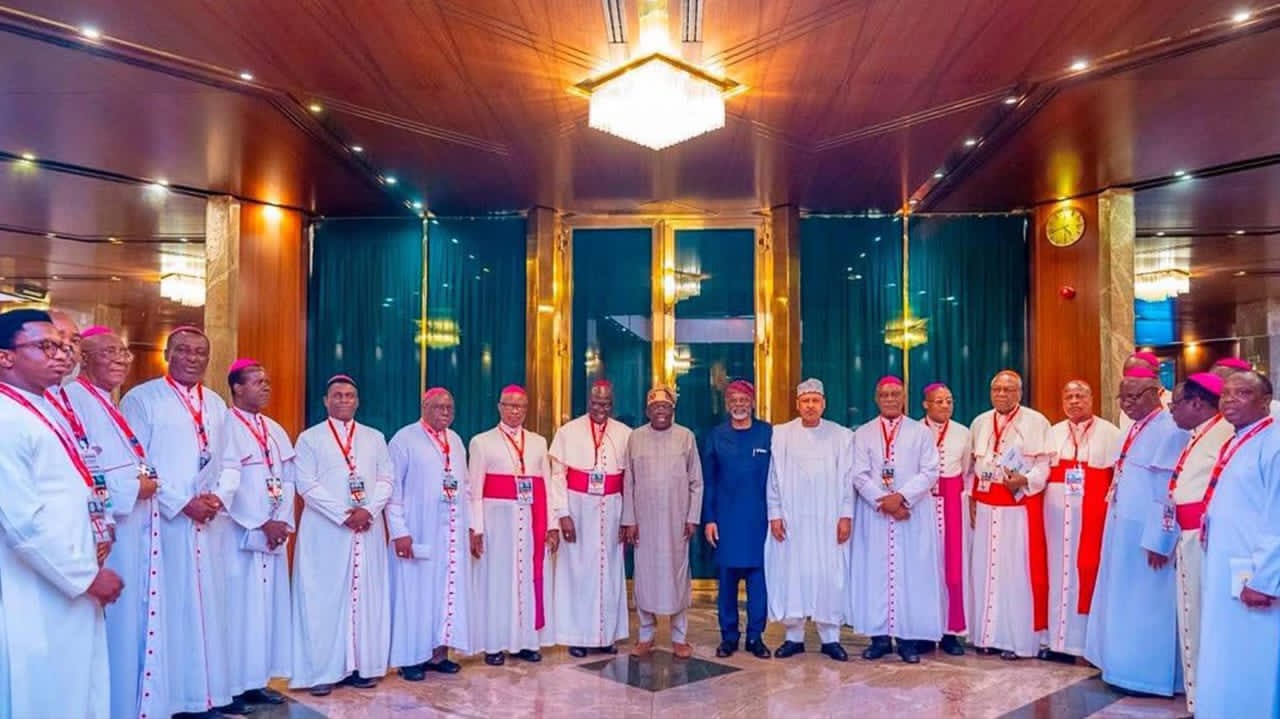
A courtesy visit to the Presidency is usually a routine event marked by formalities, pleasantries and photographs. However, the recent visit by the leadership of the Catholic Bishops’ Conference of Nigeria (CBCN), led by Archbishop Matthew Man-Oso Ndagoso of Kaduna, to President Bola Ahmed Tinubu at the State House, Abuja, turned into a significant national conversation after the bishops raised serious concerns about the country’s condition.
Rather than offering commendation, the nineteen-member delegation presented what they described as a documented assessment of Nigeria’s challenges, including worsening insecurity affecting schools, churches, farms and highways, economic hardship despite ongoing reforms, deteriorating infrastructure, concerns over the shrinking political space ahead of the 2027 elections, and lingering anxieties among Christians regarding the protection of their constitutional rights. Archbishop Ndagoso described the meeting as an engagement between “partners in building a just, peaceful and prosperous Nigeria,” although the President’s response suggested a different perspective.
President Tinubu defended his administration’s record, maintaining that the Independent National Electoral Commission (INEC) remains impartial, the economy is on a positive path, and security agencies are being repositioned to achieve decisive victories against terrorism, banditry and kidnapping. His response reflected the government’s confidence in its policies rather than agreement with the concerns presented by the bishops.
The outcome of the meeting became public after Cardinal John Onaiyekan, Archbishop Emeritus of Abuja, disclosed in a televised interview that President Tinubu rejected the bishops’ concerns outright. According to the Cardinal, neither the President nor his aides appeared pleased with the presentation. Declaring that “Nigeria is bleeding,” Onaiyekan said the bishops’ assessment differed significantly from the reports regularly presented to the President by his close advisers.
The episode has attracted attention because it highlighted the contrasting views between the Presidency and one of Nigeria’s most influential religious bodies. While the Presidency later criticised Cardinal Onaiyekan for allegedly breaching the confidentiality of the meeting and exceeding clerical boundaries, it also maintained that the President’s position is informed by intelligence and security briefings not available to the public. Critics, however, argue that dismissing the messenger instead of addressing the substance of the concerns reflects a familiar pattern in Nigerian governance.
The bishops’ position is not new. At its First Plenary Meeting in February 2026 in Abuja, themed “Leadership for the Common Good,” the CBCN identified poor leadership and a flawed political culture as the root causes of Nigeria’s insecurity, economic decline, poverty, corruption, unemployment and weakening public institutions. The Conference argued that political office has increasingly become a means of personal enrichment rather than public service.
The Conference had expressed similar concerns in previous years. During its 2025 plenary in Ikot Ekpene, the bishops blamed corruption and poor governance for the country’s challenges and renewed calls for electoral reforms, including transparent electronic transmission of election results and impartial appointments into INEC. Earlier that year, then CBCN President Archbishop Lucius Ugorji stressed the Church’s responsibility to consistently challenge bad governance and demand accountability. Likewise, the 2021 communiqué issued in Enugu linked rising agitations for self-determination to injustice, inequity and poor governance.
Taken together, these communiqués demonstrate that the CBCN has maintained a consistent institutional position across different administrations and leaderships, insisting that Nigeria’s challenges are rooted largely in the quality of governance and leadership.
Cardinal Onaiyekan has also consistently voiced similar views throughout his decades of public engagement. He has repeatedly described Nigeria’s democracy as regressing, criticised politics driven by personal enrichment, rejected claims that the country has not experienced poor governance, and warned about the “silent violence of poverty” affecting millions of Nigerians. He has also cautioned that continued neglect of unemployed youths could fuel serious unrest, while attributing Nigeria’s unrealised potential to years of corruption and mismanagement.
The recent meeting also stood out because it departed from the usual pattern of visits to the State House, where delegations often offer praise and reassurance to those in power. Instead, the Catholic bishops chose to present what they considered an honest assessment of the nation’s realities, regardless of the possible reaction.
The article argues that this consistency in speaking truth to power should serve as an example for other religious leaders across Nigeria. It notes that many clerics have become more closely associated with political leaders than with holding them accountable, while the Catholic hierarchy has continued to prioritise public responsibility despite political criticism.
It concludes that Nigeria’s challenges will not be resolved through denial or optimistic narratives alone. Echoing Cardinal Onaiyekan’s assertion that “Nigeria is bleeding,” the article maintains that meaningful progress will depend on more religious, civic and institutional voices consistently presenting an honest account of the nation’s condition and demanding accountable leadership.