
International
China-Africa All-Media Seminar Charts New Path for Media Integration and Technological Exchange

By Iyojo Ameh
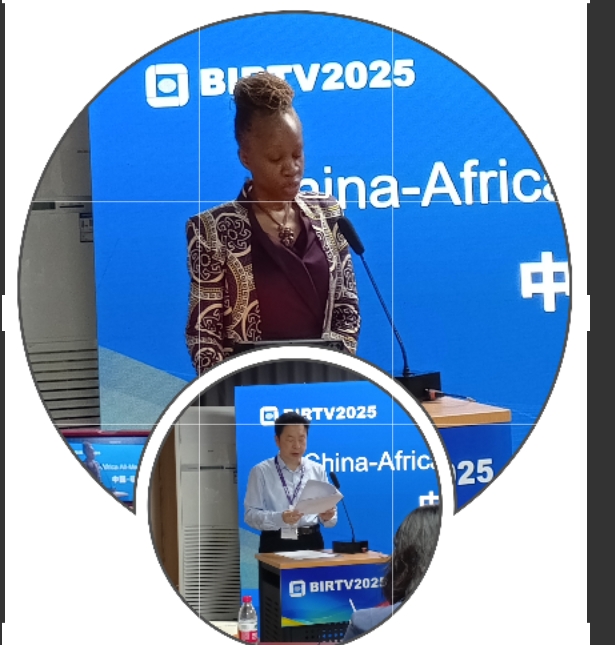
The China-Africa All-Media Capacity Enhancement Seminar held in Beijing brought together leading voices from African and Chinese media, government, and technology sectors to chart a new path for integrated media collaboration, digital innovation, and mutual capacity development.
Organized by the China Broadcasting International Economic and Technical Cooperation Company Limited (CBIC) under the guidance of the National Radio and Television Administration of China (NRTA), the seminar provided a robust platform for examining the evolving media landscape, particularly in the context of the rapidly expanding African digital ecosystem which now boasts over 600 million internet users.
In his welcome address, Mr. He Dongbo, Deputy General Manager of CBIC, emphasized the strategic importance of the seminar in light of China’s growing media cooperation with Africa. He referenced President Xi Jinping’s “10 Cooperation Initiatives” announced at the 2024 Forum on China-Africa Cooperation (FOCAC), which includes the China-Africa Radio, Television, and Audio-Web Innovation Cooperation Plan.
“We recognize the responsibility entrusted to us,” Dongbo said, “to help shape an all-media framework that supports the mutual aspirations of both continents.”
He outlined CBIC’s contributions to global media development, including building over 1,000 international broadcasting centers and training more than 3,100 media professionals from over 130 countries—1,300 of whom are African.
Addressing the seminar, Mrs. Leslie Richer, Director of Information and Communication at the African Union Commission, described the event as a vital step in reinforcing the long-standing China-Africa partnership.
“This seminar bridges two continents through media and technology,” Richer said. “We are not just discussing tools, but forging partnerships that reflect shared values and mutual respect.”
Richer pointed out Africa’s need for technological leapfrogging in media through 5G connectivity, AI-driven production, and cloud-based broadcasting. She praised China’s support for African media, particularly the state-of-the-art TV and radio studio built for the African Union Headquarters, and called for deeper collaboration in areas like cultural preservation through AI.
“Artificial Intelligence can help Africa preserve and project its unique heritage,” she added, citing Chinese successes in digitizing cultural artefacts like the Dunhuang Mogao Caves.
She proposed the creation of joint AI research centers and media academies to empower Africa’s youth in digital storytelling, ethical journalism, and multimedia innovation.
In a closing address, Mr. Hu Pingchao echoed the call for deepened China-Africa media engagement.
“Media exchanges are not just about communication,” he said. “They are a tool for enhancing mutual trust, promoting peace, and tackling global challenges like poverty and climate change.”
He detailed how Chinese and African media have collaborated on initiatives like the BRI in My Eyes column, featuring African journalists’ perspectives on the Belt and Road Initiative, and the Belt and Road Economic Information Partnership (BREIP), which facilitates information sharing among media institutions from 43 countries, including eight in Africa.
The seminar also proposed several key areas for immediate cooperation which includes: sharing Chinese technical expertise and operational models with African media outlets, promoting joint content creation, particularly on development and cultural themes, establishing innovation hubs, AI-driven media labs, and joint education platforms and enhancing regulatory frameworks that support ethical AI use in media.
Participants were also invited to attend the upcoming Beijing International Radio, TV, and Film Exhibition (BIRTV), described as a hub for the latest global technologies and collaborative opportunities.
As the seminar concluded, the resounding consensus was clear: China-Africa media collaboration is not only about exchanging tools and training, but also about telling stories that reflect the shared aspirations of two continents bound by history, development, and a future shaped through innovation and dialogue.