General News
China’s Zero-Tariff Policy Boosts Nigeria’s Exports, Trade Hits $18bn in Six Months — Envoy

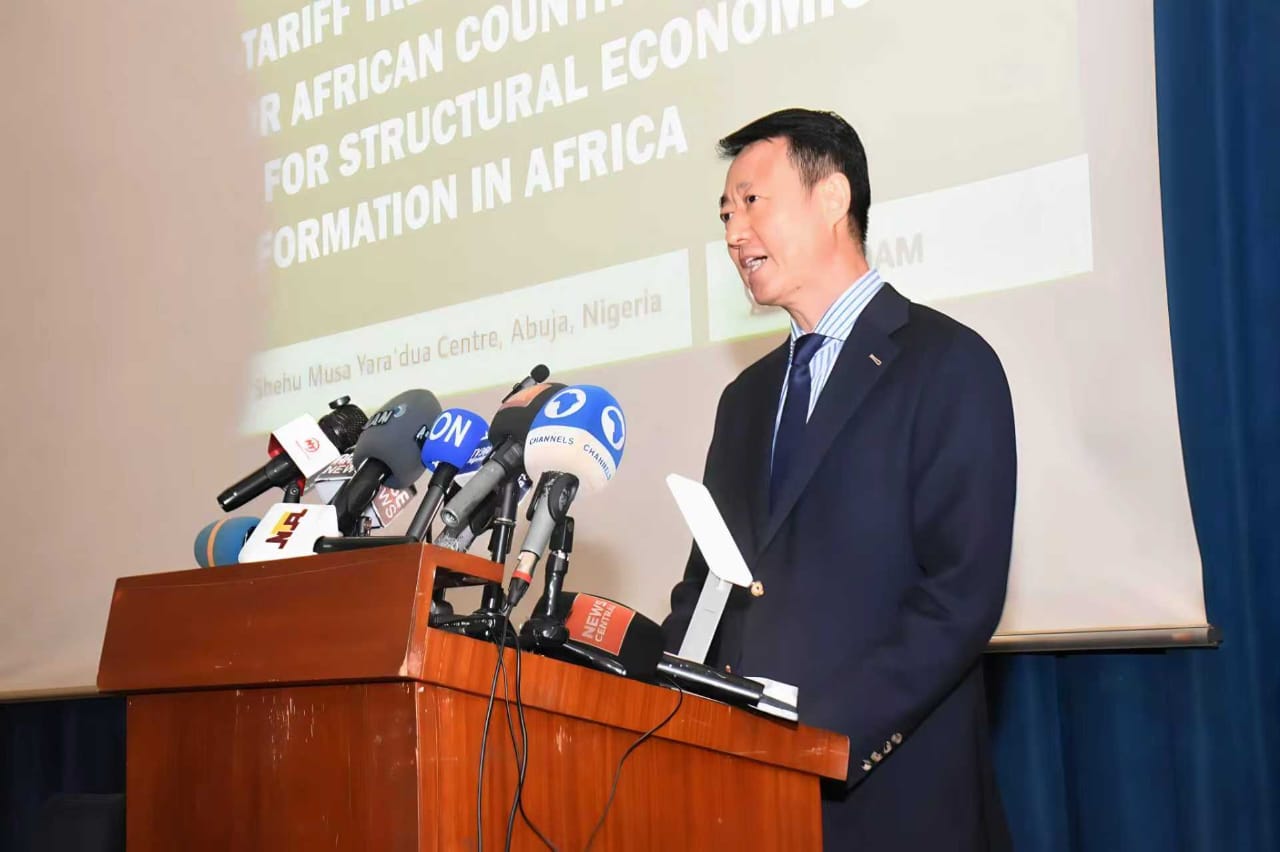
China’s zero-tariff policy for African countries has begun delivering significant gains for Nigeria, with bilateral trade between both countries rising to $18 billion in the first half of 2026, Chinese Ambassador to Nigeria, Yu Dunhai, has said.
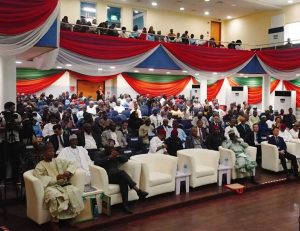
Yu disclosed this on Friday at a seminar on “China’s Zero-Tariff Measures and Africa’s Economic Structural Transformation” held at the
Yar’Adua Conference Centre in Abuja.
He said Chinese imports from Nigeria surged by 80 per cent to $2.3 billion during the period, while monthly growth exceeded 40 per cent in both May and June.

According to the envoy, the development followed China’s decision, announced by President Xi Jinping on February 14, to grant zero-tariff treatment, beginning May 1, 2026, to all 53 African countries that have diplomatic relations with China.
He described the measure as a strategic milestone in China-Africa relations and an opportunity to accelerate Africa’s economic transformation.
Yu said the broader China-Africa trade relationship had also reached a historic high of $207 billion in the first half of 2026, while Chinese imports from Africa between May and June alone stood at $29 billion, representing a 24 per cent year-on-year increase.

He added that the zero-tariff arrangement had contributed to an estimated six per cent increase in overall African exports to China.
The ambassador said Nigeria, as Africa’s most populous nation and one of the continent’s major economies, was strategically positioned to become one of the biggest beneficiaries of the policy.
He identified three immediate benefits for Nigeria, including reduced trading costs, increased trade volumes and support for industrial transformation.
According to him, tariff reductions of between three and 10 per cent have already generated substantial savings for Nigerian exporters.
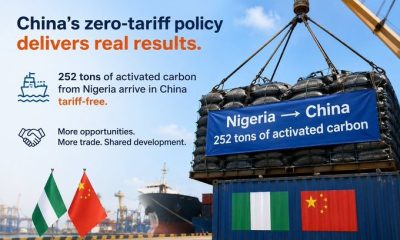
He cited sesame exports as an example, saying every 100 tonnes exported to China now saves about $11,000 in costs. Nigeria’s annual export of 7,000 tonnes of cattle bone granules, he said, saves nearly $450,000, while a single shipment of 23,000 tonnes of Nigerian liquefied propane generated about $300,000 in tax savings on the first day of the policy.
Yu said the policy was also helping Nigerian businesses expand their presence in the Chinese market, particularly through exports of specialised products.
At the same time, he noted that Chinese exports of solar equipment and power infrastructure were supporting Nigeria’s efforts to address energy challenges and strengthen its industrial base.
He said the expanding trade relationship was beginning to stimulate other sectors, including warehousing, logistics and regional transportation, with the potential to create more jobs and strengthen the Nigerian economy.
China seeks formal trade framework with Nigeria
The Chinese envoy, however, said Nigeria and other African countries needed to move beyond temporary tariff preferences by establishing stronger institutional frameworks for long-term economic cooperation.
He said a formal Agreement on Economic Partnership for Shared Development with China would provide the long-term framework required to sustain the benefits of the zero-tariff policy.
Yu disclosed that 38 African countries had already signed framework agreements with China to advance early-harvest negotiations, adding that Beijing was looking forward to finalising similar arrangements with other partners, including Nigeria.
He also urged Nigeria to focus on four priorities to maximise the opportunities presented by the policy.
These, he said, include improving product quality and supply-chain stability, expanding local processing and industrial differentiation, integrating trade with long-term investment and strengthening institutional cooperation.
He stressed that Nigerian exporters would need to meet Chinese market standards and guarantee reliable supply volumes if they were to secure sustainable market share.
China, he added, was prepared to provide technical support to help Nigerian producers improve standardisation and competitiveness.
Yu further proposed the establishment of joint industrial demonstration parks with Nigerian partners, where Chinese equipment, technology and training could be deployed to support local processing and value addition.
He said such cooperation would enable Nigeria to process more of its raw materials domestically, create jobs and move away from dependence on exports of unprocessed commodities.
The ambassador also encouraged Nigerian small and medium-sized enterprises to take advantage of major Chinese trade platforms, including the China International Import Expo, Canton Fair and China-Africa Economic and Trade Expo, to connect directly with Chinese buyers.
He assured that the Chinese Embassy in Nigeria would support implementation of the zero-tariff policy and facilitate greater access for quality Nigerian products to the Chinese market.
In return, he said China would continue to provide technology, equipment and expertise to support Nigeria’s industrial development.
Yu noted that 2026 marks the 70th anniversary of China-Africa diplomatic relations and the 55th anniversary of China-Nigeria relations, expressing optimism that the zero-tariff policy would take bilateral economic cooperation to a new level.