
General News
CIRDDOC raises alarm over increasing SGBV cases in Benue, linking the crisis to teenage pregnancies, child trafficking, and school dropout among girls.

From Dooshima Terkura, Makurdi
A Non-Governmental Organization (NGO), Civil Resource Development and Documentation Centre (CIRDDOC), has called for stronger collaboration with the Benue State Government to reduce cases of Sexual and Gender-Based Violence (SGBV) to the barest minimum.
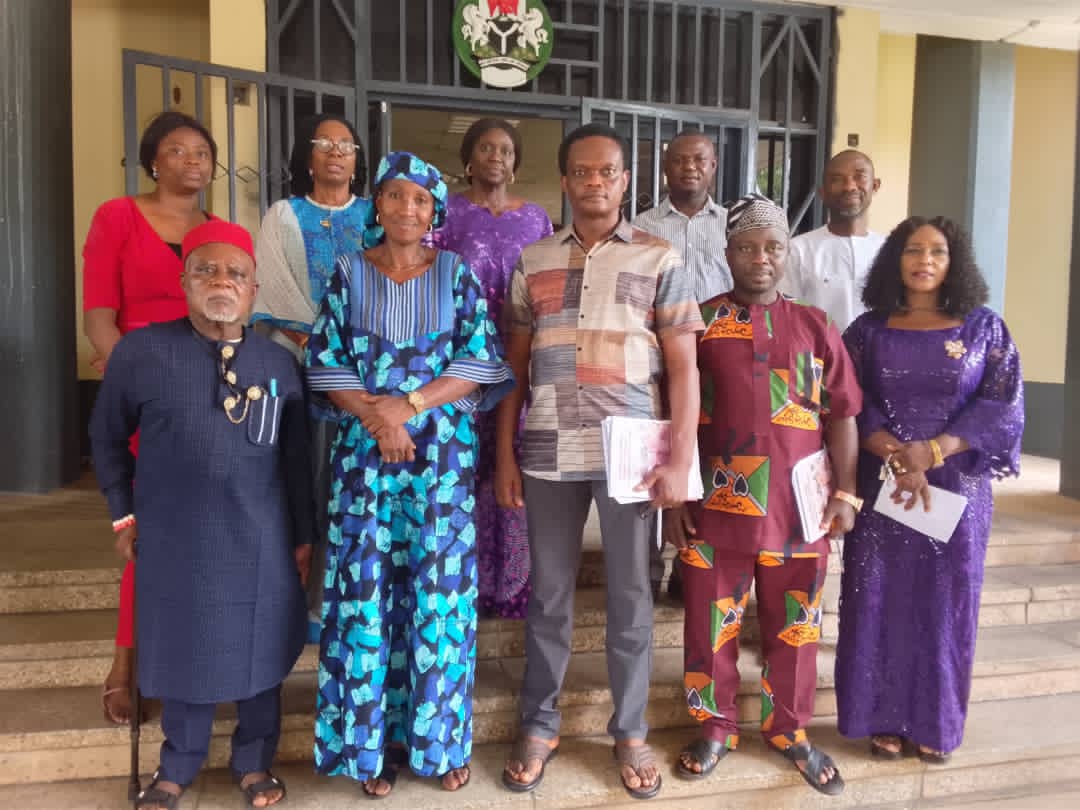
CIRDDOC Project Manager, Mr. Paschal Anozie, made the call when he led a team from the organisation on an advocacy visit to the Benue State Ministry of Women Affairs and Social Welfare in Makurdi.
According to him, a baseline assessment on conflict-related Sexual and Gender-Based Violence (SGBV) in Benue State revealed a disturbing increase in cases, leading to the withdrawal of female pupils and students from school due to teenage pregnancies, increased commercial sex activities, child trafficking, and heightened risk of HIV/AIDS.
The assessment, commissioned by CIRDDOC, forms part of a broader intervention project being implemented in the state in collaboration with the Justice and Rights Initiative (JRI).
The initiative, funded by the Ford Foundation, is currently being executed in both Benue and Imo States to address the growing menace of SGBV, particularly in conflict-affected communities.
Speaking during the advocacy visit to the Benue State Ministry of Women Affairs and Social Welfare in Makurdi, Anozie disclosed that the project is focused on preventing SGBV in crisis-prone areas.
He noted that the organisation had already conducted a baseline survey to better understand the scope of the problem and develop targeted intervention strategies.
Anozie explained that three pilot local government areas had been selected for the project in Benue State, adding that the visit to the ministry was aimed at fostering collaboration and charting a way forward. He emphasized the importance of partnership with government institutions in addressing gender-based violence.
He said, “As partners in progress, our goal is to reach a point where sexual and gender-based violence is significantly reduced, if not eliminated, in our society.”
The team also presented an advocacy brief to the Commissioner for Women Affairs and Social Welfare through the Secretary of Committee of Practice, Mr. Joseph Kwaghdega, urging stronger government commitment to implementing policies that prevent SGBV and protect vulnerable populations.
The project, titled “Strengthening Capacity and Oversight on the Use of Human Rights Principles in the Prevention of Conflict-Related Sexual and Gender-Based Violence,” is being implemented in partnership with Community and Youth Development Initiatives (CYDI) in Imo State.
It aims to promote human rights, gender equality, access to justice, and democratic values, while also reducing poverty and injustice.
According to the Benue State Development Plan (2025–2034), the government has outlined strategies to combat gender-based violence, including improving safety and security for women and girls, increasing support for survivors, and reducing the stigma associated with reporting such cases.
The plan projects a reduction in GBV cases from a baseline of 7,622 to 6,500 by 2027 and further down to 4,000 by 2029.
To achieve these targets, an estimated public investment of over N23.2 billion has been proposed for the period between 2025 and 2029. The advocates also called for increased budgetary allocation to the Ministry of Women Affairs and Social Welfare to strengthen implementation.
Responding, the Commissioner for Women Affairs and Social Welfare, Mrs. Theresa Ikwue, acknowledged that tackling SGBV remains a core responsibility of the ministry.
The Commissioner, who was represented by the Permanent Secretary, Martha Erdo, noted that while the government is making significant efforts, collaboration with development partners is essential to effectively address the crisis.
She said, “Benue is a conflict-prone state, and we see these cases frequently. Government cannot do it alone, which is why partnerships like this are critical.”
Ikwue also highlighted the role of displacement and living conditions in Internally Displaced Persons (IDP) camps as contributing factors to the rise in SGBV cases.
She stressed the need for better planning of settlements, including proper separation of living spaces and provision of basic amenities such as toilets and bathrooms to reduce vulnerability.
According to her, “In prevention, you must start from the root because SGBV is increasing based on the crises driving people from their homes, and the way the IDPs are settled also contributes. Some are in host communities, and the way they live together with the opposite sex can give rise to this. The way settlements are arranged in the IDP camps also contributes.”
She urged the organisation to assist in improving settlement arrangements, including how men, women, and girls are accommodated, as well as provision of amenities like toilets and bathrooms, which could help reduce SGBV.
She assured the visiting team of the ministry’s commitment to continued collaboration, emphasizing that a multi-sectoral approach involving government, security agencies, and civil society organisations is necessary to reduce SGBV to the barest minimum.