
Opinion
Dangote’s $17bn Lamu Refinery: Africa’s March Toward Energy Sovereignty

_By Sam Agogo_
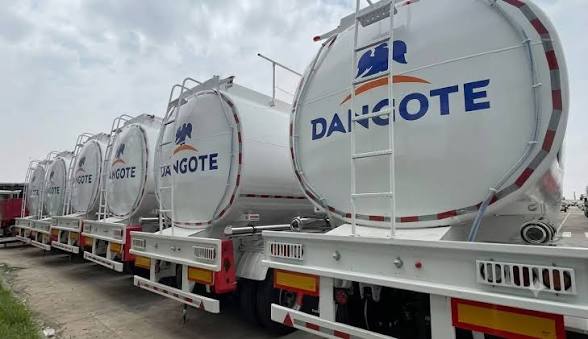
For decades, Nigeria carried a peculiar shame that few oil-producing nations could match. It pumped crude out of its soil in vast quantities, shipped that crude abroad, and then turned around to buy back refined petrol, diesel, and kerosene at prices dictated by foreign refiners. Four state-owned refineries in Port Harcourt, Warri, and Kaduna sat for years as monuments to failure, consuming public funds meant for turnaround maintenance without ever running at meaningful capacity. It was against that backdrop of national embarrassment that one man, Aliko Dangote, decided he would build a refinery capable of doing what the government itself could not.
That decision has now carried him beyond Nigeria’s borders. Dangote Industries has confirmed it will build a $17 billion refinery on Lamu Island off Kenya’s coast, a facility designed to process 700,000 barrels of crude daily, larger even than the Lekki plant that transformed Nigeria’s fuel market. The Kenyan government has already committed seed capital worth billions of shillings toward the project, site selection at Lamu is complete, soil testing is under way, and engineering work has begun, with construction expected to run for roughly thirty months once it starts in earnest. The refinery will draw crude feedstock from Kenya’s own onshore discoveries, Uganda’s fields in the Albertine Graben, and South Sudan’s oil basins, with the Democratic Republic of Congo also positioned as a potential supplier. Once complete, it is designed to serve not Kenya alone but Uganda, Tanzania, and South Sudan as well, a genuinely regional undertaking built around agreements the four governments have worked through over the course of this year, following months of negotiation that at one point saw Tanzania’s Tanga port considered as the preferred site before commercial logic settled the matter on Kenya’s deeper Mombasa-area coastline instead.

To understand why East African leaders are moving so eagerly to secure this investment, one has to return to what happened, and is still happening, in Nigeria. The Lekki refinery was never handed an easy path. Long before the first drop of crude touched its units, entrenched interests in the downstream sector—the marketers, importers, and depot owners who had spent over three decades profiting from Nigeria’s fuel subsidy regime—mobilised against it. Dangote himself has been candid about this in multiple interviews. Speaking at an investor forum, he stated plainly that people who had made enormous sums from government-subsidised oil imports were the ones working to sabotage his refinery, and that these same groups funded resistance to the removal of the petrol subsidy under President Bola Tinubu. In a separate interview with the head of Norway’s sovereign wealth fund, he went further, describing the resistance as the work of a “mafia” benefiting from Nigeria’s roughly $10 billion annual subsidy bill, insisting that these were people determined to stop his refinery from settling down because it threatened to displace them entirely.
The obstruction did not stop at rhetoric. Dangote’s own executives accused Nigeria’s downstream regulator of issuing licences to marketers to import substandard, off-specification fuel into a market the Lekki refinery was already capable of supplying in full, a practice the company has since challenged in court after fresh import licences were granted to half a dozen marketing firms in 2026 despite rising domestic refining capacity. There was also the matter of crude itself. Dangote Industries accused international oil companies operating in Nigeria of deliberately pricing local crude above prevailing market rates, a manoeuvre that, by the company’s own account, forced the refinery to import crude from as far away as the United States rather than source it from the country beneath which it sits. At one particularly low point last year, Dangote admitted he regretted ever building the refinery, remarking that the mafias entrenched in Nigeria’s oil sector were, in his estimation, tougher than those in narcotics. Yet he did not walk away. He has said, more than once, that he has been fighting all his life and remains certain he will win.
It is worth pausing to imagine what Nigeria’s position would have looked like this year had that fight been lost, had the cabal succeeded in strangling the refinery in its infancy. When the war between Israel, the United States, and Iran escalated to the point of threatening closure of the Strait of Hormuz, the passage through which roughly a fifth of the world’s oil and gas moves, fuel markets across the globe convulsed. Countries far wealthier than Nigeria scrambled for alternative supply, and nations that lacked any domestic refining cushion watched prices and shortages spiral. Nigeria, because the Lekki refinery had by then reached full operational capacity, was largely spared that fate. It kept its own pumps running and was able to supply fuel to neighbouring countries at the very moment the usual import routes through the Gulf were thrown into uncertainty. Had the cabal that fought Dangote for eighteen years succeeded in its aims, Nigeria would in all likelihood have joined the queue of nations begging for cargoes on a global market gripped by panic, its currency absorbing yet another shock, its citizens facing the fuel queues that had become a grim national ritual for generations.
That is precisely the exposure Kenya’s President William Ruto has said, in plain terms, he does not want repeated in East Africa. Speaking publicly this year, Ruto declared that the region does not want to be held hostage any longer by the Strait of Hormuz or by wars started by other people, arguing that East Africa possesses its own resources and intends to use them to industrialise rather than remain permanently dependent on imported fuel. It is a striking thing to hear a sitting president speak with such urgency about a private businessman’s refinery, and it is impossible not to notice the contrast with Nigeria’s own experience. Where Abuja’s regulators kept issuing import licences that undercut the refinery built to end Nigeria’s import dependence, Nairobi has moved to co-finance one. Where Nigerian marketers threatened chaos and ultimatums to preserve their subsidy-era windfalls, Kenya, Uganda, Tanzania, and South Sudan have signed on as partners.
None of this is to suggest East Africa’s path will be free of difficulty. Regional refineries of this scale require crude volumes that current East African production may struggle to fully guarantee, and the diplomatic friction that briefly flared between Kenya and Tanzania over the choice of site is a reminder that four governments rarely move in perfect unison. But the posture is nonetheless the opposite of what Dangote encountered at home, and the difference in posture matters. It suggests that East Africa’s leaders have studied Nigeria’s decade of self-inflicted delay and decided not to repeat it, choosing instead to treat energy security as a shared regional priority rather than a threat to entrenched interests.
Dangote through this refinery will also create enormous employment opportunities across Africa. At the peak of construction, estimates suggest around 95,000 workers will be engaged—engineers, technicians, artisans, and logistics staff. Once completed, the refinery is expected to sustain 10,000–15,000 permanent jobs, with thousands more indirect roles in transport, manufacturing, services, and supply chains. This scale of job creation will benefit Kenya, Uganda, Tanzania, South Sudan, and potentially the wider region, making the refinery not just an energy project but a continental employment engine.
There is a broader argument buried inside this story, one that goes beyond Dangote himself. Africa’s fuel-import shortfall is projected to widen sharply in the years ahead as demand grows faster than the continent’s refining capacity, and the recent Hormuz crisis was a preview of what recurring global instability will keep doing to economies that refine nothing and import everything. Nigeria has already paid the tuition for this lesson, in wasted state refineries, in subsidy fraud, in the eighteen-year fight it took one man to force a single functioning refinery into existence. East Africa, watching from a distance, appears to have decided to skip the tuition and go straight to the benefit. That is the real story behind the $17 billion figure attached to Lamu: not merely a refinery, but a continent slowly, unevenly, learning that self-reliance is bought with foresight, and that the nations wise enough to embrace their own industrialists, rather than fight them, are the ones that will be spared the next global shock.
_For comments, reflections and further conversation, email samuelagogo4one@yahoo.com or call +2348055847364._