
News
Military Airstrikes Target ISIS Terrorists in Sokoto

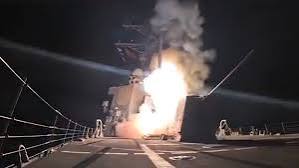
United States President Donald Trump on Friday morning announced that U.S. forces had carried out what he described as “powerful and deadly” airstrikes against Islamic State (ISIS) militants in northwestern Nigeria, specifically in Sokoto State, on Thursday.
The announcement followed an earlier warning by Trump in which he cautioned the group to halt the killing of Christians in Nigeria.
According to the U.S. Department of Defense, the operation—conducted at the request of Nigerian authorities—resulted in the deaths of “multiple ISIS terrorists,” although specific operational details were not disclosed.
Trump stated that the airstrikes were executed on Christmas Day. In a post on his Truth Social platform, he said he had previously warned the terrorists that continued attacks against Christians would have severe consequences.
“I have previously warned these Terrorists that if they did not stop the slaughtering of Christians, there would be hell to pay, and tonight, there was,” Trump wrote.
He further added, “May God Bless our Military,” while extending Christmas greetings, saying, “MERRY CHRISTMAS to all, including the dead Terrorists, of which there will be many more if their slaughter of Christians continues.”
The United States Africa Command also confirmed the operation in a post on X, stating that it carried out a strike in Sokoto State at the request of Nigerian authorities, killing multiple ISIS operatives.
Similarly, Pentagon Chief Pete Hegseth praised the Department of Defense’s readiness to act, expressing gratitude for the support and cooperation of the Nigerian government.
The airstrikes mark the first military action by U.S. forces in Nigeria under Trump’s leadership. They follow remarks made by the Republican leader in October and November, during which he sharply criticized Nigeria, asserting that Christians in the country faced an “existential threat” amounting to “genocide.”
While some welcomed the diplomatic and military stance, others viewed it as potentially exacerbating religious tensions in Africa’s most populous nation, which has a history of sectarian violence.
Nigeria’s government, along with independent analysts, has rejected the portrayal of the country’s security challenges as primarily religious persecution. They argue that such a narrative has long been promoted by Christian advocacy groups in the United States and Europe.
Nevertheless, Trump has continued to highlight what his administration describes as global persecution of Christians, emphasizing Washington’s willingness to take military action in Nigeria to curb such violence.
Earlier this year, the United States placed Nigeria back on its list of countries of “particular concern” over religious freedom and also imposed restrictions on the issuance of visas to Nigerians.