Governance
Ndume Urges CDS, Service Chiefs to Prioritize Troop Motivation Says Military Budget Should Be on First Line Charge

By our Correspondent
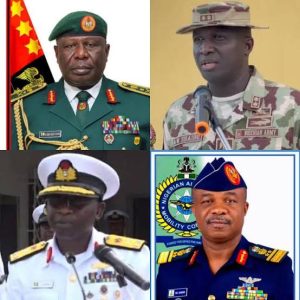
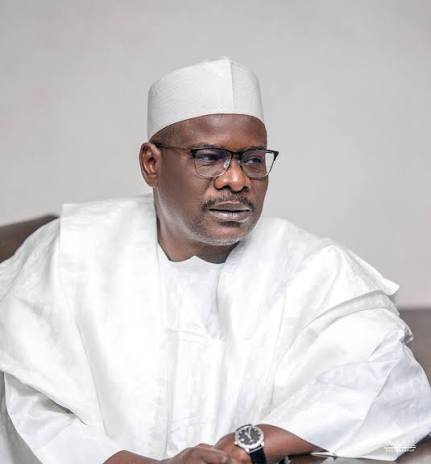
Former Senate Leader, Senator Ali Ndume, has called on the newly appointed Chief of Defence Staff, Lt-General Olufemi Oluyede, and the Service Chiefs to advocate for improved remuneration for personnel of the Nigerian Armed Forces to enhance their motivation and operational effectiveness.
The lawmaker made the appeal in a statement issued in Abuja on Thursday, following the decoration of the officers with their new ranks by President Bola Ahmed Tinubu.

Checks revealed that General Oluyede and three others were screened and confirmed for their appointments by the Senate on Wednesday. Those confirmed alongside the Chief of Defence Staff were Major General Waidi Shaibu as Chief of Army Staff, Rear Admiral Ibrahim Abbas as Chief of Naval Staff, and Air Vice Marshal S.K. Aneke as Chief of Air Staff.
Ndume, who represents Borno South and served as Chairman of the Senate Committee on Army in the Ninth Senate, emphasized that better pay and welfare are crucial to sustaining troop morale in combating insurgency, banditry, and other threats to national security.
He said: “I have identified four pillars that would make our military formidable and keep security threats at bay. I call it TEAM — Training, Equipment, Ammunitions, and Motivation — in that order.”

The senator further urged the Federal Government to prioritize the military’s budgetary provisions by placing them on the First Line Charge.
“The annual budget of the Armed Forces and other security agencies should be in the First Line Charge and not left to discretion. They should be front-loaded,” he added.
Arguing for improved welfare, Ndume noted that the salaries and allowances of Nigerian military personnel lag far behind those of their counterparts in neighboring countries.
“In Ghana, a private soldier earns the equivalent of about ₦180,000 monthly; in South Africa, enlisted personnel start at around ₦250,000 per month; in Egypt, junior officers earn between ₦230,000 and ₦280,000 monthly; while in Kenya, a private earns about ₦200,000 excluding operational allowances,” he said.
“In contrast, Nigerian soldiers earn significantly less despite facing more frequent deployments and tougher operational conditions. The current remuneration has been outpaced by rising living costs, affecting morale, recruitment, retention, and overall efficiency — especially among personnel deployed in high-risk and remote areas,” he lamented.