General News
Nigeria Must Turn Gender Inclusion Into Law, Policy, Budget, Philippine Envoy Says

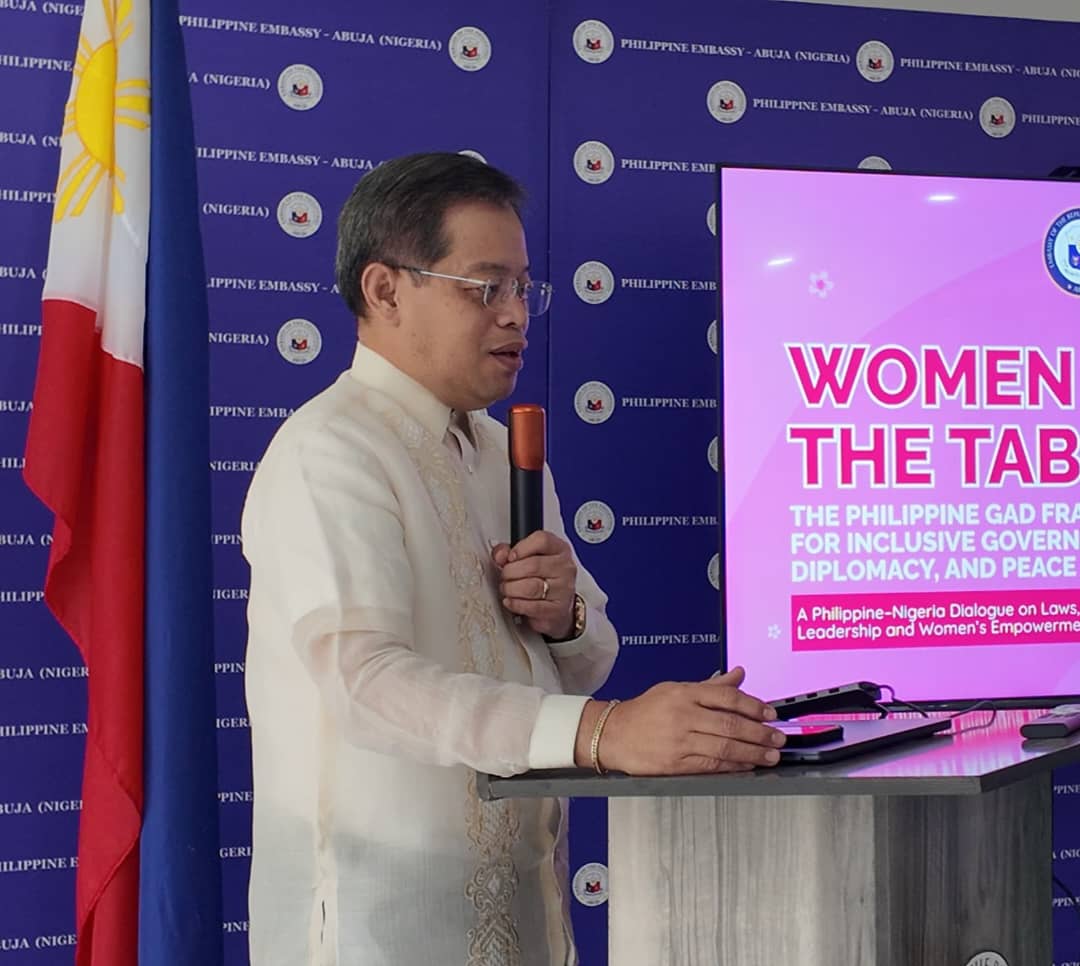
The Philippine Ambassador to Nigeria, Mersole Mellejor, has urged Nigeria to strengthen institutional and legislative mechanisms for gender equality, stressing that sustainable gender inclusion must be backed by enforceable policies, accountability measures and adequate funding.
Mellejor made the call during a dialogue session organised under the Female Legislative Mentorship Initiative on Parliamentary Affairs and Diplomacy at the Philippine Embassy in Abuja.
The session, which brought together officials from the Directorate of Parliamentary Affairs, the Ministry of Foreign Affairs and members of the diplomatic community, focused on the theme, “Women at the Table: The Philippine Gender and Development (GAD) Framework for Inclusive Governance, Diplomacy, and Peace.”

The envoy described gender mainstreaming as an evolving “work in progress”, insisting that governments must move beyond policy declarations to establish mechanisms capable of ensuring compliance.
He said the Philippines had introduced measures that link gender mainstreaming to government budgeting, thereby creating a direct incentive for public institutions to implement gender-responsive policies.
«“In the Philippines, we have parameters in place that carry direct budget implications for government agencies,” Mellejor said.»
He explained that failure by an agency to implement gender mainstreaming could affect its budgetary allocation, describing the arrangement as an accountability mechanism designed to ensure compliance.
The ambassador also cited the Philippines’ Safe Spaces Act, which provides legal protection against gender-based harassment and abuse in public spaces and workplaces.
According to him, the legislation reflects the broader Philippine approach of embedding gender protection and equality within enforceable legal frameworks.
‘Nigeria Is on the Right Path’
Mellejor commended Nigeria for the progress it has made in advancing gender mainstreaming despite the country’s complex social and cultural environment.
“As an outsider, I am very encouraged by where Nigeria is in terms of gender mainstreaming. You are on the right path,” he said.
He urged Nigerian policymakers to see the country’s diversity and large youthful population as strategic assets rather than obstacles to national development.
Nigeria, he noted, is a highly diverse country with a population of more than 230 million people, adding that the Philippine experience demonstrated how diversity could become a catalyst for unity.
“Diversity should not be a source of weakness; it is a vital generator of unity,” he said.
The envoy also pointed to Nigeria’s youthful and increasingly technology-oriented population as an important economic advantage, particularly in the creative and digital sectors.
He said the shared democratic values and complementary strengths of Nigeria and the Philippines could provide opportunities for deeper bilateral cooperation, particularly in areas relating to women’s empowerment, governance, technology and the creative economy.
Mentorship Deepens Legislative and Diplomatic Exchange
The mentorship programme provided Nigerian legislative mentees and diplomatic representatives with an opportunity to exchange perspectives on gender-responsive legislation, women’s political participation, leadership and peacebuilding.
Members of the Philippine diplomatic mission, including Vice-Consuls Norman and Yate, shared experiences from the embassy’s domestic and external Gender and Development programmes.
The discussions also highlighted the importance of sustained collaboration between diplomatic missions, national legislatures, government institutions and civil society organisations in advancing gender equality.
Mellejor expressed optimism that the engagement would pave the way for stronger institutional partnerships between the Philippine Embassy, the Nigerian National Assembly and relevant civil society groups.
Such partnerships, he said, could deepen legislative and diplomatic cooperation while promoting inclusive governance and creating greater opportunities for women to participate meaningfully in leadership and decision-making.
The envoy’s intervention ultimately underscored the need for Nigeria to move from commitments on gender equality to measurable, funded and enforceable action, with legislation and institutional accountability serving as key drivers of lasting change.