
General News
Nigeria’s Water Crisis Deepens as Experts Demand Standard Frameworks to Unlock Private Investment

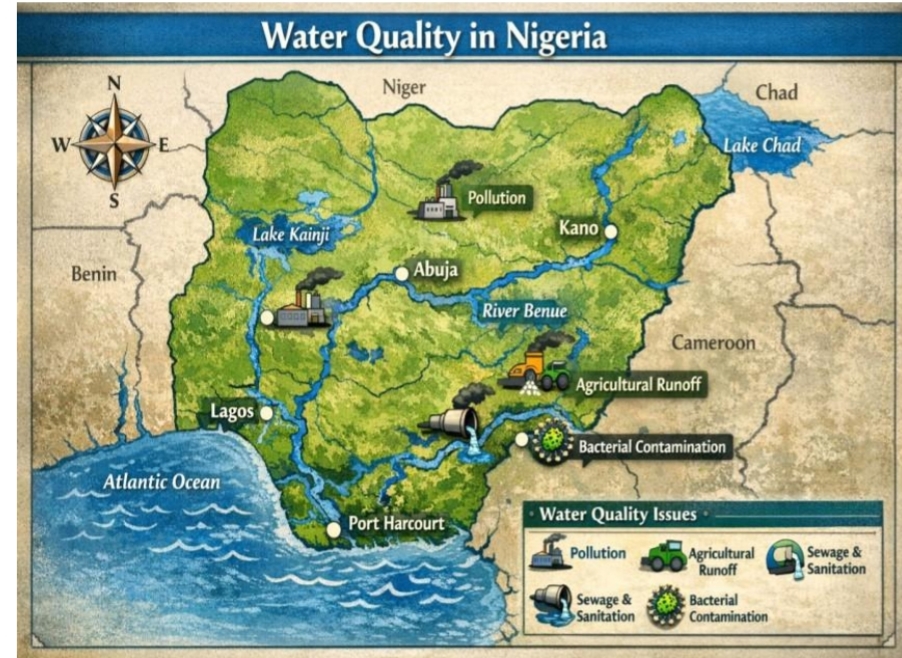
Stakeholders in Nigeria’s water, sanitation and hygiene (WASH) sector have identified the absence of a standard deal architecture as one of the biggest obstacles preventing private sector investment and slowing efforts to achieve universal access to safe water and sanitation.
They warned that unless governments move swiftly to establish clear legal and commercial frameworks for public-private partnerships (PPPs), millions of Nigerians will continue to face inadequate access to clean water, while the country misses opportunities to attract billions of naira in private investment.
Speaking on the challenge, Dr. Nicholas Igwe, Global Head and National Coordinator of the Organised Private Sector in Water, Sanitation and Hygiene (OPS-WASH) and Co-founder of the Private Sector Engagement Platform (PSEP), said every major WASH transaction in Africa is still negotiated from the beginning due to the lack of standardised agreements and contractual frameworks.

According to him, unlike sectors such as energy and transport where investors rely on tested PPP templates and standard contractual arrangements, the WASH sector lacks uniform public-private partnership contract templates tailored to its unique risks.

“There are no standardised offtake agreement structures that can easily be adapted across different jurisdictions without starting negotiations from scratch,” Igwe said.
He explained that legally tested water reuse lease agreements that would allow commercial landlords and tenants to jointly finance and benefit from onsite water recycling systems are virtually non-existent across African countries.
Similarly, he noted that there are no universally accepted impact measurement protocols that institutional investors can use for Environmental, Social and Governance (ESG) reporting or for comparing WASH investments across different markets.
As a result, lawyers, financial advisers and regulators are repeatedly forced to resolve issues that have long been standardised in sectors such as power and transportation.
High transaction costs
Igwe said the lack of standardisation significantly increases transaction costs, particularly for smaller projects.
He explained that while a typical water reuse project serving a secondary city may require between $5 million and $15 million in investment, legal and advisory costs can consume between $1 million and $2 million because every agreement has to be negotiated from scratch.
“This makes many otherwise viable projects financially unattractive,” he said.
According to him, the situation discourages investments in secondary cities and peri-urban communities where water shortages are often most severe and where relatively small-scale projects could deliver substantial social and economic benefits.
Investors discouraged
Igwe further noted that the absence of successful precedents increases legal uncertainty for investors and lenders.
He explained that financiers typically assess how similar projects have been structured, disputes resolved and contractual risks managed before committing funds.
However, because Africa has very few completed WASH PPP projects, legal advisers adopt highly conservative positions, resulting in longer negotiations, higher financing costs and increased risk premiums.
He added that institutional investors such as pension funds are also unable to compare WASH investments across African countries because the sector lacks consistent contractual structures.
“In renewable energy, investors can compare projects across countries because they rely on broadly similar power purchase agreements, credit enhancement mechanisms and financing structures. The WASH sector does not yet have that advantage,” he said.
Why water matters
Experts stressed that access to clean water is not only a public health issue but also a foundation for economic growth, food security and national development.
Safe water reduces the spread of diseases such as cholera, typhoid and diarrhoea, improves school attendance, enhances workforce productivity and lowers healthcare costs.
Reliable water supply also supports agriculture, manufacturing, healthcare facilities and businesses, making it a critical driver of sustainable economic development.
The United Nations estimates that every dollar invested in water and sanitation generates several dollars in economic returns through improved health, increased productivity and reduced healthcare expenditure.
Call for urgent government action
Stakeholders urged the Federal Government and state governments to accelerate reforms that would create a predictable investment environment for private sector participation in the WASH sector.
They called for the development of standard PPP contracts, model concession agreements, water reuse regulations, ESG reporting standards and other legal instruments that would reduce transaction costs and build investor confidence.
According to them, government alone cannot bridge Nigeria’s enormous water infrastructure deficit, making private sector participation essential to achieving universal access to safe water and sanitation.
They argued that creating clear and bankable investment frameworks would not only attract domestic and international investors but also accelerate progress toward achieving Nigeria’s WASH targets and the Sustainable Development Goals (SDGs).