
Education
Okebukola Applauds UI, UNILAG’s Inclusion Among Top 1000 World Universities for 2026

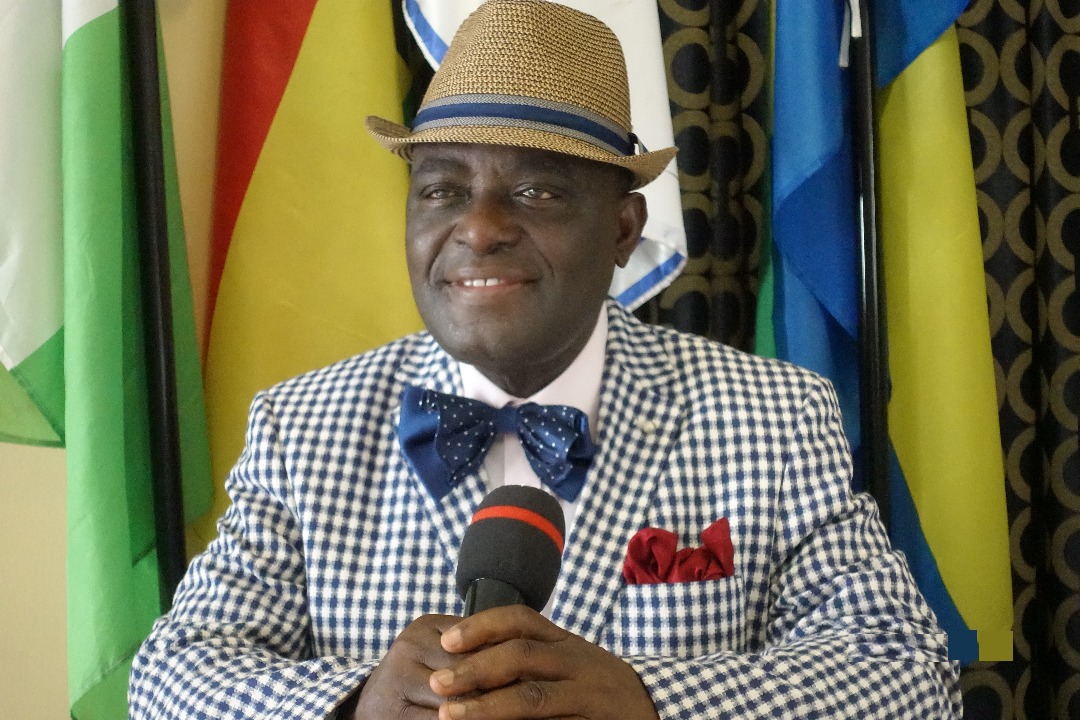
By our Correspondent
The Chairman of the Nigerian Universities Ranking Advisory Committee (NURAC), Professor Emeritus Peter Okebukola, has commended the inclusion of two Nigerian universities in the top 1000 of the 2026 Times Higher Education (THE) World University Rankings released on Thursday.
In a statement issued in Abuja, the former Executive Secretary of the National Universities Commission (NUC) disclosed that the University of Ibadan (UI) and the University of Lagos (UNILAG) are Nigeria’s top-ranked institutions for 2026, both achieving an overall score range of 35.5–38.9.

Okebukola explained that Times Higher Education employs 18 carefully calibrated performance indicators to provide a comprehensive and balanced comparison trusted by students, academics, university leaders, industry, and governments worldwide. He also noted that the organisation runs other ranking schemes such as the Impact Rankings, where Afe Babalola University, Ado Ekiti, has consistently excelled.
According to him, “Oxford University led the global ranking, followed by the Massachusetts Institute of Technology, Princeton University, University of Cambridge, Harvard University, and Stanford University. Interestingly, Harvard, which had dominated in earlier years, slipped to fifth place, while Oxford retained its number one position for the tenth consecutive year, driven by a strong research environment score.”
He added that this marks an improvement from the 2025 rankings, where only Covenant University was listed among the top 1000 and ranked as Nigeria’s best.

Okebukola, a former Chairman of the Governing Board of the National Open University of Nigeria (NOUN), further highlighted that Bayero University Kano, Covenant University, and Landmark University are ranked within the top 1200 band, sharing the same overall score range of 32.1–35.4.
He noted that while four Nigerian universities made the top 1200 in 2025, the 2026 rankings show a slight dip. The next set of institutions—Ahmadu Bello University, Federal University of Technology Minna, University of Ilorin, University of Jos, and University of Nigeria Nsukka—fall within the 1201–1500 band. Fourteen universities were placed in the 1500+ category, including Babcock University, Delta State University Abraka, Federal University of Agriculture Abeokuta, Ekiti State University, Federal University of Technology Owerri, Federal University Oye-Ekiti, Ladoke Akintola University, Lagos State University, Nnamdi Azikiwe University, Obafemi Awolowo University, University of Benin, University of Calabar, and University of Port Harcourt.
Twenty-six other institutions were listed in the reporter category, meaning they have not yet reached the ranking threshold but show potential for future inclusion. These include Akwa Ibom State University, Al-Hikmah University, Augustine University, Bamidele Olumilua University of Education, Science and Technology, Bauchi State University Gadau, Bayelsa Medical University, Baze University, Bells University of Technology, Bowen University, Evangel University Akaeze, Federal University of Lafia, Federal University of Petroleum Resources Effurun, Fountain University, Godfrey Okoye University, Igbinedion University Okada, Kaduna State University, Lagos State University of Education, Lagos State University of Science and Technology, Lead City University, Maryam Abacha American University of Nigeria, Nasarawa State University Keffi, Redeemer’s University, Rivers State University, Thomas Adewumi University, University of Cross River State, and University of Delta.
Okebukola explained that universities could be excluded from the World University Rankings if they do not teach undergraduates or if their research output falls below 1,000 relevant publications between 2020 and 2024 (with at least 100 annually). Additionally, institutions where over 80 percent of research output is confined to one of THE’s 11 subject areas may also be excluded.
He further clarified that the 18 performance indicators used by THE are grouped under five core pillars: Teaching (learning environment) – 29.5%; Research environment – 12.5%; Research quality – 30.0%; International outlook – 7.5%; and Industry (knowledge transfer) – 10.5%. An additional indicator, study abroad, is currently tracked but carries no weight.
On strategies to improve Nigerian universities’ global rankings, Okebukola, who pioneered university ranking in Africa, offered seven key recommendations:
1. Increase investment in research and development – Governments and private proprietors should fund research, encourage international co-authorship, publish in reputable journals, and attract qualified PhD holders to strengthen research output.
2. Strengthen infrastructure and resources – Improve laboratory, library, and teaching facilities to enhance learning and research.
3. Enhance international collaboration – Build partnerships with global universities, engage in joint research, and increase international staff and student numbers.
4. Promote innovation and industry linkages – Foster relationships with industries to enhance research commercialization and graduate employability.
5. Implement governance reforms – Encourage transparent and effective management to ensure strategic institutional growth.
6. Improve teaching reputation – Enhance global academic visibility, employ qualified lecturers, and reduce overcrowding to boost teaching quality.
7. Implement the NURAC 2024–2030 Strategic Plan – Ensure that by 2030, at least 10 Nigerian universities are ranked among the top 800 globally.
NURAC members include Professor Peter Okebukola (Chairman); Professor Olanrewaju Adigun Fagbohun (Southwest); Professor Chinedum Nwajiuba (Southeast); Professor Joseph Ajienka (South-South); Professor Jibrila Dahiru Amin (Northeast); Professor Muhammad Yahuza Bello (Northwest); Professor Angela Miri (North Central); the late Professor Emeritus Nimi Briggs (STRADVCOM); and Dr. Biodun Saliu (NUC Representative).
Okebukola expressed optimism that with the leadership of Professor Emeritus Olu Aina as NUC Board Chairman and Professor Abdullahi Ribadu as Executive Secretary, the Nigerian university system is poised to achieve greater heights in global competitiveness.