
General News
Open Week: Akpabio Urges Citizens to Engage Parliament

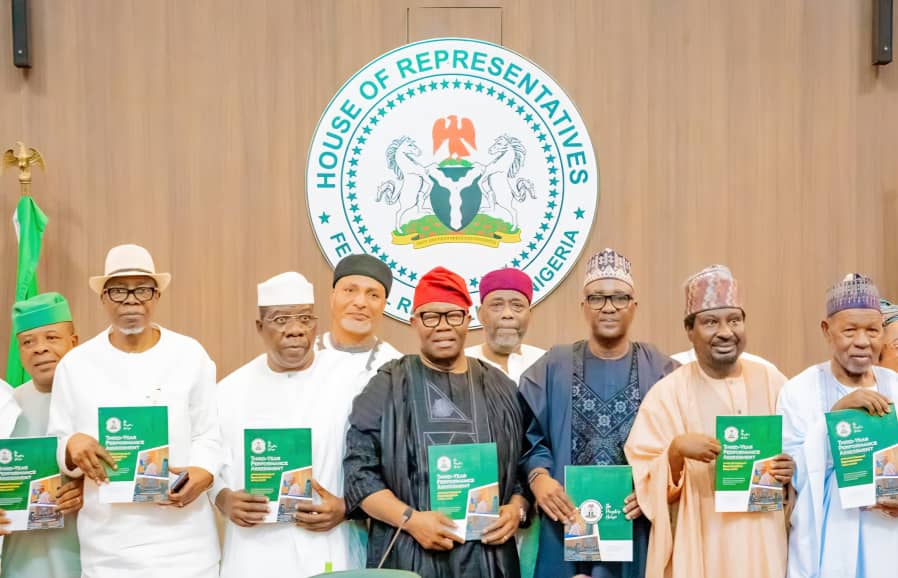
President of the Senate, Godswill Akpabio, on Tuesday declared the National Assembly Open Week open at the House of Representatives Chamber in Abuja, urging lawmakers to embrace transparency and deepen public engagement in the nation’s democratic process.
The Open Week is designed to showcase the legislature’s commitment to openness, strengthen public confidence, and provide stakeholders with an opportunity to engage with the legislative activities of the 10th National Assembly.
In his keynote address, Akpabio described Parliament as an institution that belongs to the Nigerian people, stressing that democracy thrives when citizens are informed and actively involved. He said the initiative offers Nigerians an opportunity to look beyond headlines and better understand Parliament as the link between the aspirations of the people and the responsibilities of government.
According to him, Parliament was established to bring citizens into the democratic process rather than exclude them, noting that strong democracies are sustained by legislatures where diverse opinions are heard, competing interests are reconciled, and every citizen is adequately represented. He added that openness goes beyond allowing the public to observe proceedings, assuring Nigerians that every community and every voice deserves representation.
Akpabio urged Nigerians to actively engage with the legislature, saying the Open Week provides an avenue not only to observe parliamentary activities but also to offer constructive criticism where necessary. He noted that a Parliament that listens becomes wiser, while a democracy that listens grows stronger.
Also speaking, Speaker of the House of Representatives, Tajudeen Abbas, said the Open Week Initiative is founded on the belief that an open and responsive Parliament is essential for building public trust and strengthening democratic institutions.
The three-day event will feature a series of high-level, citizen-focused engagements aimed at bridging the gap between the public, the private sector, and policymakers.