Special Report
Russia-Africa Summit: Can Moscow Turn Trade Promises Into Jobs, Investment For Nigeria?

By Caroline Ameh
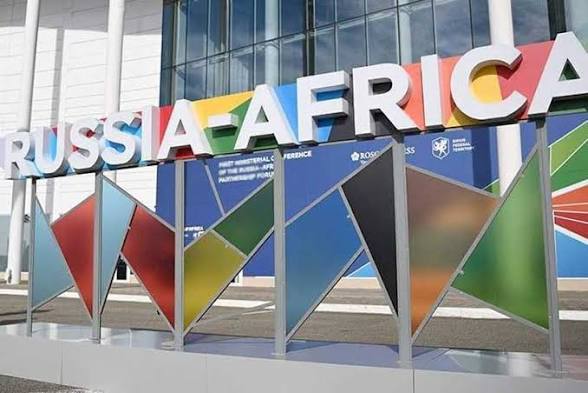
As Russia and African leaders prepare to meet in Moscow, Nigeria faces an opportunity to expand exports, attract technology and industrial investment, and address a trade imbalance that has long favoured Russian suppliers.
With the third Russia-Africa Summit scheduled for Moscow on October 28 and 29, expectations are mounting that the meeting will move beyond diplomatic declarations to deliver measurable economic benefits for African countries.
For Nigeria, the summit presents an opportunity to secure new markets for agricultural products, attract investment in manufacturing and energy, deepen scientific cooperation and expand access to technologies that could support industrial development.
Yet, a fundamental question remains: will the engagement produce a more balanced economic partnership, or will Africa continue to depend largely on imports from Russia while struggling to expand its own exports?
The question is particularly relevant as the continent pursues industrialisation, regional integration and economic diversification under the African Continental Free Trade Area (AfCFTA).
The Moscow meeting, which will include the Russia-Africa Economic and Humanitarian Forum, is expected to examine opportunities in trade, investment, science, technology, education, energy and security. The objective is to strengthen mutually beneficial cooperation and identify areas for future collaboration.
Trade Imbalance Raises Questions Over Benefits
Despite years of diplomatic engagement, trade between Russia and African countries remains modest compared with the continent’s economic relationships with other major global partners.
Data from Russia’s Federal Customs Service showed that Russian exports to Africa reached $24.3 billion in 2024, while imports from African countries stood at $3.5 billion. The figures indicate a substantial imbalance in the direction of trade.
The challenge is not simply to increase the value of commerce, but to diversify what both sides buy and sell.
Russia supplies African markets with commodities and industrial inputs, including wheat, fertilisers, petroleum products and metals. African countries, meanwhile, have opportunities to expand exports of agricultural produce, processed foods, minerals and manufactured goods.
For Nigeria, the imbalance is particularly instructive.
Figures based on United Nations Comtrade data, published by Voice of Nigeria in August 2025, showed that Nigeria imported goods worth $1.51 billion from Russia in 2023 but exported only $10.02 million to the country. The major Russian supplies included wheat, fertilisers and fish, while Nigerian exports included cocoa products.
The figures illustrate the scale of the challenge facing Nigerian exporters seeking to establish a stronger presence in the Russian market.
Although the data relate to 2023 and should not be interpreted as the current trade position, they highlight a longstanding concern: Nigeria must do more to turn its agricultural and industrial potential into competitive exports.
A more balanced relationship would require Nigerian businesses to gain better access to Russian buyers, reliable shipping and payment arrangements, trade finance and information about product standards and market requirements.
It would also require Nigerian authorities to work with their Russian counterparts to identify products that can compete successfully in the Russian market.
Beyond Diplomatic Declarations
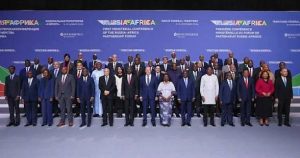
The forthcoming summit is the third major gathering of its kind, following meetings in Sochi in 2019 and St Petersburg in 2023.
The inaugural summit established a framework for cooperation in trade, infrastructure, agriculture, energy, education, science, healthcare and technology. The African Union said the 2019 meeting brought together 47 African heads of state and government and produced agreements covering a broad range of economic and political priorities.
At the second summit in 2023, participating leaders adopted a declaration calling for stronger investment, industrial development, technology transfer and the production and export of higher-value manufactured goods.
The declaration also recognised the importance of the AfCFTA in advancing continental market integration and industrialisation.
However, the existence of agreements does not automatically translate into factories, jobs, export earnings or improved living standards.
A 2023 assessment by the Institute for Security Studies’ PSC Report questioned whether commitments emerging from the second summit would necessarily translate into outcomes that serve Africa’s interests. It also examined the geopolitical considerations shaping Moscow’s engagement with the continent.
The implication for the next meeting is clear: African governments need stronger mechanisms for monitoring commitments, tracking investments and measuring results.
Rather than focusing only on the number of agreements signed, the summit should establish clear targets for trade growth, local production, technology transfer and employment.
Technology Transfer And Industrial Development
Russian expertise in energy, engineering, agriculture, nuclear technology, information technology and space research offers potential areas for cooperation with African countries.
For Nigeria, the benefits would depend on whether partnerships can support domestic production, improve technical capacity and reduce reliance on imported equipment and expertise.
In agriculture, cooperation could extend beyond the supply of grain and fertilisers to agricultural machinery, food processing, storage, irrigation and research into improved production methods.
Such arrangements would be particularly valuable if they helped Nigerian farmers and processors increase productivity while enabling local companies to manufacture, maintain or assemble equipment.
In the energy sector, cooperation could include technical training, engineering services, equipment supply and carefully structured investment in electricity generation and industrial infrastructure.
Nigeria’s manufacturing and technology sectors could also benefit from research partnerships, professional exchanges and joint ventures that provide local workers with practical skills.
However, technology transfer must be more than the delivery of imported equipment. Agreements should specify local training, research collaboration, maintenance capacity and, where commercially viable, domestic production.
Without such provisions, technology partnerships risk leaving African countries dependent on foreign suppliers for spare parts, technical support and specialised services.
What Nigeria Should Demand
Nigeria’s diplomatic engagement with Russia should be anchored in a clear economic agenda that identifies national priorities and establishes measurable outcomes.
Minister of State for Foreign Affairs, Ambassador Sola Enikanolaiye, has argued that trade and economic cooperation should occupy a central position in African diplomacy.
Speaking at a pan-African regional roundtable involving the African Union Commission, AUDA-NEPAD, the AfCFTA Secretariat, Afreximbank and regional economic communities, Enikanolaiye highlighted the opportunities a more integrated African market could create for manufacturers, farmers, innovators and service providers.
His position reflects a broader policy consideration: diplomatic relationships are most useful when they improve the economic opportunities available to citizens and businesses.
For Nigeria, that means identifying export-ready products and negotiating practical arrangements that enable them to reach Russian consumers.
Cocoa, processed agricultural products, cashew nuts, oilseeds and other commodities could offer opportunities, provided exporters can meet market requirements, maintain consistent supply and compete on price and quality.
The government should also encourage Nigerian businesses to participate directly in trade missions and commercial forums, rather than leaving negotiations largely to government officials.
The Nigeria-Russia Joint Commission could serve as a platform for identifying export opportunities, addressing trade barriers and monitoring the implementation of bilateral agreements.
The Nigerian Embassy in Moscow and relevant trade agencies could further assist exporters with market intelligence, contacts with importers and guidance on certification and regulatory requirements.
Financing is another important consideration. Small and medium-sized enterprises may struggle to enter a distant market without affordable credit, export insurance and reliable payment mechanisms.
The summit could therefore provide an opportunity to explore practical arrangements for trade finance and payments, subject to applicable financial regulations and the ability of participating institutions to implement them.
AfCFTA Offers A Wider Market
Nigeria’s engagement with Russia should also be considered within the context of African economic integration.
The AfCFTA offers an opportunity to build regional value chains, expand manufacturing and create a larger market for African products.
Rather than negotiating solely as individual countries, African governments could identify areas in which regional cooperation would make their economies more competitive.
Joint ventures involving Nigerian manufacturers and businesses elsewhere on the continent could, for example, supply agricultural machinery, processed foods, industrial inputs and other products to Russian buyers.
Such arrangements would allow African countries to combine production capacity, improve economies of scale and develop stronger bargaining positions.
The 2023 Russia-Africa Summit declaration encouraged cooperation with African regional organisations and called for investment in value chains and value-added manufacturing.
For this commitment to become meaningful, however, participating governments must translate the broad objectives into commercially viable projects with clear responsibilities, financing arrangements and implementation schedules.
Education, Research And People-To-People Exchanges
Economic cooperation also depends on the availability of skilled workers, researchers and entrepreneurs capable of sustaining long-term partnerships.
Secretary-General of the United World Congress of Diplomats, Ambassador Tunji Asaolu, has called for greater investment in education, research, cultural exchanges and academic programmes.
Such initiatives could strengthen cooperation between Nigerian and Russian universities, research institutions and technical training centres.
Priority areas could include engineering, agriculture, energy, artificial intelligence, information technology and industrial research.
Scholarship programmes would be more valuable if linked to national skills needs and supported by opportunities for graduates to apply their knowledge at home.
Research partnerships could also help local institutions adapt imported technologies to African conditions, instead of relying exclusively on solutions developed for different markets.
Leader of the Trans-Africa Tourism and Unity Campaign, Ras Mubarak, has advocated visa-free arrangements to facilitate integration, economic growth and cultural exchange.
Although visa policies remain a matter for individual governments and regional agreements, simpler and more predictable travel procedures could help legitimate business, educational and cultural exchanges.
A Partnership That Must Deliver
The third Russia-Africa Summit comes at a time when African countries are seeking to diversify their international partnerships and expand their options for trade, investment and technological development.
Russia, for its part, has identified stronger engagement with African economies as part of its broader international cooperation agenda.
But the interests of both sides will not always coincide automatically. African governments must evaluate proposed agreements against their own development priorities, commercial viability and long-term national interests.
They must also consider the practical challenges of financing, logistics, sanctions-related restrictions, international payment arrangements and access to markets.
These issues require careful assessment before governments and businesses commit resources to proposed projects.
The central test of the Moscow summit will therefore be whether its commitments produce measurable economic outcomes.
For Nigeria, those outcomes should include increased non-oil exports, more balanced bilateral trade, new investment in productive sectors, improved technical capacity and opportunities for local businesses to participate in international value chains.
The summit should also establish mechanisms for monitoring progress, publishing implementation reports and identifying obstacles that require government intervention.
Russia-Africa relations have developed through successive rounds of diplomacy and declarations of shared interests. The next stage must demonstrate that these relationships can deliver concrete benefits to businesses, workers and communities.
For Nigeria and the wider continent, the real measure of success will not be the number of agreements signed in Moscow, but the extent to which those agreements translate into investment, industrial growth, skilled employment and stronger African economies.