General News
Shettima Urges FRSC on Effective Traffic Management, Safer Roads

By our Correspondent
Vice President Kashim Shettima has emphasized that no nation can achieve sustainable growth without an efficient and disciplined road safety system.
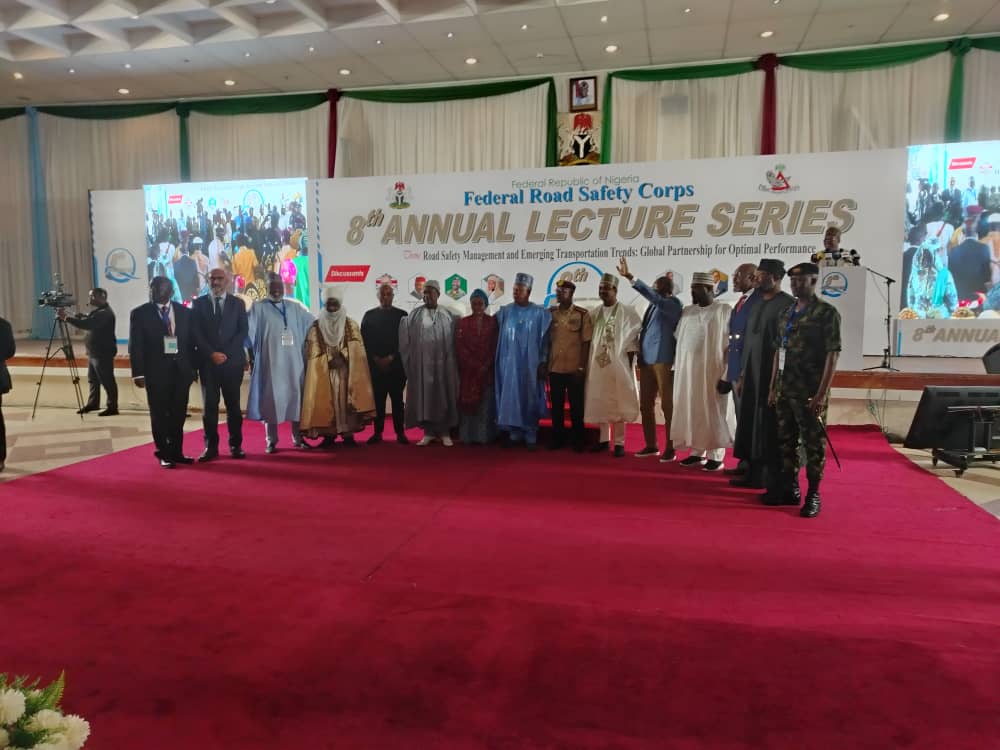
Speaking at the Eighth Annual Lecture Series of the Federal Road Safety Corps (FRSC) held at the Presidential Villa, Abuja, Shettima, who also chairs the National Road Safety Advisory Council, described road safety as one of Nigeria’s most pressing public health challenges.
Despite years of awareness campaigns and enforcement efforts, Nigeria continues to record alarming road crash statistics—over 5,000 deaths and 30,000 injuries annually. He identified poor driving culture, weak compliance with traffic regulations, and inadequate infrastructure as key contributors to making Nigerian highways among the most dangerous in Africa.
While acknowledging the FRSC’s efforts, the Vice President cautioned that the country cannot afford complacency, stressing that there is no cause for celebration until fatality rates are significantly reduced. He called on stakeholders across government, the private sector, and civil society to recommit to the Nigeria Road Safety Strategy, designed to integrate indigenous approaches with global best practices.
FRSC Corps Marshal, Mallam Shehu Mohammed, explained that the lecture series, first introduced in 2009, provides a platform to raise awareness and generate innovative ideas for curbing road crashes. He noted that the revival of the series after eight years aligns with the United Nations’ target for African nations to halve road crash deaths and injuries by 2030.

The Secretary to the Government of the Federation, Senator George Akume, described the lecture theme, “Road Safety Management and Emerging Transport Trends: Global Partnership for Optimal Performance”, as timely, urging policymakers to act decisively.
Also speaking, the Director General of the Federal Radio Corporation of Nigeria, Dr. Mohammed Bulama, pledged media support for FRSC’s efforts to achieve the 50 percent reduction target.
Resolutions from the Abuja gathering are expected to shape new policies and strengthen partnerships to promote safer roads in Nigeria and across West Africa.