
General News
Coalition Pushes Urgent Reforms to Boost Women’s Political Inclusion Ahead of 2027

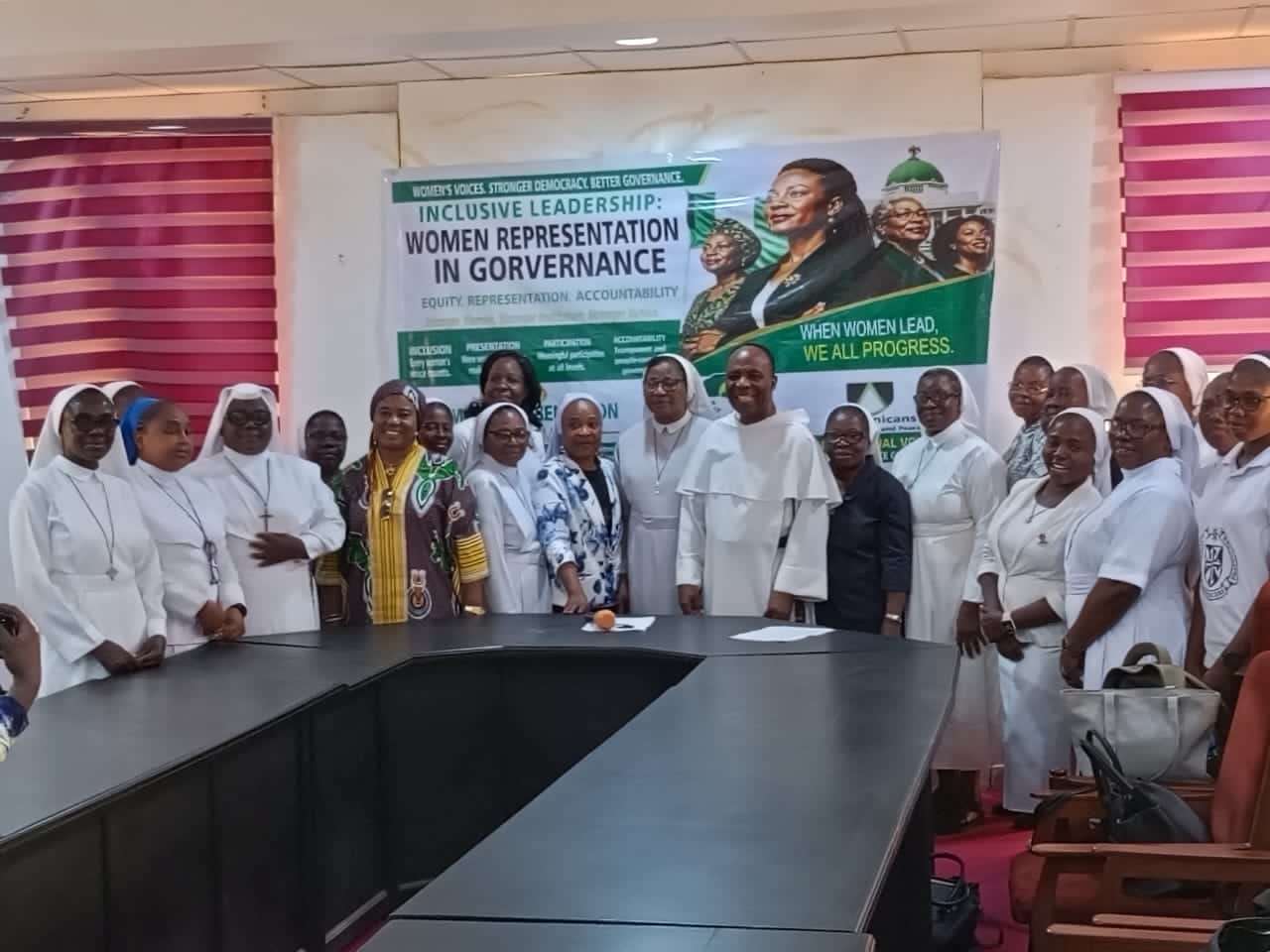
Coalition Advocates Reforms For Women Empowerment, Inclusion In Governance
Ahead of the 2027 General Election, a coalition of faith-based and civil society organizations has called for urgent reforms to promote women’s empowerment and enhance their inclusion in political leadership across Nigeria.
Speaking to journalists in Abuja, Mother Leone-Martha Okaraga of the African Faith and Justice Network expressed concern over the persistent underrepresentation of women in governance. She called for reforms in political party structures and strict enforcement of policies that penalize electoral violence against women.
Okaraga noted that although women make up about half of Nigeria’s population, their continued marginalization limits the country’s ability to achieve equitable and sustainable development.
She further stated that the current political environment in Nigeria is not conducive for women’s participation.
“By proactively investing in empowering women to fully participate in governance, Nigeria stands to benefit from a wealth of talent and innovation that will drive sustainable national development,” she said.
“We call on Nigerians at all levels of governance—national, state, and local—to deliberately invest in women’s leadership. This will unlock a broader pool of talent, innovation, and perspectives needed for sustainable development and the common good.”
Also speaking, former Executive Director of the African Faith and Justice Network, Reverend Aniedi Okure, urged the Tenth National Assembly to fast-track the passage of the Special Seats Bill currently under consideration.
He emphasized that enforcing laws against electoral violence and harassment targeting women would encourage greater confidence and participation in politics.
In her remarks, the Coordinator of Women Empowerment, Sister Eucharia Madueke, highlighted that structural, cultural, socio-economic, and political challenges continue to hinder women’s representation in governance.
According to her, female political aspirants often face higher levels of violence, harassment, and intimidation than their male counterparts, discouraging participation and posing serious safety risks during campaigns.
“Nigeria has a dismal four percent of women’s participation at this level and ranks 178th out of 182 countries studied,” she added.