
International
Xi, Trump Meet In Washington As China, US Seek To Stabilise Ties

By Iyojo Ameh
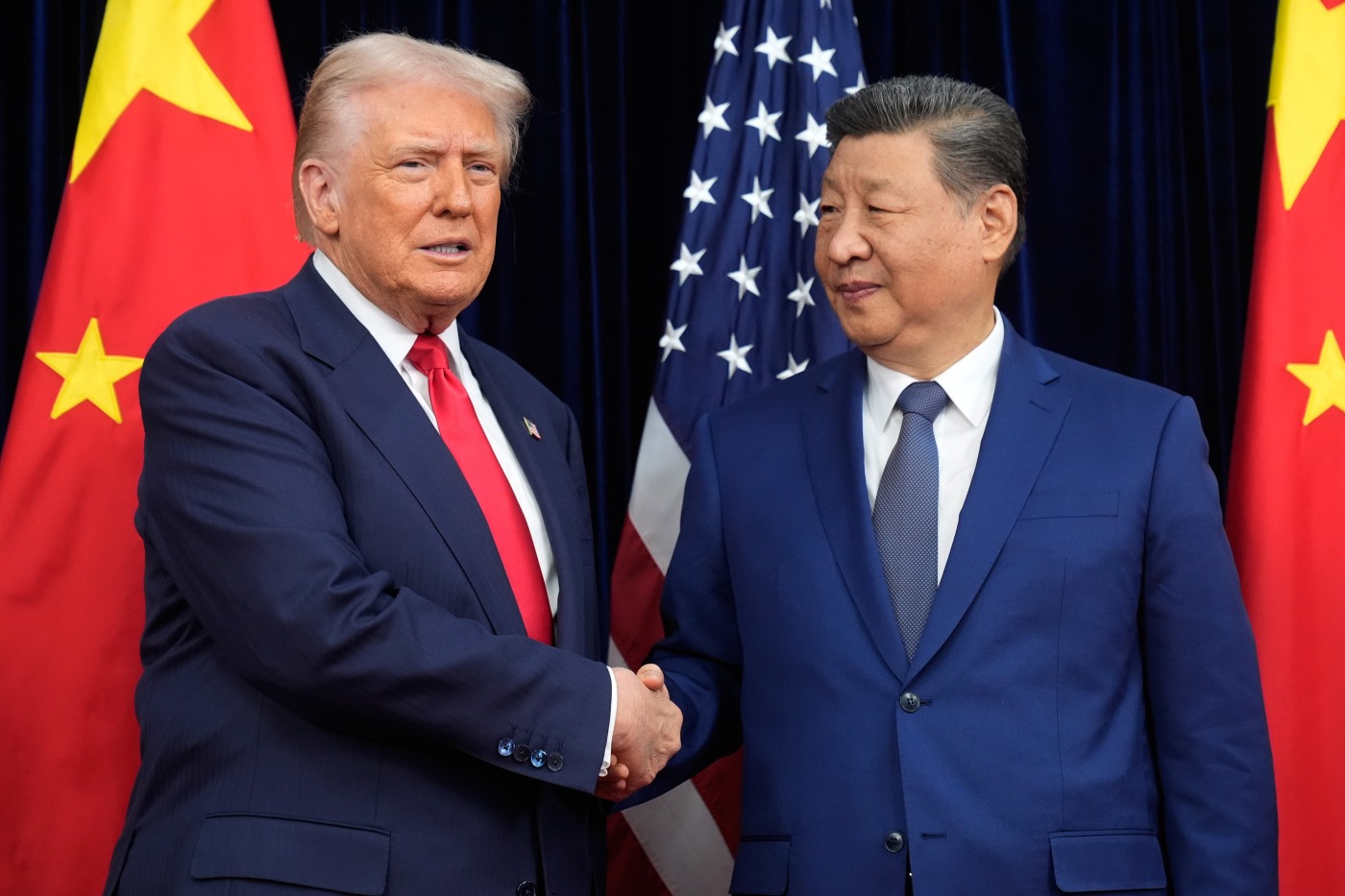
Chinese President Xi Jinping arrived in Washington on Wednesday for a three-day state visit aimed at stabilising relations with the United States amid continuing disagreements over trade, technology, critical minerals, Taiwan and other global issues.
Xi’s visit, his first to the United States in more than a decade, comes four months after U.S. President Donald Trump visited Beijing, with both leaders seeking to consolidate a fragile improvement in bilateral relations.

Trump personally received Xi and his wife, Peng Liyuan, at Joint Base Andrews ahead of a formal state welcome at the White House on Thursday.
The White House said the ceremony would include a 479-member military contingent, military demonstrations and a flyover involving a B-2 Spirit and four F-22 Raptors. A state dinner is also scheduled for Thursday evening.
The elaborate welcome comes against the backdrop of significant economic and strategic tensions between the world’s two largest economies.

The leaders are expected to discuss the future of their trade truce, which has helped prevent a return to the tariff escalation that characterised much of their relationship in 2025.
Trade, rare earths and other critical minerals, artificial intelligence and investment are among the major issues expected to feature in the discussions. Taiwan and China’s relationship with Iran are also potential sources of disagreement.
The meeting is taking place as Washington presses Beijing to ensure more consistent supplies of rare earths and other critical minerals needed by American industries.
The minerals are essential to the manufacture of electronics, electric vehicles, renewable-energy equipment and advanced military technologies, giving China considerable importance in global supply chains.
The United States, meanwhile, is seeking greater access for American agricultural and industrial products in China.
An agreement reached during Trump’s May visit to Beijing included Chinese commitments on rare earths, agricultural purchases and an initial order of 200 Boeing aircraft, while the two governments agreed to establish boards for trade and investment.
However, implementation of some of the commitments has been uneven.
The Associated Press reported that projected Chinese purchases of U.S. agricultural products could fall below the agreed target, while the promised Boeing aircraft order had not yet materialised. Progress on the proposed investment board has also been slow.

Analysts therefore expect the Washington meeting to focus more on managing existing tensions and preserving stability than on producing a comprehensive settlement.
“The fact that they are meeting, and there’s dialogue occurring and building that relationship, is probably as important as outcomes from the meeting,” U.S. Senator Steve Daines said, according to AP.
Beyond trade, artificial intelligence has emerged as a new area of competition and potential cooperation.
China and the United States are among the world’s leading powers in AI development, but Washington continues to impose restrictions aimed at maintaining its technological advantage, while Beijing is pursuing greater technological self-reliance.
U.S. officials have also expressed interest in establishing mechanisms for communication over the risks associated with increasingly powerful AI systems.
The two countries are also attempting to prevent their strategic rivalry from escalating into broader confrontation.
The May agreement between Trump and Xi referred to a relationship of “constructive strategic stability,” although analysts have noted that Beijing and Washington attach different meanings to the concept.
For China, maintaining stable relations with Washington would provide greater predictability for its economy and international trade, while allowing Beijing to continue expanding economic relationships with other parts of the world.
For the United States, a stable relationship could help protect American farmers and manufacturers’ access to Chinese markets while reducing disruptions involving critical minerals and other strategic supply chains.
The implications extend beyond the two countries.
China and the United States play central roles in global manufacturing, trade, technology and investment. Prolonged confrontation between them could affect businesses and consumers worldwide, while greater stability could reduce uncertainty across international markets.
The human dimension of the relationship is also receiving renewed attention.
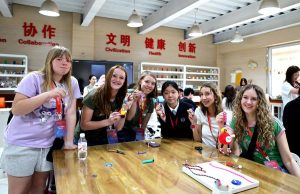
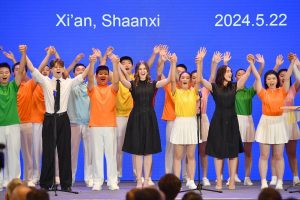
China has promoted youth and people-to-people exchanges as a means of improving mutual understanding between the two societies.
According to Xinhua, China reached its 2023 target of inviting 50,000 young Americans for exchange and study programmes two and a half years ahead of schedule.
The programmes have brought American students to Chinese cities and provinces for academic, cultural and sporting activities, where they interacted with Chinese students and communities.
Ahead of Xi’s visit, the Chinese president also replied to letters from students from 10 U.S. universities who had participated in exchange programmes.
Xi urged the students to contribute to mutual understanding and friendship between the peoples of China and the United States.
One of the students, Kiana Haywood of Central Michigan University, told Xinhua that the exchanges allowed participants to experience Chinese culture directly and develop friendships rather than relying solely on distant perceptions.
The exchanges reflect Xi’s longstanding emphasis on people-to-people relations as a foundation for bilateral ties.
Xi has maintained relationships with Americans since his first visit to Iowa in 1985 and has repeatedly highlighted educational and cultural exchanges as a means of building understanding between the two countries.
For the global community, the significance of the Washington meeting may ultimately lie less in whether China and the United States resolve their fundamental differences and more in whether they can establish mechanisms for managing them.
Their disagreements over Taiwan, technology, trade and national security remain substantial.
But continued high-level dialogue gives both governments an avenue for addressing disputes before they escalate.
As Xi and Trump sit down in Washington, the immediate challenge is therefore not to eliminate competition between the two powers.
It is to ensure that competition does not undermine global economic stability or turn strategic differences into a wider confrontation.
The outcome of the talks will be closely watched by governments, businesses and markets around the world as China and the United States attempt to determine whether their current period of relative stability can endure.