General News
Alarm as Tobacco Industry Targets African Women Through Social Media, Flavoured Products – Study

By Caroline Ameh
A new study has raised concerns over what researchers describe as an aggressive and evolving strategy by the tobacco industry to target women and girls across Sub-Saharan Africa through social media, entertainment platforms, flavoured products, and misleading narratives of empowerment.
The findings were unveiled ahead of World No Tobacco Day during a media briefing where public health experts, researchers, lawmakers, and advocates called for stronger regulations and enforcement to curb the growing influence of tobacco marketing on young women.
The study, titled “The Evolution of Tobacco Marketing to Women and Girls in Sub-Saharan Africa,” was conducted by Abuja based public policy and advocacy organisation, gatefield.co., with support from the Gates Foundation.
According to the report, more than 77 per cent of women surveyed across Nigeria, South Africa, Kenya, Rwanda, and Senegal reported exposure to tobacco-related content through television, movies, and streaming services, making entertainment media the leading channel through which smoking is normalised among women.
Researchers also found that women aged 18 to 24 face the highest levels of exposure to tobacco promotions on social media platforms, including influencer endorsements, product placements, giveaways, and branded content.

Speaking during the briefing, public health expert and co-principal investigator of the study, Omei Bongos, said the tobacco industry’s marketing tactics have become increasingly sophisticated and gender-specific.
“The tobacco industry has been targeting African women for years. Our research presents a gender-specific analysis that reveals how these strategies are being deployed to appeal to women and girls across the continent,” he said.
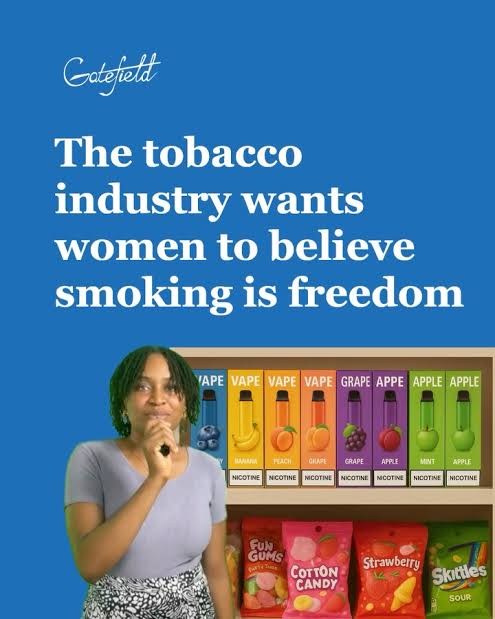
The report identified several tactics used by tobacco companies, including the promotion of flavoured tobacco products such as mint and vanilla variants, colourful packaging, sponsorship of social events, and marketing messages linking smoking to independence, sophistication, weight control, and personal freedom.
Researchers warned that these narratives often mask the significant health risks associated with tobacco use while seeking to reshape cultural attitudes toward female smoking.
Despite these efforts, the study found that strong social resistance to smoking among women remains across much of Africa. About 76 per cent of respondents said female smoking was “not at all acceptable.”
However, experts cautioned that continued exposure to pro-smoking imagery in entertainment and digital media could gradually erode those norms.
Lead researcher Farida Adamu said digital platforms have become a major battleground in tobacco control efforts, urging regulators to focus on holding technology companies accountable rather than pursuing individual influencers.
She called for stronger platform regulations requiring social media companies to identify, label, or remove tobacco-related promotional content.
“Without immediate regulatory action, including platform accountability for companies such as Meta and X, younger generations of African women will continue facing increasing exposure to harmful and misleading tobacco marketing,” she said.
The media briefing also highlighted significant policy gaps surrounding emerging nicotine products, including e-cigarettes and synthetic nicotine products, which researchers say are often marketed as safer alternatives despite insufficient regulation.
Participants noted that weak enforcement, cross-border advertising loopholes, and the absence of comprehensive legislation covering emerging tobacco products have allowed tobacco marketing to evade national restrictions.
Representing Ireti Kingibe, legislative aide Dr. Mercy Kwabe reaffirmed the commitment of the Senate Committee on Women Affairs to strengthening tobacco control measures and addressing enforcement challenges.
She expressed concern over the aggressive rebranding of tobacco products to appeal to women through flavours, product designs, and marketing campaigns that portray smoking as harmless or fashionable.
“Public health is a gender equity issue. We must address enforcement gaps and develop comprehensive legislative frameworks that protect citizens from predatory industry practices,” she said.
Dr. Kwabe added that lawmakers are committed to supporting civil society efforts aimed at countering tobacco industry narratives and promoting smoke-free environments.
Stakeholders at the event stressed that tobacco control cannot be left solely to government agencies, describing it as a collective responsibility requiring sustained engagement from communities, religious institutions, schools, media organisations, and policymakers.
Advocates also called for year-round public awareness campaigns rather than limiting anti-tobacco messaging to World No Tobacco Day commemorations.
The study recommended comprehensive gender-responsive tobacco regulations, bans on flavoured tobacco products and digital advertising, increased funding for enforcement agencies, stronger collaboration among stakeholders, and public education campaigns focused on the health and financial consequences of tobacco use.
Researchers argued that such measures are essential to protecting women and girls from increasingly sophisticated marketing strategies and preventing a rise in tobacco consumption across the region.