
Opinion
Backward Integration: Lessons from Africa’s Richest Man

_By Sam Agogo_
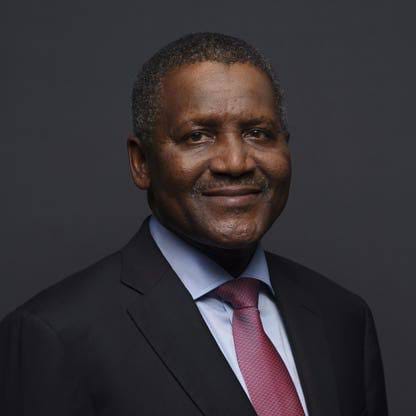
Powerful choices define powerful destinies. Aliko Dangote’s rise to the summit of African wealth was not built on luck or inheritance, but on deliberate transformation. He began as a trader, buying and selling commodities, surviving on margins, and mastering the appetite of the market by living inside it daily. Like countless Nigerians hustling in Lagos, Kano, Onitsha, and Aba, he understood demand because he was immersed in it. Trading gave him insight, but insight alone does not build empires. The true leap came when he chose to stop being a tenant in the supply chain and instead become its landlord.It was during a conversation with James Dumoulin, the social media influencer who interviews millionaires and billionaires about the secrets of their success, that Dangote revealed the principle that changed his destiny. He did not speak of chance or mystery. He spoke of backward integration. Stop buying from the source. Become the source.That decision reshaped his future. Dangote took the profits from trading and invested in machines, factories, and raw materials. He moved upstream, past middlemen and foreign suppliers, into the very foundation of production. Cement, sugar, flour — industries where he once played as a trader became industries he owned as a manufacturer. That discipline, repeated with consistency, became the thread that stitched together his empire and secured his generational wealth.Dangote’s wisdom was not only about building; it was also about the courage to release burdens disguised as success. In his conversation with Dumoulin, he confessed to owning three houses abroad — in America and the UK — purchased as monuments of arrival. But these houses sat empty, accumulating taxes, maintenance costs, and obligations. They became symbols of achievement that quietly turned into liabilities. Dangote realized he was serving assets that were not serving him. So he made another bold choice: he sold them. Today, when business takes him overseas, he checks into a hotel, pays his bill, and leaves with no lingering obligations. His capital is free to multiply, not to sleep inside monuments that merely exist.The lesson here is sharp: wealth is not measured by what you own, but by what your ownership produces. Factories generate. Supply chains compound. Idle houses drain. The trader who becomes a manufacturer breaks free of dependency. The man who sells the house he never visits breaks free of obligation disguised as achievement.This truth was echoed by a late senator from Nigeria’s South-South region, who once spoke with visible regret about the houses he had purchased in different states. Built, furnished, and maintained, many of those houses had never been slept in for years. They stood as monuments to ambition, but in reality, they were burdens — assets that consumed resources without giving anything back. His story is a sobering reminder that acquisition without utility is not achievement. It is a cautionary tale for anyone who confuses ownership with success.Dangote’s story is not just about cement or sugar. It is about discipline. It is about the courage to ask hard questions: Is this asset serving me, or am I serving it? Am I building engines of growth, or am I polishing monuments of vanity? His empire is a living testimony that wealth is not in the accumulation of possessions but in the multiplication of productive assets. Cement plants, sugar refineries, flour mills — these are not just businesses, they are engines of national development. They employ thousands, feed millions, and stabilize supply chains that would otherwise depend on imports.Backward integration is not reserved for billionaires. It is a principle that can be applied at every level. A tailor who decides to own his sewing machines instead of renting them is practising backward integration. A farmer who chooses to process his cassava into flour rather than sell it raw is practising backward integration. A trader who invests in a small factory instead of relying on imports is practising backward integration.The principle is simple but profound: control the source, and you control the future. Dependence on others for supply is dependence on their terms, their timing, and their pricing. Independence through production is freedom to set your own terms, your own timing, and your own pricing.Consider the countless businesses across Africa that collapse not because demand disappears, but because supply chains fail. Traders who rely on imports are at the mercy of foreign exchange rates, shipping delays, and international politics. Manufacturers who own their production lines, however, can weather storms with resilience. Dangote understood this early, and it is why his empire continues to thrive even in turbulent times.Backward integration is not only about economics. It is about psychology. It is about shifting from a mindset of consumption to a mindset of creation. The trader consumes what others produce. The manufacturer creates what others consume. That shift in mindset is the true secret of wealth.Dangote’s decision to sell his houses abroad is another psychological lesson. Too often, success is measured by visible symbols — houses, cars, properties scattered across cities. But true success is measured by invisible engines — investments that generate, factories that produce, systems that multiply. The senator’s regret about his unused houses is a mirror of this truth. Ownership without utility is vanity. Ownership with productivity is wealth.This lesson applies to individuals as much as it does to nations. Countries that rely on imports remain trapped in dependency. Countries that invest in production build sovereignty. Nigeria’s struggle with imports is a national version of the trader’s struggle. Dangote’s empire is a national lesson: build at home, produce at home, and wealth will stay at home.For the young entrepreneur, the lesson is practical. Start small, but start upstream. If you sell clothes, consider owning a sewing machine. If you sell food, consider owning a small processing unit. If you sell digital services, consider owning the tools that power your work. Every step upstream is a step toward independence.Backward integration also demands courage. It is easier to remain a trader, to buy and sell, to enjoy quick profits. Production is slower, riskier, and more demanding. But it is also more rewarding. Dangote’s courage to endure the slow grind of building factories is what separates him from countless traders who never made the leap.The discipline of backward integration is not glamorous. It does not produce instant wealth. But it produces lasting wealth. It produces empires that endure. It produces legacies that outlive their founders.Dangote’s story, the senator’s regret, and the countless lessons embedded in their experiences converge into one truth: success is not about accumulation. It is about multiplication. It is about ensuring that every resource you hold is actively building the next version of your life.Dangote did not become Africa’s richest man by accumulating things. He became so by relentlessly channeling his resources into engines of growth, and by having the rare courage to let go of whatever would not. That discipline of backward integration is not reserved for billionaires. It is available to anyone bold enough to practise it.
_For comment, reflections, and further conversation, you may reach me via email at samuelagogo4one@yahoo.com or call +2348055847364_ .