Agriculture
Breaking Barriers: The Plight of Women in Nigeria’s Agricultural Space


By Caroline Ameh
In Nigeria, agriculture is more than just an economic activity; it is a way of life. It provides livelihood for about 70% of the country’s rural population and contributes to food security and national development.
At the heart of this sector are millions of women who labor tirelessly on farmlands, ensuring food reaches every table. Yet, it is sad to note that despite their indispensable role, women remain largely marginalized and trapped in subsistence farming with little hope of economic empowerment.

Their journey is marred by systemic challenges, cultural norms, and policy neglect that hinder their growth and perpetuate cycles of poverty.
According to reports by the Federal Ministry of Agriculture and Rural Development, women make up about 60-80% of Nigeria’s agricultural labor force, and are involved in virtually every stage of food production that is from planting, weeding, and harvesting to processing and marketing.
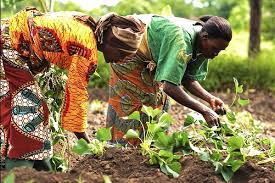
In regions like the Middle Belt, South-East and the South-South, they cultivate food crops such as cassava, maize, and vegetables.

Also sad to note is that despite their heavy involvement in farming activities, women are rarely recognized as farmers in their own right. They are seen as helpers or caretakers, working on family lands controlled by male relatives.
This cultural perception is one of the many obstacles that keep women confined to subsistence farming, producing just enough to feed their families.
With limited access to resources, they are unable to scale their productivity, thus remaining economically dependent. This dependency reinforces gender inequality, leaving women vulnerable to poverty and food insecurity.
Access to fertilizers and improved seeds is crucial for boosting agricultural productivity. However, women farmers face difficulties in obtaining these inputs. Government subsidies on fertilizers are often hijacked by middlemen who resell at exorbitant prices. Moreover, the distribution channels are male-dominated, making it harder for women to access subsidized inputs.
According to the Food and Agriculture Organization, women farmers receive only 5% of agricultural extension services, further compounding the issue. As a result, they rely on organic manure, which, while environmentally friendly, does not produce the high yields needed to sustain commercial farming.
Mrs. Felicia Micah, Chairperson, Association of Small Scale Agro Producers in Nigeria (ASSAPIN ) Nasarawa Eggon Local Government Chapter,
” We are always running to the businessmen to get fertiliser at high cost to produce food for the nation . Government should provide fertilisers for us at subsidized rate. They should create a link for female farmers to get farm inputs”.
Land is the cornerstone of agricultural productivity. However, in Nigeria, access to land is governed by complex socio-cultural norms that heavily favor men. Under customary land tenure systems, which are prevalent across the country, women cannot inherit land. Even in cases where they gain access through their husbands or fathers, their rights are often secondary and insecure.
According to a report by the African Development Bank, less than 20% of landholders in Nigeria are women. Without land ownership, they face significant challenges in making long-term investments or accessing credit facilities, as banks often require land as collateral. This systemic discrimination keeps them locked out of commercial farming.
“I have been farming for over 15 years, but I don’t own the land I cultivate,” says Enuwa Odah, a farmer in Benue State. “After my husband died, his relatives tried to evict me. I had to beg them to let me continue farming so I could feed my children.” Enuwa’s story resonates with countless women who live in constant fear of displacement, knowing they could lose their livelihoods at any moment.
Another challenge faced by women farmers is limited access to modern equipments.
In Nigeria, mechanization in agriculture is still low, and women are the worst affected. According to the International Food Policy Research Institute, women are 30% less likely to own or use mechanized tools compared to men.
Most women farmers rely on rudimentary tools like hoes and cutlasses, which are labor-intensive and time-consuming. This limits the size of land they can cultivate and reduces their overall productivity.
Mrs Patricia Onoja, leader of Ogbonge Women Farmers in Nasarawa State said supporting women in agriculture would not only ensure food sufficency in the country but raised revenue generation and bring peace to the families while urging the government to provide farm inputs to farmers especially women to encourage food production across the state.
“Women are confronted with challenges especially the high cost of farm equipment. Women do not have collateral to collect loans from the bank to buy farm inputs and equipment”
” We are appealing to government to involve women as critical stakeholders in the formulation of policies that affect women, especially in areas of agriculture, education, Onoja stated.
She further urged the government to provide more extension services to farmers to enable them get the right information to improve farming activities in the state.
“Any notion that women do not contribute to agricultural development, improvement in the critical sectors will face serious challenges because women are doing a lot to take care of their families through farming, education of the children even though most of them do not have ownership to land”
“The men in my community get fertilizers from the government agents because they know them personally,” laments Ngozi Okafor, a cassava farmer in Enugu State. “We women are left to buy at triple the price or use animal waste, which isn’t enough.”
Also, Fatima Abubakar, a rice farmer in Kano State, explains the challenges of manual farming: “We clear land using hoes, which takes weeks. By the time we finish, the planting season is almost over. Men hire tractors, but we can’t afford them.”
The cost of hiring a tractor ranges from ₦20,000 to ₦50,000 per day, a price many women farmers cannot pay. Consequently, they remain stuck in low-yield agriculture, unable to compete with male farmers who have better access to mechanization.
Finance is another critical factor that influences agricultural productivity. Yet, women farmers in Nigeria face severe financial exclusion. They lack access to formal credit facilities due to stringent requirements, including collateral, guarantors, and high-interest rates. Most rural women resort to informal savings groups or moneylenders who charge exploitative interest rates, trapping them in debt cycles.
According to the World Bank, women in Nigeria are 20% less likely to have a bank account than men, limiting their ability to access agricultural loans. Even microfinance institutions, which are meant to bridge this gap, often demand collateral or male guarantors, excluding widows and single women.
Beyond economic and logistical challenges, social and cultural norms also impede women’s progress in agriculture. In many communities, farming is considered a man’s job, and women are expected to prioritize domestic responsibilities. This cultural expectation limits the time they can devote to farming activities, reducing their productivity.
Additionally, women face mobility constraints due to social norms that restrict their movement, particularly in northern Nigeria. This affects their ability to access markets, attend training sessions, and participate in agricultural cooperatives, further isolating them from opportunities.
Despite these challenges, there have been concerted efforts to empower women farmers. The Nigerian government launched the Women in Agriculture program under the Agricultural Transformation Agenda, aimed at increasing women’s access to inputs, training, and market linkages. Additionally, organizations like the Women Farmers Advancement Network (WOFAN) provide training on sustainable agricultural practices and facilitate access to microcredit.
However, the reach and impact of these initiatives remain limited due to inadequate funding, poor implementation, and cultural resistance. More comprehensive and gender-sensitive policies are needed to address the structural barriers that hinder women’s participation in agriculture.
The resilience of Nigerian women farmers is unmatched. With the right support systems, they can transform from subsistence farmers to commercial agricultural entrepreneurs. This would not only improve their economic status but also contribute to national food security and economic development.
The journey to gender equality in agriculture is challenging but achievable. It starts with recognizing the immense potential of women farmers and breaking the systemic barriers that limit their growth. By investing in women, Nigeria can unlock a prosperous agricultural future that leaves no one behind.