
Agriculture
FG Intensifies Ranching Push, Targets Nationwide Livestock Overhaul via Feed and Breeding Programmes

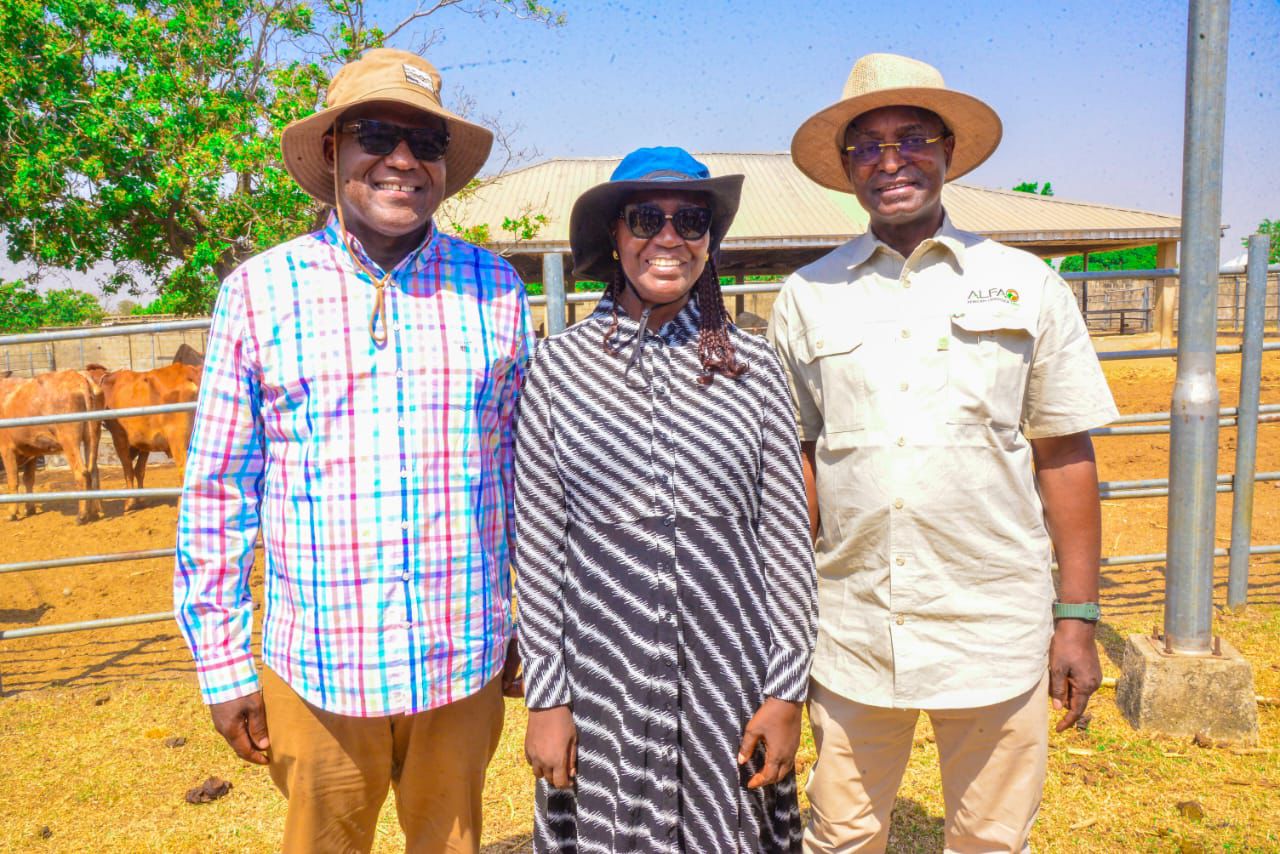
The Federal Government has stepped up moves to transform Nigeria’s livestock industry, prioritising ranching as the cornerstone of its reform strategy while strengthening feed availability and genetic improvement initiatives.
This position was restated by the Honourable Minister of Livestock Development, Idi Mukhtar Maiha, during an inspection tour of Manchong Integrated Farms Limited in Nasarawa State on Thursday, December 19, 2025. The Minister, accompanied by top ministry officials and key stakeholders, evaluated the farm’s integrated livestock system, including its fodder cultivation and breeding operations.
Maiha described the facility as a clear example of how modern ranching can be successfully implemented nationwide, highlighting its ability to maintain healthy green pastures even during the dry season through efficient irrigation.

According to him, the farm demonstrates that ranching is both viable and scalable in Nigeria. He noted that with effective planning, reliable feed supply, and organised management, the livestock sector can experience increased productivity, reduced conflicts, and enhanced wealth creation.
The Minister revealed that the Federal Ministry of Livestock Development plans to collaborate with Manchong Integrated Farms to scale up feed and fodder seed production, with the objective of developing a national feed distribution framework. He noted that the farm already supplies fodder to states such as Jigawa and Yobe, making it a suitable platform for nationwide expansion.

Maiha explained that the broader aim is to guarantee year-round access to quality livestock feed, curb reliance on open grazing, and improve overall sector performance.

On breeding and genetics, he announced that the farm would function as a pilot hub for genetic improvement programmes, producing adaptable livestock offsprings for multiplication and distribution across the country.
He stated that any new genetic material introduced into the sector would first be produced at Manchong Integrated Farms to ensure quality control and adaptability before being deployed nationwide.
The proprietor of the farm, Hon. Yakubu Dogara, applauded the Minister’s hands-on engagement, noting that the project was established to showcase ranching as a realistic response to persistent farmer–herder conflicts, particularly in northern Nigeria.
Dogara stressed that ranching is both practical and profitable, adding that replicating the model across the country could foster peace, create employment opportunities, and unlock major economic gains.
He further noted that northern Nigeria accounts for more than 70 per cent of the nation’s livestock population, pointing out that tapping even a fraction of the global $2.5 trillion dairy and beef market could yield billions of dollars annually for Nigeria.
Also contributing, a livestock business partner to the Botswana Embassy in Abuja, Mr. Clinton Agbo, described the farm as a strong foundation for Pan-African cooperation in livestock development.
He said the facility provides an ideal setting for pilot projects that combine African expertise, with Botswana offering experience, Nigeria driving implementation, and the continent reaping the benefits.
Observers note that the Minister’s visit reflects a growing emphasis on action-oriented livestock policies, with ranching, feed security, and genetic enhancement forming the core of Nigeria’s emerging livestock transformation strategy.