
Entertainments
Ministry, Sultan Back Film Project on 19th-Century Scholar Nana Asma’u as Film Producer Says Project Will Reaffirm Women’s Education as Northern Tradition, Promote Peace and National Unity

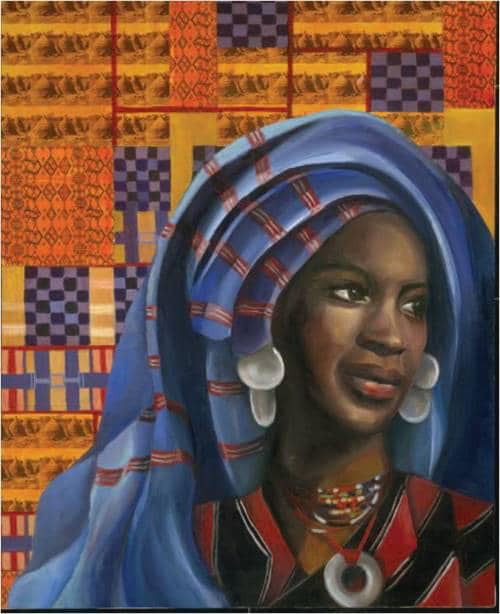
The Sultan of Sokoto, His Eminence Muhammadu Sa’ad Abubakar III, along with the Federal Ministry of Industry, Trade and Investment, has formally endorsed and authorized Script Plus Limited to commence production of a film on the life and legacy of Princess Nana Asma’u, the revered 19th-century Muslim scholar, poet, and educator.
Conceived to highlight the intellectual contributions of Princess Nana Asma’u—daughter of the Sokoto Caliphate founder, Usman dan Fodio—the film aims to showcase her impact on education, women’s empowerment, and Islamic scholarship. It is also expected to serve as a vital tool for strengthening cultural understanding, unity, peace, and national cohesion across the country.
In a letter dated November 21, 2025, the Sultan of Sokoto, through the Secretary of the Sultanate Council, Sa’idu Muhammadu Maccido (Danburam Sokoto), conveyed the Council’s approval for the project spearheaded by the Executive Producer, Hajiya Rahma Abdulmajid, who doubles as the Personal Assistant to the President on Radio and Broadcast (Office of the Vice President).
“We are glad that you have undertaken to produce a film on Nana Asma’u bnt. Usman bn. Fodio, for many, the epitome of Muslim Women in Africa… The Sultanate Council hereby conveys its endorsement for this project and authorizes you to commence as you requested,” the letter read.
The Council also asked for periodic updates on the project and indicated interest in being part of the final review ahead of the film’s premiere.
Similarly, the Federal Ministry of Industry, Trade and Investment, through its Commercial Law Department, issued a certified letter of acceptance for the project’s trademark application, confirming its official support.

Speaking on the film, Executive Producer Hajiya Rahma Abdulmajid said the project’s relevance transcends northern Nigeria, as its rich cultural heritage is expected to inspire unity and promote peace nationwide.
“This is an important story of leadership, faith, and knowledge that belongs to all Nigerians. By showcasing the intellectual and moral foundation laid by figures like Nana Asma’u, we aim to leverage this rich cultural heritage to foster unity and promote peace between the Hausa-Fulani and other ethnic groups across the North and the entire nation,” she stated.
She added that the legacy of Princess Nana Asma’u demonstrates how shared values in education and character development can significantly enhance national cohesion.
Addressing the importance of the story to women’s education in northern Nigeria, Hajiya Rahma emphasized that Nana Asma’u’s life stands as clear proof that educating women has deep cultural and religious roots in the region.
“Nana Asma’u’s life provides irrefutable historical evidence that education for women is deeply rooted in the culture and religious values of Northern Nigeria, not a foreign imposition,” she said.
She noted that the project also aims to challenge the misconception that formal education for women is a Western concept or incompatible with local traditions. She reflected on Nana Asma’u’s approach to learning, which focused on building character and strengthening religious practice.
“By showing how Nana Asma’u’s educational efforts empowered women, we implicitly highlight the debilitating consequences of a lack of learning, such as social vulnerability, religious malpractice, extremism, and political exploitation.
“Nana Asma’u is the perfect historical mirror to reflect the truth: educating Northern Nigerian women is a revival of their own cultural and religious tradition, not a deviation from it,” she added.