Agriculture
The Alternative Bank Unveils Ethical Agri-Financing Framework to Tackle Food Insecurity


By Iyojo Ameh
The Alternative Bank has announced a bold new ethical financing framework aimed at transforming Africa’s agricultural sector by prioritising farmers’ welfare over financial gain, in a move the bank says could redefine how food security is financed across the continent.
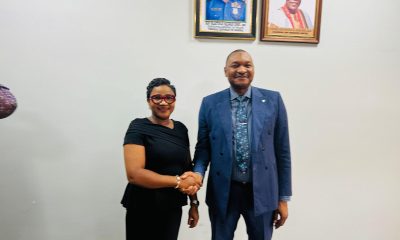
Speaking at the Agriculture Summit Africa 2025 in Abuja, themed “Survival of the Greenest: Reclaiming Africa’s Food Destiny,” the bank’s Executive Director (North), Garba Mohammed, said the initiative seeks to make agriculture financing more inclusive, sustainable, and transparent. He was represented by his Chief of Staff, Azeez Badru.
Mohammed noted that Africa’s food future will depend as much on ethical financing as on innovation and technology.
“Africa’s food destiny will not be reclaimed by technology alone, but by the courage to finance differently—to make money serve humanity rather than the other way around,” he said.
Amid Nigeria’s worsening food security challenges, The Alternative Bank is positioning itself as a leader in non-interest, purpose-driven financing designed to support productivity and sustainability rather than speculation.

“We are financing purpose, not just profit. Agriculture is a national responsibility. Every loan, every partnership must feed families, preserve the land, and build resilience. That is the essence of ethical finance,” Mohammed added.
The bank’s approach draws on time-tested Islamic finance principles such as Mudarabah (profit-and-loss sharing), Musharakah (equity partnership), Ijara (lease-to-own financing), and Murabaha (cost-plus trade finance). Through these models, risk and reward are more equitably distributed across the agricultural value chain—empowering producers, processors, and distributors alike.
Mohammed criticised the traditional financing system that, he said, allows financiers to reap the greatest returns while farmers shoulder the most risk.
“For too long, those who feed Africa have carried the heaviest burden while financiers reap the greatest returns. That imbalance must end, and The Alternative Bank intends to lead the way,” he stated.
Beyond capital, the bank’s agricultural financing portfolio supports renewable energy systems for irrigation, solar-powered cold storage, and waste-to-value technologies—solutions that promote environmental sustainability while increasing farmers’ productivity and incomes.
“The survival of the greenest challenges us to build systems that reward stewardship over speculation, and to finance not just growth, but good,” Mohammed affirmed.
Commending the organisers of Agriculture Summit Africa 2025, The Alternative Bank reiterated its commitment to reshaping Africa’s food systems through finance that empowers rather than exploits, urging governments, investors, and development partners to collaborate in building fair and resilient food economies.
“We’re leading this charge and welcome farmers, off-takers, partners, and all who believe finance should build fair, resilient food systems,” the bank said.