Governance
NiMet DG Pushes AI-Driven Solutions to Tackle Climate Risks

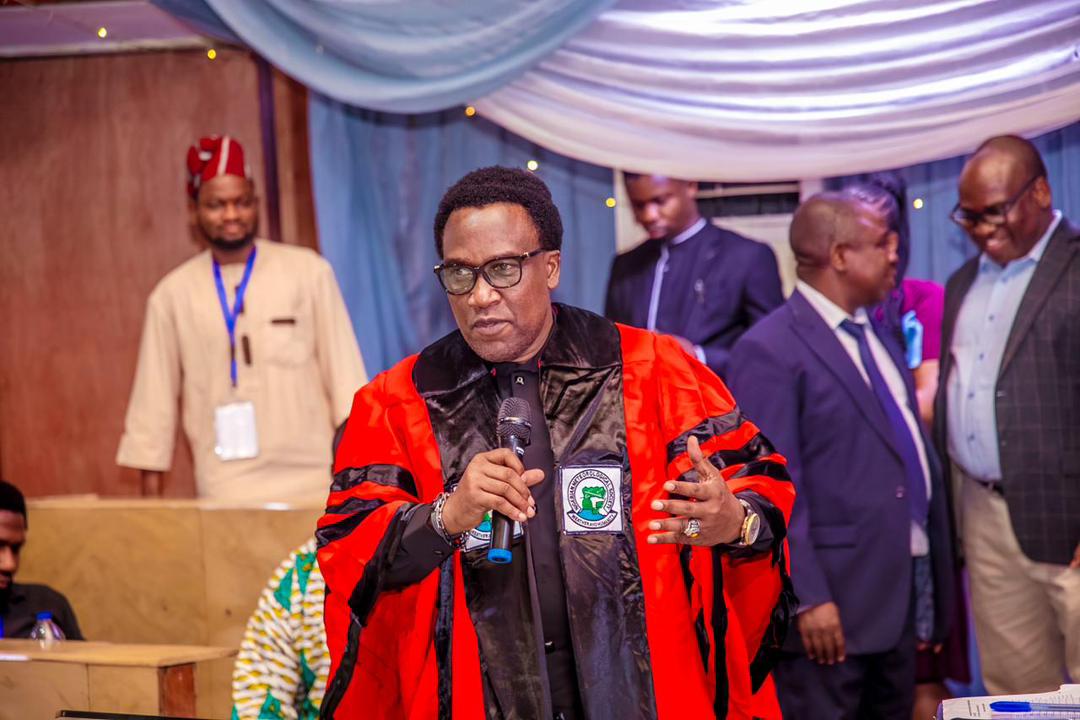
The Director General and Chief Executive Officer of the Nigerian Meteorological Agency (NiMet), Charles Anosike, has called for the adoption of innovative, technology-driven approaches to strengthen Nigeria’s resilience to climate change.
Anosike made the call while delivering a keynote address at the 2026 International Conference of the Nigerian Meteorological Society (NMetS), held at the University of Lagos. The event also marked the Society’s 35th Annual General Meeting and brought together experts, policymakers, and stakeholders in the climate and meteorology space.
Speaking on the conference theme, “Advancing Meteorology: Harnessing AI, Satellites, and Big Data for Climate Resilience and Sustainability,” Anosike said the timing of the gathering was critical, given the increasing impact of climate change globally.
He noted that climate change has moved from being a distant threat to a present-day reality, with rising temperatures, erratic rainfall, flooding, drought, and heatwaves already affecting ecosystems, economies, and livelihoods, particularly across Africa.
Focusing on Nigeria, Anosike highlighted growing environmental challenges,
including desertification in the north, coastal erosion in the south, and shifting weather patterns nationwide. He stressed that these challenges require a transition from conventional forecasting methods to advanced, data-driven systems.
According to him, emerging technologies such as artificial intelligence, satellite systems, and big data analytics are transforming meteorology by improving the accuracy and timeliness of weather predictions.
He disclosed that NiMet has intensified the integration of AI-powered models and satellite data into its operations, supported by high-performance computing systems, to enhance impact-based forecasting.
The NiMet boss also revealed that the agency has strengthened its capabilities through partnerships with global institutions, including AIM for Scale, Ignitia, Tomorrow.io, the Korean Meteorological Authority, and the China Meteorological Administration.
He pointed to the agency’s Digital Climate Advisory Service as a key innovation supporting climate-smart agriculture, providing farmers with timely and location-specific weather information.
Anosike called for stronger collaboration among researchers, professional bodies, and the private sector to improve climate observation systems and expand access to climate services.
He also urged the Nigerian Meteorological Society to prioritise mentorship for young professionals, uphold ethical research standards, and bridge the gap between scientific research and policy implementation.
He added that such efforts align with the United Nations’ Early Warnings for All initiative aimed at ensuring universal access to life-saving weather and climate information.
Reaffirming NiMet’s commitment to innovation, Anosike said the agency would continue to leverage science and technology to build a more climate-resilient Nigeria.
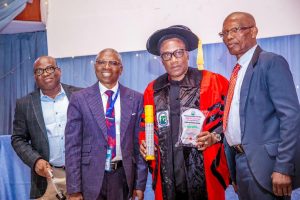
In recognition of his contributions to meteorology and climate services, Anosike was honoured with a fellowship and commendation award at the conference.