
General News
UK Mining Firm Drags Nigeria to International Arbitration Over Alleged Seizure of Multi-Billion-Dollar Lithium Project

By Iyojo Ameh
A British mining company, Jupiter Lithium Ltd, has initiated international arbitration proceedings against the Nigerian government, alleging unlawful interference in its multi-billion-dollar lithium mining project and violations of investment protections under the UK–Nigeria Bilateral Investment Treaty (BIT).




The company has filed a Request for Arbitration with the International Centre for Settlement of Investment Disputes (ICSID), seeking redress over what it describes as the revocation of key mining licences, prolonged regulatory delays, and obstruction of its operations in Nigeria.

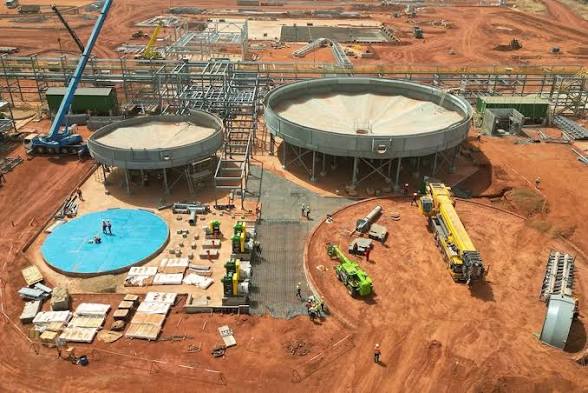
Jupiter Lithium, a United Kingdom-registered firm, said it had spent several years exploring and developing what it claims is one of the world’s largest hard-rock lithium deposits in central Nigeria. The company maintains that the project could play a major role in supplying lithium for Britain’s electric vehicle and battery manufacturing industries.
According to the company, the dispute stems from the alleged revocation of approximately 70 per cent of its mining leases and the failure of Nigerian authorities to process additional lease applications within timelines stipulated under the Nigerian Mining Act.
The legislation requires the Minister of Solid Minerals Development to approve or reject mining title applications within 45 days.
Jupiter, however, claims some of its applications have remained unresolved for more than two years.
The disagreement reportedly intensified in late 2025 when the company alleged that government officials removed its personnel from project sites and allowed a Chinese-backed mining operator to commence activities on the same tenements despite allegedly lacking valid mining titles.
Jupiter further claimed that repeated attempts to engage Nigerian authorities, including the Ministry of Solid Minerals Development and the Mining Cadastre Office, failed to yield any resolution.
The company said it formally notified the Federal Government in June 2025 of its intention to pursue arbitration if the issues remained unresolved.
“Jupiter has acted in full compliance with Nigerian law and has made every effort to resolve this matter amicably,” a company representative said.
“We have been left with no option but to pursue international arbitration to protect our investment and the rights afforded under the Bilateral Investment Treaty.”
Under the UK–Nigeria BIT, British investors are entitled to protections including fair and equitable treatment, protection from expropriation, and non-discriminatory treatment. Jupiter alleges that Nigeria breached several of these obligations.
As of the time of filing this report, the Federal Government had not publicly responded to the arbitration proceedings or the allegations made by the company.
The dispute comes amid Nigeria’s efforts to attract greater investment into its solid minerals sector while increasing local participation in the development of strategic mineral resources, including lithium and other critical minerals essential to the global energy transition.
Jupiter’s website describes the project as one of the largest lithium deposits globally. The company estimates that production could reach about 167,000 tonnes of lithium concentrate within its first two years of operation, potentially generating billions of dollars in revenue and contributing significantly to Nigeria’s mining sector.
The case is also expected to attract international attention due to the growing geopolitical competition for access to critical minerals. Lithium is a key component in electric vehicle batteries, renewable energy storage systems, and advanced manufacturing technologies.
The United Kingdom and the United States have both intensified efforts to secure reliable supplies of critical minerals, amid concerns over China’s dominant position in global mineral processing and supply chains.
Analysts say the arbitration could test Nigeria’s investment climate at a time when the government is seeking to position the country as a major destination for mining investment.
Despite commencing arbitration, Jupiter said it remains open to an amicable settlement with the Nigerian government but is prepared to pursue its claims through international legal channels if negotiations fail.