
General News
Women’s Coalition Presses Tinubu Presidency for Paid Paternity Leave, 35% Leadership Quota

By Iyojo Ameh
The Women in Leadership (WIL) Coalition has called on the Tinubu administration to introduce stronger family-friendly workplace policies, including paid paternity leave, longer maternity leave and a mandatory 35 per cent representation for women in leadership, saying the reforms are critical to Nigeria’s economic growth.
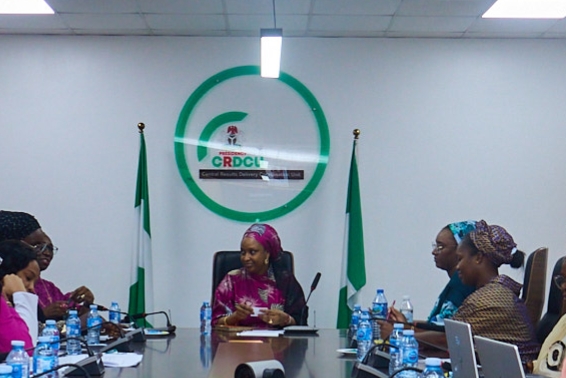
The coalition made the appeal during an advocacy visit to the Special Adviser to the President on Policy Coordination, Hadiza Bala Usman, where it urged the Federal Government to remove structural barriers preventing women from fully participating in the workforce and occupying leadership positions.

According to the coalition, Nigerian women perform an estimated $111 billion worth of unpaid care work annually, while existing labour laws provide only 12 weeks of maternity leave at half pay and no paid paternity leave for workers in the private sector. It argued that the policy gap forces many women out of the workforce, weakens leadership pipelines and ultimately slows economic growth.

To address the challenge, the coalition proposed a national policy guaranteeing 16 weeks of fully paid maternity leave, 14 days of paid paternity leave, at least 35 per cent female representation on corporate boards and executive management, and a similar quota in federal and state cabinets.

Chairperson and Founder of Women in Successful Careers (WISCAR), Amina Oyagbola, described gender inclusion as an economic necessity, while other coalition members stressed that supporting families would enable more women to remain in employment and contribute to national development.

Responding, Hadiza Bala Usman reiterated the Presidency’s commitment to advancing gender equality, noting that the Federal Public Service already provides five months and two weeks of fully paid maternity leave, as well as two weeks of paid paternity leave.
She acknowledged that similar provisions are not consistently available in the private sector and pledged to engage relevant government agencies to strengthen women’s representation across federal institutions while encouraging broader adoption of family-friendly workplace policies.
The coalition maintained that expanding parental leave and increasing women’s participation in leadership should be treated as national economic priorities rather than gender issues alone, insisting that the reforms would improve productivity, retain skilled workers and strengthen Nigeria’s competitiveness.