
Governance
Nigeria Issues 2026 Flood Warning as 33 States, FCT Face Massive Risk

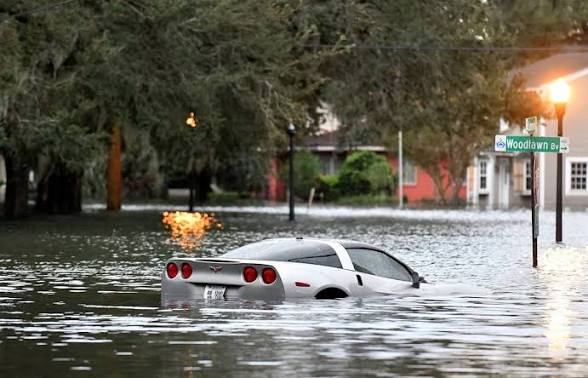
Nigeria is once again facing concerns over severe flooding as the Federal Government has identified 226 Local Government Areas (LGAs) across 33 states and the Federal Capital Territory (FCT) as high-risk flood zones in 2026.
The Minister of Water Resources and Sanitation, Joseph Terlumun Utsev, made this known during the presentation of the 2026 Annual Flood Outlook by the Nigeria Hydrological Services Agency at the State Banquet Hall of the Presidential Villa in Abuja.
He revealed that not less than 14,118 communities in 266 LGAs fall under the high-risk category, covering major flood-prone states including Kogi, Benue, Bayelsa, Rivers, and Lagos.
The report shows increasing vulnerability of Nigerian communities to extreme weather conditions, a situation linked to weak drainage systems, rapid urban development, and the effects of climate change.
In addition, 405 LGAs across 35 states were classified under moderate flood risk, with only Ekiti State not included in this category.
The outlook further indicates that 923 communities in 77 LGAs across 24 states are expected to experience low-level flooding, meaning nearly all parts of the country will be affected in varying degrees during the rainy season.
Experts warn that these figures highlight the urgent need for stronger environmental planning and coordinated disaster management, as flooding continues to threaten food supply, displace residents, and destroy infrastructure nationwide.
To address the expected impact, the government has introduced a community-based flood forecasting system under the 2026 outlook. This system is designed to provide localized early warnings to at-risk communities for faster response and preparedness.
President Bola Ahmed Tinubu, represented by the Minister of Environment, Balarabe Lawal, reaffirmed the administration’s commitment to improving emergency response systems across the country.
He stressed the importance of stronger coordination among agencies and improved rescue operations to reduce the impact of flooding.
The President also emphasized timely communication as a key tool in disaster management, noting that quick information sharing is essential for protecting lives and property.
As the rainy season approaches, the 2026 flood outlook serves as a warning and a call for all levels of government, communities, and stakeholders to strengthen resilience, improve planning, and adopt sustainable environmental practices.