
News
Dangote’s Lesson to Nigeria’s Elite: Wealth Should Build Nations, Not Buy Luxury

By Sam Agogo
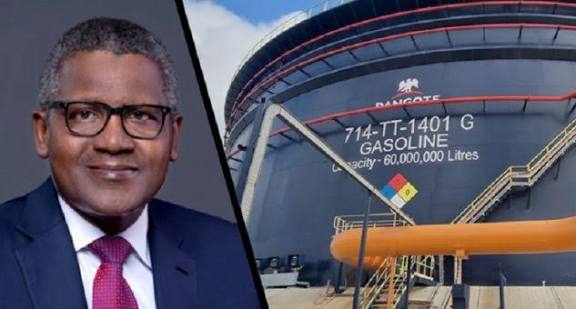
In the grand tapestry of nations, some men weave threads of vanity while others stitch legacies of purpose. Alhaji Aliko Dangote belongs firmly to the latter. His life and words remind us that true greatness is not measured by the glitter of luxury or the weight of foreign mansions, but by the industries built, the jobs created, and the lives uplifted.
Dangote recently stunned the world when he unveiled a ₦1 trillion educational scholarship fund designed to support 1.3 million Nigerians. This was not a token gesture but a monumental investment in the future of the country. By channeling such vast resources into education, he demonstrated his belief that wealth must empower generations, not merely decorate the lives of a few. For him, education is the foundation upon which nations rise, and his commitment ensures that millions of young Nigerians will have opportunities that might otherwise have been denied them.

But Dangote’s vision goes beyond philanthropy. He has consistently admonished Nigeria’s elite to rethink their priorities. He has spoken against the culture of extravagance that sees fortunes poured into private jets, Rolls-Royces, and foreign mansions while industries remain neglected. “If you have money for a Rolls-Royce,” he declared, “you should take that money and go put up an industry in your locality or any part of the country where there is need.” His words were not mere rhetoric but a philosophy he has lived by, building cement factories, fertilizer plants, and a massive refinery that employ thousands and strengthen Nigeria’s economy.
In one of his most striking remarks, Dangote revealed that a public servant once spent as much as five million dollars to train his children abroad, while he, despite being Africa’s richest man, chose to train all his children here in Nigeria. That contrast is telling. It is not only a lesson in humility but a reminder that true wealth is not about foreign indulgence but about confidence in one’s own nation. Dangote’s choice reflects his belief that Nigeria has the capacity to nurture greatness if only its elite would invest in its institutions rather than abandon them.
This message resonates even more when contrasted with the vanity of others. Recently, a young man proudly showed off a car his boss had bought, claiming it might be the only one of its kind in Nigeria. The pride was misplaced, for such displays of luxury do little to uplift society. This is exactly what Dangote warns against: the shallow pursuit of status symbols that serve no purpose beyond personal vanity. For a man who has seen everything life holds, Dangote chooses simplicity. He is not only wealthy but globally recognized as one of the richest men alive, yet he does not live an extraordinary lifestyle. He lives simply, rooted in Nigeria, without houses abroad or indulgences that separate him from his people.
Perhaps the most thoughtful of his commitments is his pledge that 25 percent of his personal wealth should be sent to the Aliko Dangote Foundation in the event of his death. This is not a casual promise but a deliberate plan to ensure that his philanthropic work continues long after he is gone. It is rare foresight from one of the richest men in the world, showing that his concern is not only for his family but for the millions of Nigerians who will benefit from his vision.
Dangote’s philosophy is a rebuke to the culture of self-centeredness that has taken root among many of Nigeria’s wealthy. While others accumulate estates both within and outside the country, often with little trace of philanthropy or social investment, Dangote channels his fortune into industries, education, and philanthropy. His example shows that wealth can be a force for national development when directed toward empowerment rather than indulgence.
The lesson is clear: wealth is not a private treasure but a public trust. To hoard it is to betray the nation; to invest it is to build the future. Dangote has shown that it is possible to be wealthy without being self-centered, to be powerful without seeking political office, and to be influential without extravagance. His life is a blueprint for responsible wealth, a reminder that industries, schools, and jobs are the true symbols of success. For Nigeria’s elite, political leaders, and religious figures, his challenge is both moral and practical. Every Nigerian elite needs to learn from this richest man, who has proven that wealth is not about foreign indulgence but about national service. The future of Nigeria will not be built on luxury cars or foreign mansions but on factories, education, and opportunities for its people. Dangote has shown the way. The question now is whether the elite will follow.
For comments, reflections, and further conversation, email samuelagogo4one@yahoo.com or call +2348055847364.