General News
Education, Not Force Alone, Key to Ending Insecurity – Alia

From Dooshima Terkura, Makurdi
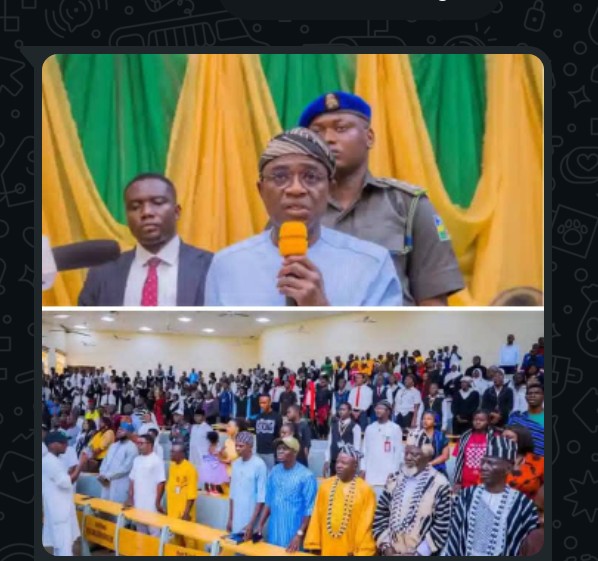
Benue State Governor, Rev. Fr. Hyacinth Alia, has identified illiteracy as one of the major factors fueling the persistent insecurity in Nigeria.
Governor Alia stated this while delivering a lecture titled “Insecurity and Education in Nigeria and the Quest for Development” at the Quarterly Lecture Series of Yakubu Gowon University, Abuja, formerly the University of Abuja.
He noted that Nigeria has witnessed unprecedented security challenges over the past decades, including the Boko Haram insurgency, which targets Western education, as well as banditry, terrorism, kidnapping, and herders-farmers clashes that have claimed many lives and destroyed property, making national security a major concern for government.
According to the governor, the key drivers of insecurity in the country include illiteracy, poverty, unemployment, inequality, weak institutions, ethno-religious tensions, poor governance, and declining social values.
Governor Alia stressed that addressing the country’s security challenges requires efficient public service and strong institutions, noting that the public service plays a critical role in delivering essential services and supporting the needs of both the state and its citizens.
He said efficient and effective public service delivery would help build stronger and more resilient communities, stimulate economic growth, and promote social cohesion.
The governor also advocated inclusive, equitable and quality education, lifelong learning, technical skills development, teacher capacity building, and safe learning environments at all levels as vital tools for promoting peace and sustainable development.
He maintained that when deliberately deployed, education remains a long-term solution to insecurity by addressing its root causes, including illiteracy, ignorance, poverty, religious extremism, and unemployment.
Governor Alia added that rather than relying solely on force and media threats, a quality, accessible, compulsory and functional education system would foster social cohesion, religious tolerance and economic empowerment, all of which are essential for building a peaceful society.
He further called for sustained efforts to strengthen Nigeria’s education system alongside complementary constitutional reforms, including the establishment of State Police, to improve the country’s security architecture and promote peace, good governance and sustainable national development.
In his remarks, the Vice Chancellor of the university, Prof. Hakeem Awehinmi, thanked Governor Alia for accepting the invitation to deliver the institution’s maiden quarterly lecture, describing the presentation as well-researched and one that would enrich scholarship at the university.