General News
Tinubu’s SDGs Aide: Youth Empowerment Must Translate Into Jobs, Innovation

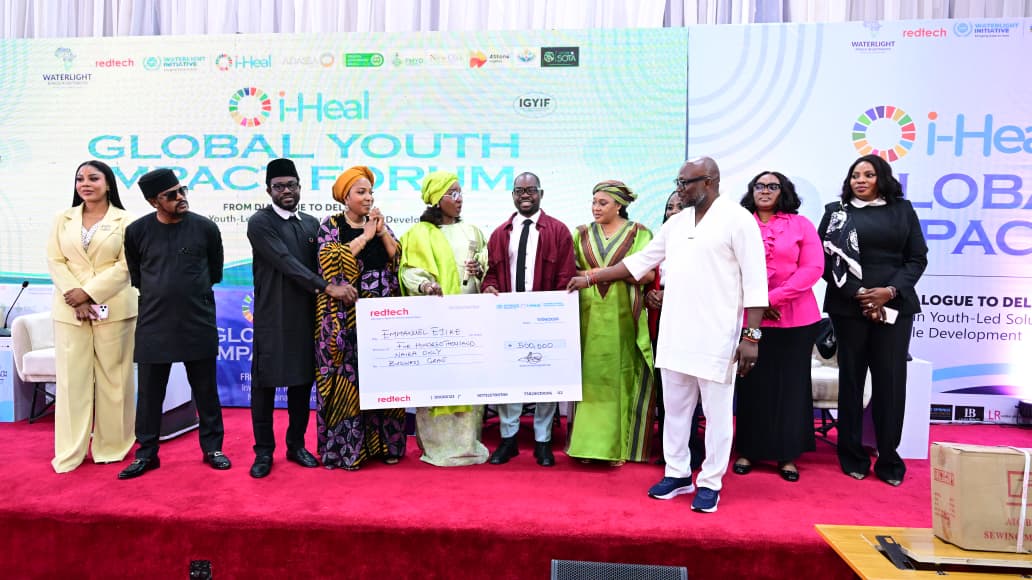
The Senior Special Assistant to the President on Sustainable Development Goals (SDGs), Adejoke Orelope-Adefulire, has called for a shift from rhetoric to practical investment in youth empowerment, stressing that such interventions must translate into jobs, innovation and sustainable development.
Orelope-Adefulire made the call in Abuja while delivering a keynote address at the 2026 iHEAL Global Youth Impact Forum, organised by the Waterlight Save Initiative for young Nigerians from across the country.
She was represented at the forum by her Special Assistant on Media, Publicity and Strategic Communication, Desmond Utomwen.

The presidential aide said young Nigerians should not be viewed merely as beneficiaries of development programmes but as indispensable partners and active architects of national and global transformation.
According to her, Nigeria’s large youth population presents enormous potential for accelerating development if young people are equipped with quality education, access to finance, mentorship, innovation ecosystems and meaningful opportunities to participate in decision-making.
“Empowerment must move beyond rhetoric to deliberate investment in human capital,” she said, urging the young participants to become innovators, problem-solvers, ethical leaders and responsible citizens.
Orelope-Adefulire also challenged young Nigerians to become ambassadors of sustainable development in their communities by promoting peace, inclusion and environmental sustainability through practical action.
She said the administration of President Bola Tinubu remained committed to expanding opportunities for young Nigerians through economic diversification, digital innovation, entrepreneurship, skills development and job creation.
She added that her office had continued to facilitate interventions in healthcare, education, water and sanitation, renewable energy, social protection, livelihoods and skills acquisition across communities.
The presidential aide emphasised the need for stronger partnerships among government, development institutions, academia, civil society organisations and the private sector to expand access to finance, mentorship, incubation programmes and global opportunities for young entrepreneurs and innovators.
She urged the participants to leverage technology, knowledge and global networks not only for personal advancement but also to create opportunities and drive sustainable transformation within their communities.
Youth, women must take centre stage — AbdulRazaq
The wife of the Kwara State Governor and Chairperson of the Waterlight Save Initiative Advisory Board, Olufolake AbdulRazaq, called for greater inclusion of young people and women in governance and national development.
AbdulRazaq said meaningful youth participation was critical to Nigeria’s socioeconomic and political transformation, urging young people to prepare themselves for leadership and take advantage of opportunities to contribute to governance.
She said the Kwara State Government had demonstrated its commitment to youth inclusion through appointments and programmes designed to position young people for leadership and meaningful participation in public affairs.
She urged participants to maximise the networking and mentorship opportunities provided by the forum and make productive use of grants and empowerment items received by beneficiaries.
According to her, the iHEAL initiative, unveiled at the World Sustainability Summit in Doha, Qatar, represents a shift from traditional aid to sustainable development and long-term empowerment of communities.
Youths receive grants, business equipment
The Chief Executive Officer of Waterlight Save Initiative and Convener of the forum, Ero Ibhafidon, said the event was anchored on the iHEAL Framework, which comprises six interconnected development pillars designed to promote lasting impact and empowerment.
He listed the pillars as innovation, income and infrastructure; healthcare and hygiene; education and empowerment; agriculture, access to food and clean water; and living standards, leadership and livelihoods.
Ibhafidon said the initiative was designed to create practical pathways through which young people could move from potential to productivity, ideas to enterprise and dependency to economic empowerment.
He disclosed that selected young entrepreneurs received non-refundable grants of N1 million and N500,000 to start, strengthen and expand their businesses.
Beneficiaries also received sewing machines, industrial grinding machines, hairdressing kits, professional makeup equipment and other business and vocational support tools.
Peller urges youths to embrace entrepreneurship
Entrepreneur and former member of the House of Representatives, Shina Peller, urged African youths to embrace entrepreneurship, leadership and active citizenship as tools for driving continental development.
Peller advised young people to move beyond waiting for government or private-sector employers, stressing that entrepreneurship could create jobs while addressing civic and societal challenges.
He urged youths to build sustainable enterprises capable of generating economic opportunities for themselves and others.
Stakeholders seek solutions to water crisis
The Chief Executive Officer of Lokoja Dialogues, Polly Alakija, urged young Nigerians to deploy their ideas and capacities towards developing sustainable solutions to Nigeria’s water challenges.
Alakija said although Nigeria was endowed with abundant natural resources and a youthful population, millions of citizens still faced significant challenges in accessing safe and equitable water.
She called for a shift from dialogue to implementation through stronger collaboration among communities, policymakers, innovators, the public and private sectors and academia.
A Waterlight Sustainable Ambassador, Dorcas Mutfwang, said the iHEAL framework was designed to tackle poverty through holistic, community-led and sustainable development aligned with the Sustainable Development Goals.
She added that the framework also sought to strengthen resilience at the grassroots by equipping communities with the tools and opportunities needed to achieve sustainable livelihoods.