
Governance
From Congestion to Global Influence: Inside NPA’s Landmark 2025 Maritime Transformation

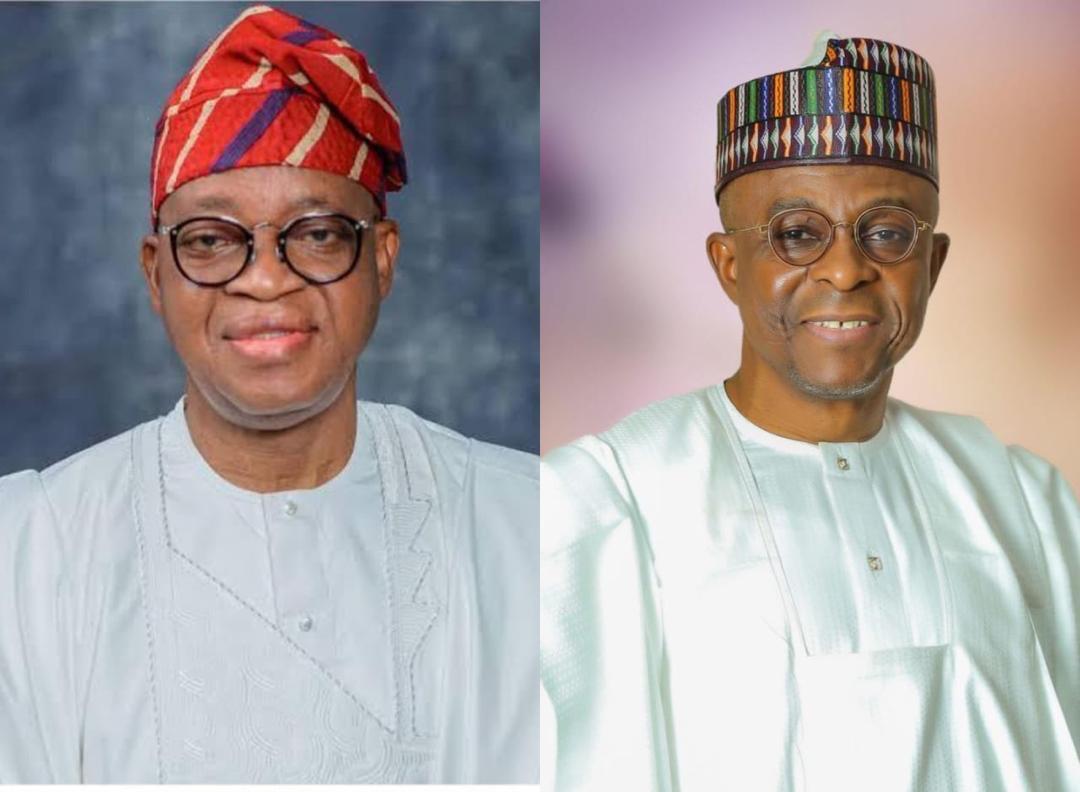
The Nigerian Ports Authority (NPA) is experiencing an era of unprecedented growth, with 2025 emerging as a defining year for transformation in Nigeria’s maritime sector.
Since assuming office in July 2024, the Managing Director and Chief Executive Officer, Dr. Abubakar Dantsoho, has reinvigorated the Authority, repositioning Nigeria’s ports as efficient, competitive hubs that significantly support the national economy.
Available figures underscore this progress. Under Dr. Dantsoho’s leadership, sustained improvements in port efficiency contributed to Nigeria’s international trade reaching ₦5.81 trillion in the third quarter of 2024.
His influence has also extended to national fiscal policy through the effective implementation of the presidential directive mandating the trading of petroleum products in Naira, a move that has helped ease pressure on the nation’s foreign exchange reserves.
By integrating Nigeria into the International Port Community System Association (IPCSA)—a key precursor to the National Single Window project championed by the Federal Government—Dr. Dantsoho has ushered in a new era of transparency and operational efficiency. In recognition of his contributions to modernizing maritime infrastructure, he was recently honored with an Award of Excellence.
The Authority’s accomplishments in 2025 clearly reflect its commitment to innovation and excellence. From berthing its first wholly Nigerian-owned container vessel to recording impressive operational performance, the NPA continues to consolidate its role in shaping the future of Nigeria’s maritime industry.
A major highlight was Nigeria’s re-election to the International Maritime Organization (IMO) Council after a 14-year hiatus, a milestone that underscores the country’s growing stature in global maritime affairs.
According to the Special Adviser to the President on Information and Strategy, Bayo Onanuga, the development demonstrates the international community’s confidence in Nigeria’s commitment to maritime safety, security, environmental sustainability, and adherence to rules-based operations.
President Bola Ahmed Tinubu commended the Minister of Marine and Blue Economy, Adegboyega Oyetola, alongside the diplomatic team, for their dedication and strategic engagement. The President also expressed appreciation to IMO member states for their support, affirming that Nigeria would justify the confidence reposed in it through sustained leadership and meaningful contributions to global maritime objectives.
Nigeria’s election into Category C of the IMO Council—reserved for countries with special interests in maritime transport and navigation—saw the nation join 19 other countries, marking a significant chapter in its maritime history. Minister Oyetola described the achievement as a landmark endorsement of renewed global confidence in Nigeria under President Tinubu’s leadership.
Dr. Dantsoho also congratulated the Minister and the nation, noting that Nigeria had spoken with renewed authority on the global maritime stage and was now being heard.
Another breakthrough came in July 2025 with the berthing of MV Ocean Dragon, a 349 TEU container vessel wholly owned by Nigerians. Dr. Dantsoho described the development as aligning with President Tinubu’s “Nigeria First” policy and the NPA’s emphasis on local content development.
The vessel, owned by Clarion Shipping West Africa Limited, has a capacity of 349 Twenty-Foot Equivalent Units (TEUs) and is designed to operate across West Africa and beyond, servicing ports in Nigeria, Benin Republic, Togo, Ghana, and South Africa. Its operations are expected to boost regional trade, reduce logistics costs, and encourage short-sea shipping as an efficient alternative to road transport.
According to Bernadine Eloka, Vice President of Clarion Shipping West Africa Limited, the acquisition represents a strategic response to the risks associated with road-dominated cargo movement and a deliberate effort to deepen regional trade under the African Continental Free Trade Area (AfCFTA).
Sustainability also featured prominently in the Authority’s progress, with a fresh $60 million investment committed to green port initiatives aimed at transforming operations and strengthening local content development.
These efforts were supported by record-breaking performance indicators. In the third quarter of 2025, export-laden container volumes surged by 1,085 percent, while total cargo throughput increased by 16.2 percent. Container traffic rose by 18.9 percent to 546,931 TEUs, with import-laden containers growing by 33.1 percent to 268,713 TEUs. Export-laden containers climbed sharply to 69,039 TEUs, up from 5,812 TEUs in the corresponding period of 2024.
Operational data released by the NPA in December showed that the growth in export containers led to a 21.5 percent reduction in empty container traffic, indicating a healthier balance between imports and exports and stronger non-oil export activity.
Ship traffic also recorded notable gains, with vessel calls increasing by 8.4 percent to 1,074 ships, while total Gross Registered Tonnage (GRT) rose by 18 percent to 42.64 million. Lekki Deep Seaport emerged as the leading growth driver, accounting for 46.8 percent of total cargo, followed by Onne Port with 17 percent. Lekki Port also handled the largest vessels, with an average GRT of 57,244.
Dr. Dantsoho attributed the strong performance to the Federal Government’s export-driven economic reforms and rising investor confidence, noting that the figures reflected improved efficiency across all pilotage districts. He further highlighted ongoing port modernization initiatives and the expansion of digital platforms.
Another milestone was recorded with Dr. Dantsoho’s election as Vice-President for Africa of the International Association of Ports and Harbors (IAPH). Confirmed after the August election in Tokyo, the development underscores the NPA’s growing influence globally. IAPH Secretary-General Masahiko Furuichi welcomed the appointment, expressing optimism about future collaboration.
This followed yet another historic achievement, with Dr. Dantsoho becoming the first Nigerian since 1972 to head the Port Management Association of West and Central Africa (PMAWCA), reinforcing Nigeria’s renewed leadership in international maritime affairs.
Founded in 1955 and headquartered in Tokyo, Japan, IAPH has evolved into a global alliance representing about 190 ports and 167 port-related businesses across 89 countries. Its member ports collectively handle over 60 percent of global seaborne trade and container traffic.
The NPA rounded off 2025 with the launch of the Electronic Call-Up System at Onne Port in Rivers State during the third quarter. The initiative is designed to address longstanding traffic congestion, enhance efficiency, and streamline port operations.
According to the Chairman of the Nigerian Port Consultative Council (NPCC), Onne Chapter, Mr. Godwin Ololuke, the commencement of the system will restore order, improve efficiency, and protect investments that had suffered losses due to delays and unregulated activities.
Final preparations have since been concluded for the full rollout of the electronic truck call-up system, aimed at improving traffic flow and port safety. Truck driver Johnbull Igbikiowubo emphasized that the cooperation of all stakeholders would be critical to the success of the initiative, noting its importance to the nation’s economy.
The system is also expected to curb extortion by non-state actors and further enhance overall port operations.
Looking ahead, the NPA is positioning itself for another major leap in 2026, driven by strategic investments, innovation, and infrastructure expansion. At a Citizens’ Engagement Meeting held in Abuja in December, Dr. Dantsoho and Minister Oyetola unveiled a forward-looking roadmap for Nigeria’s blue economy.
Central to the plan is a $1 billion port rehabilitation and modernization project, which will involve comprehensive reconstruction of key ports and the deployment of a Port Community System (PCS), scheduled for launch in 2026.
Although the PCS concept originated in Europe in the 1970s to digitize ports such as Rotterdam and Hamburg, its implementation in Nigeria has been adapted to align with the Federal Government’s Renewed Hope Agenda. By automating cargo handling and simplifying administrative processes, the system will serve as a digital bridge to the National Single Window, ultimately integrating aviation and rail logistics into a unified trade ecosystem.
The anticipated economic benefits are significant, with the system projected to save millions of dollars annually through reduced vessel turnaround times and demurrage. By enhancing data integrity and automating transactions, the PCS will also block revenue leakages and provide reliable trade data for long-term national planning.
Building on the remarkable gains of 2025 and the forthcoming $1 billion modernization project, the Nigerian Ports Authority is poised for even greater achievements. As 2026 approaches, the Authority is set to deliver a transformative performance that will redefine Nigeria’s maritime landscape.